Study finds tea type reshapes kombucha chemistry, aroma and antioxidants
Tea is a brewing variable, not a garnish: swap the base and kombucha can change in chemistry, aroma, and antioxidant activity.
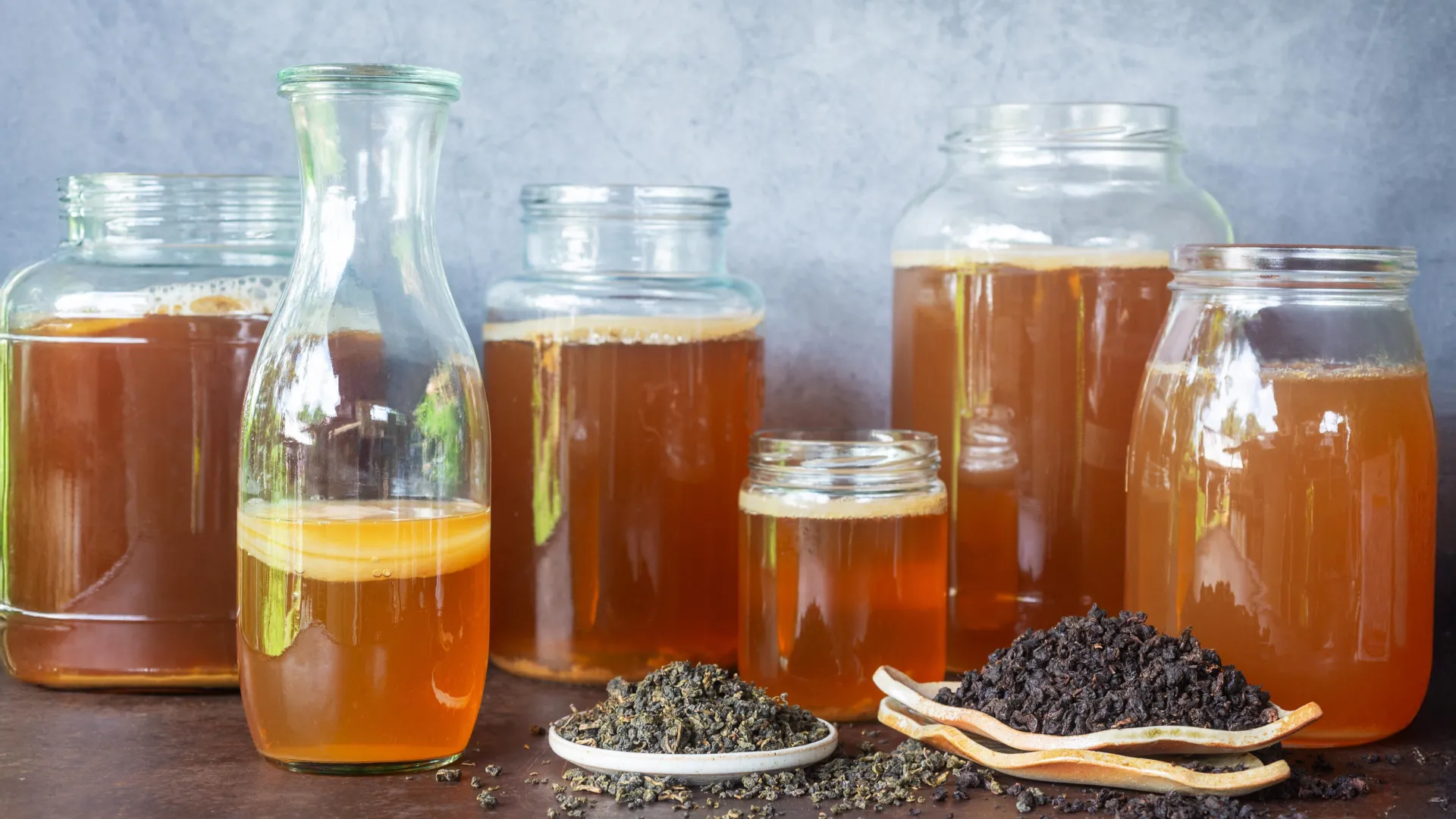
Switching kombucha’s base from black tea to green, white, oolong, or pu-erh changed the drink’s chemical composition, volatile aroma profile, and antioxidant activity in a new paper in *Food Chemistry*.
Tea is the control knob, not the backdrop
The Wrocław Medical University team, working with the Wrocław University of Environmental and Life Sciences, compared kombucha made from black, green, white, oolong, and pu-erh teas under controlled fermentation.
Tea choice is a formulation variable, right alongside sugar load, temperature, and time. In the data, green and oolong kombuchas stood out as the most biologically active, while the other teas pushed the ferment in noticeably different directions.
What changes when you change the leaf
Tea shapes fermentation and final composition. Tea is not just flavor dissolved in water. It brings polyphenols, catechins, caffeine, and other bioactive compounds into the jar, and SCOBY microorganisms work on that material during the ferment.
That microbial interaction explains why the same starter can behave differently from batch to batch when the tea changes. Yeast break sugars into alcohol and carbon dioxide, which gives kombucha its light sparkle, while bacteria mainly convert those products into acetic and gluconic acids. That is the chemistry behind the familiar tang, but the data show the base tea also steers which compounds survive, which compounds get transformed, and which new ones appear.
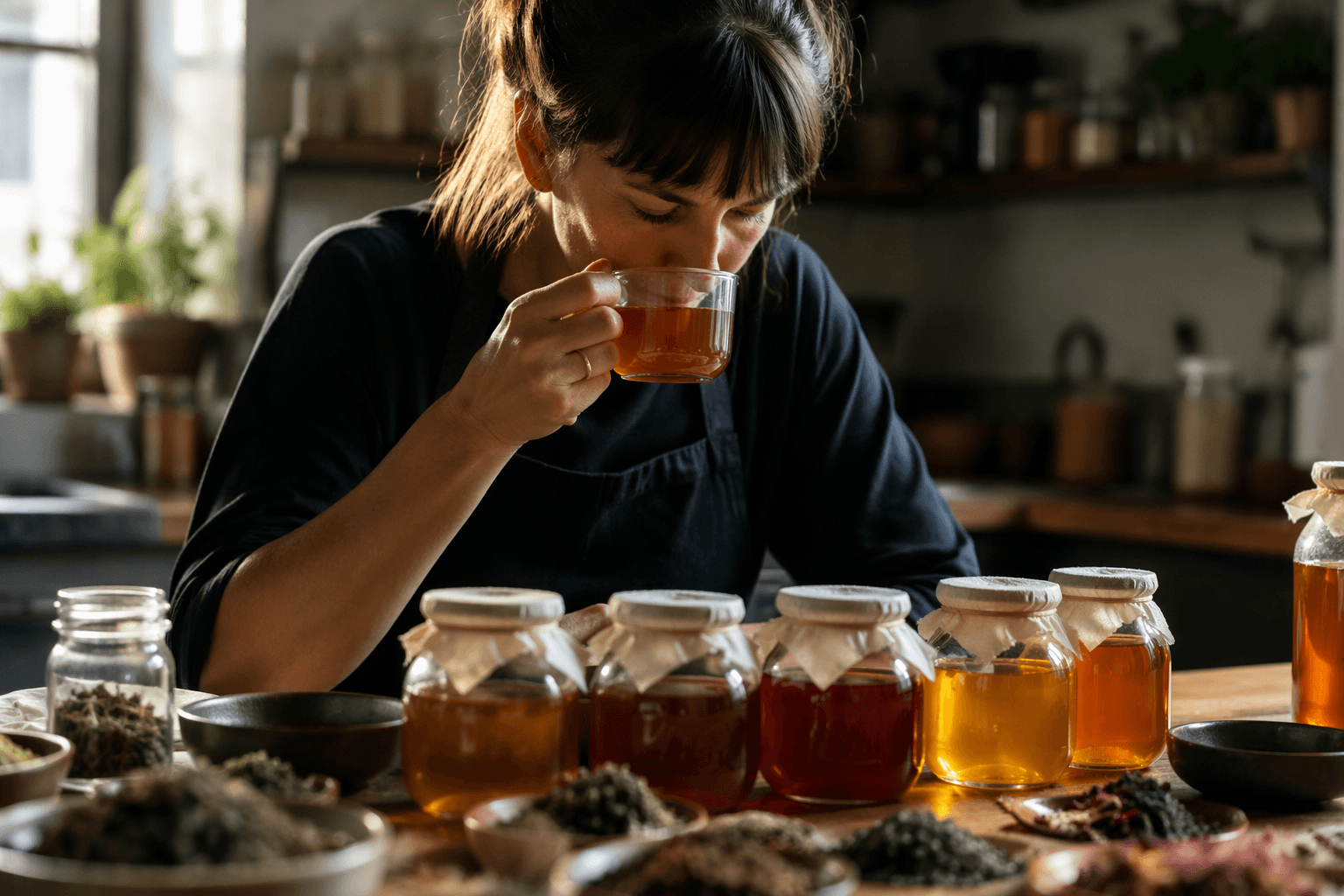
The aroma changes are just as important for anyone trying to dial in a better finished drink. The analyses found increases in floral and fruity compounds such as linalool and 2-phenylethanol. At the same time, some compounds typical of freshly brewed tea fell away, replaced by metabolites created by the bacteria and yeast during fermentation.
How to use this in your own brew
If you want a sharper, more robust, or more antioxidant-forward kombucha, tea selection deserves the same attention you already give to sugar and fermentation time. The practical move is to test one variable at a time and keep the rest locked down.
A simple way to approach it:
- Keep the same starter culture and sugar amount.
- Change only the tea type, one batch at a time.
- Log steeping strength, because a stronger infusion changes the starting matrix.
- Track fermentation length, since the same tea can land differently at day seven than at day ten.
If green and oolong are giving the strongest biological activity in this setup, that makes them worth trying when you want a batch with more lift in the finished chemistry. If you are chasing a different sensory profile, the study is still useful because it shows that black, white, and pu-erh are not interchangeable inputs.
This is not a one-off result
A 2020 study in *Antioxidants* found that tea type significantly influenced antioxidant potential, pH, acetic acid, alcohol, and sugar content in kombucha made from white, green, black, and red tea. A 2024 paper in *Fermentation* also found that different tea extract substrates changed kombucha’s bioactive compounds and antioxidant activity.
This article was produced by Prism’s automated news system from verified source data, official records, and press releases, then run through automated quality and moderation checks before publishing. The system is built and supervised by the people who set the standards it runs under. Read our full AI policy.
Did this article answer your question?