Study tests Turkish endemic plants for boosted kombucha bioactivity
Turkey's endemic herbs are being tested as kombucha bases, with notable antioxidant and antimicrobial activity but no anticancer effect on CaCo-2 cells.
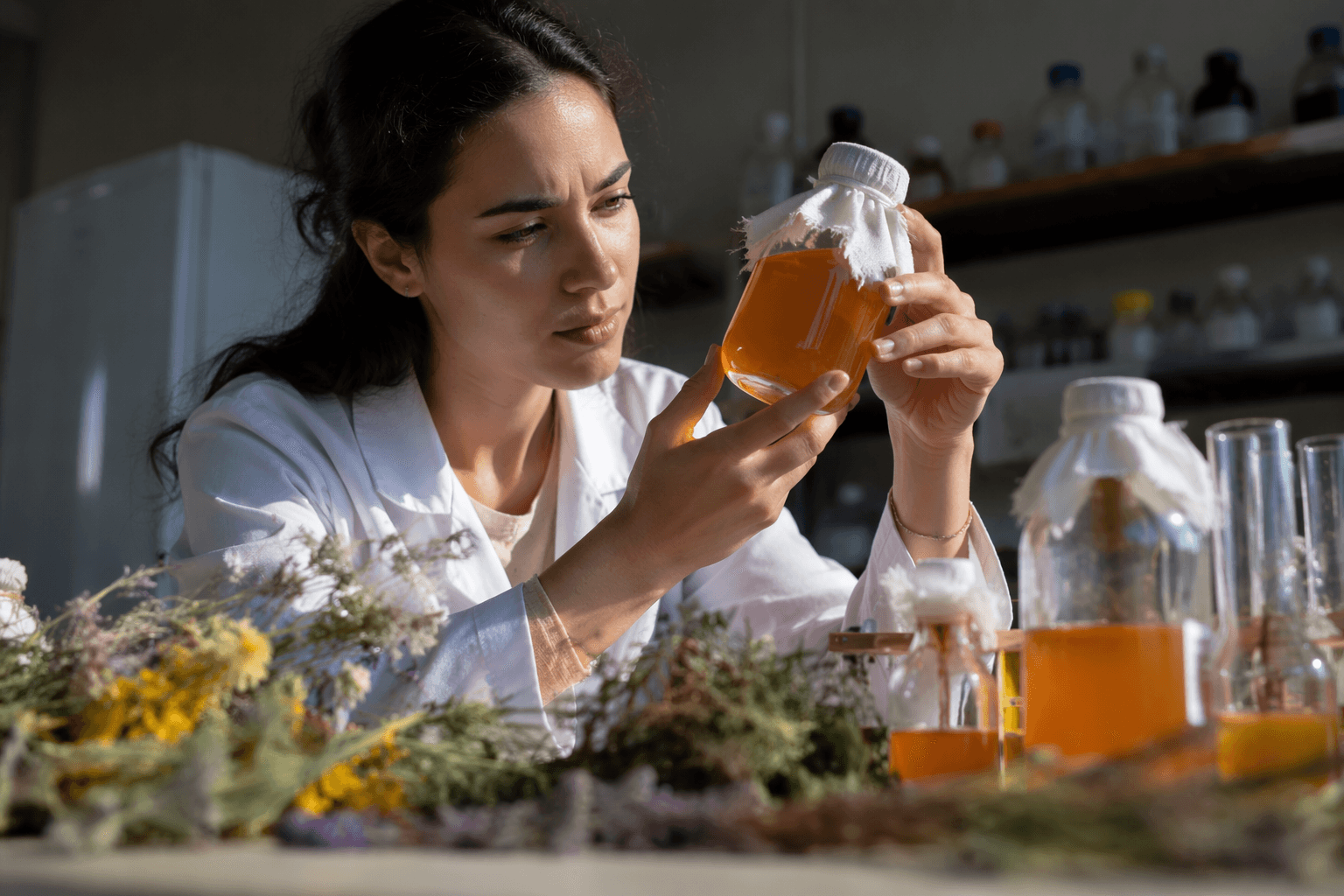
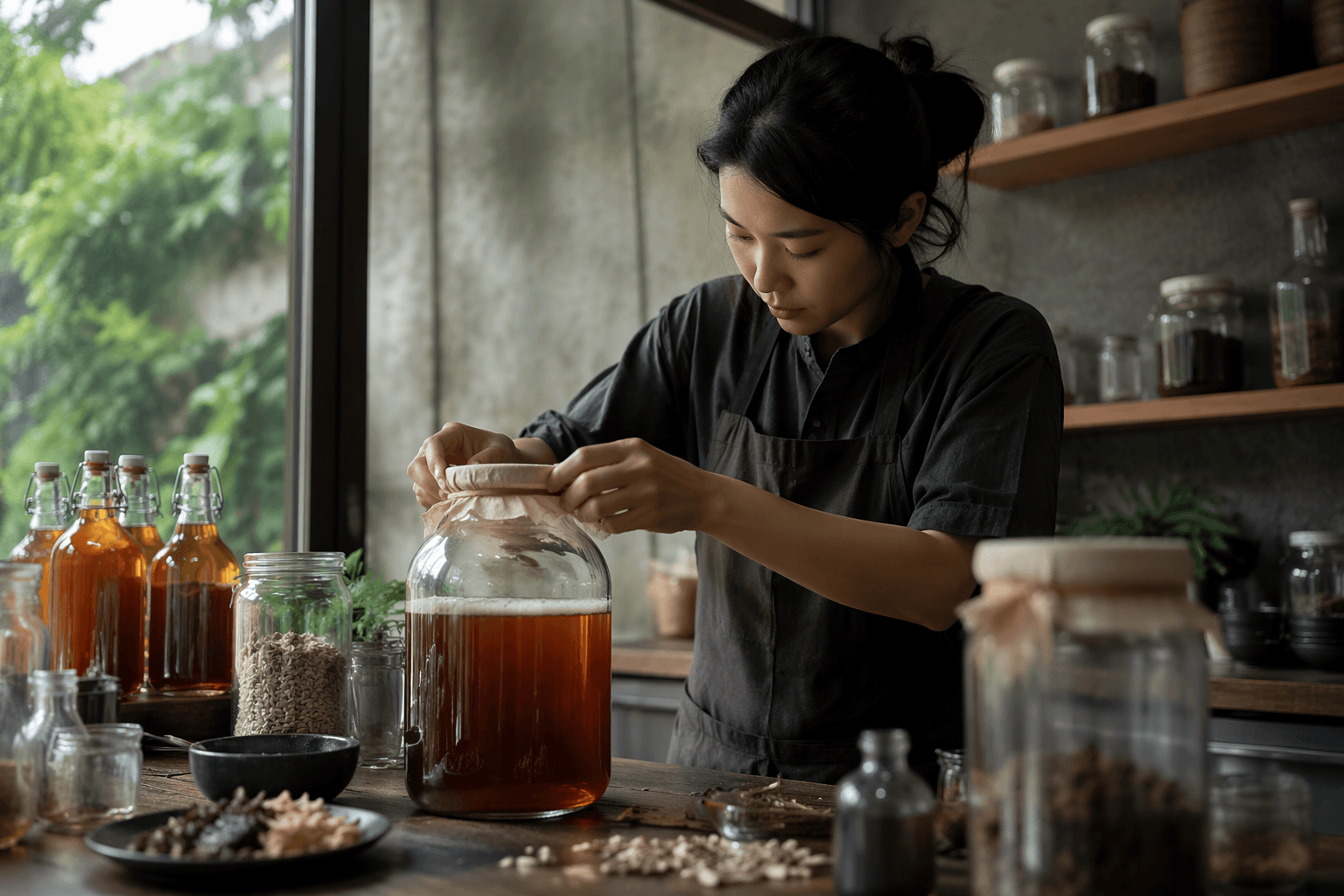
Which local botanicals can give kombucha a regional stamp without slowing the ferment? This Turkish paper points brewers toward two endemic plants, Sideritis bilgerana and Galium nigdeense, and compares them with black tea and green tea to see whether they can deliver something distinctive without losing the clean behavior a good SCOBY needs.
What this paper is testing
The study appeared online on June 26, 2026 as an in-press, journal-pre-proof paper in Food Bioscience, and it makes a very specific claim: this is the first scientific attempt to examine Sideritis bilgerana and Galium nigdeense in kombucha production. That framing matters because the authors are not treating these plants as novelty flavors. They are testing them as fermentation bases, side by side with black tea kombucha and green tea kombucha, to see whether local botanicals can carry both function and identity.
The preview abstract keeps the story in practical brewer territory. It says the kombuchas showed notable antioxidant and antimicrobial activity, while showing no anticancer effects on CaCo-2 cells. For anyone who brews at home, that is the useful split: there is a signal that these infusions can produce a bioactive drink, but the paper does not pretend every health angle lands the same way.
Why these two plants matter
The plant choice is not random, and that is what makes the study interesting. Kew’s Plants of the World Online lists Galium nigdeense as native to Türkiye, where it grows as a perennial in the temperate biome. It also lists Sideritis bilgeriana as native to southern Türkiye, where it grows as a subshrub in the temperate biome. In other words, the study is not borrowing from generic herbal tea culture. It is working from plants with real regional roots.
That regional depth is strongest in the Sideritis family. One review counts 45 Turkish Sideritis species, 40 of them endemic. Another source puts the Turkish total at 46 species and an endemism ratio of 79 percent. A 2019 review also notes that Sideritis species in southeastern Europe and Turkey are valued medicinal plants, used in traditional medicine and brewed as herbal tea. That is exactly the sort of background that makes a kombucha trial feel less like a stunt and more like a serious extension of local drinking culture.
What to watch in the glass
If you are thinking like a brewer, the study suggests the right question is not just whether these botanicals ferment. It is what they do to the finished drink. The variables to watch are the ones that decide whether a batch becomes a repeatable house culture or a one-off experiment: acidity, aroma, tannin structure, carbonation behavior, and SCOBY performance.
That is where the comparison with black tea and green tea is useful. Black tea usually gives kombucha more backbone, while green tea tends to land lighter and more delicate, so the endemic infusions now have a clear control line. If a Sideritis or Galium batch acidifies cleanly, keeps enough structure to support carbonation, and still tastes like a coherent drink rather than a herbal decoction, that is the kind of result that can move from lab curiosity to homebrew rotation.
For a first bench trial, the cleanest approach is simple:
- Run the endemic infusion against a black tea control and a green tea control.
- Keep the sugar level, starter ratio, fermentation temperature, and timing identical across all batches.
- Taste for how the aroma changes from tea-like to herbal, floral, grassy, or medicinal.
- Watch the pellicle and surface growth for SCOBY vigor, texture, and any slowdown.
- Check whether the finished drink feels sharper, flatter, or more rounded on the tongue.
That is the real brewer’s value of the paper. It gives you a way to ask whether a local plant can do more than add flavor. It can tell you whether a regional infusion can carry the same fermentation load as the tea leaves most kombucha recipes still rely on.
Why this fits the bigger kombucha shift
This paper also sits in a bigger trend that has already changed the category. Recent kombucha reviews say the field has expanded far beyond traditional black-tea SCOBY drinks and now includes herbs, fruits, vegetables, cereals, dairy, algae, and food-industry by-products as alternative substrates. That is a wide net, but the same reviews also point to a stubborn gap: the field still lacks consistent information on chemical composition, sensory aspects, biological properties, and market strategies for non-tea kombuchas.
That gap is exactly where endemic-plant brewing becomes interesting. A kombucha built from Niğde-region botanicals is not just a new flavor. It is a way to ask whether local flora can support a stable ferment, create a distinct aroma profile, and give the drink a stronger regional story without breaking the basics that make kombucha worth bottling in the first place. The more useful answer is not whether these herbs are exotic, but whether they are dependable enough to deserve a place beside black and green tea.
The big takeaway is the one brewers will care about most: local plants can be more than a label story if they still give you a healthy ferment, a clean acid curve, and a glass that tastes like somewhere specific. This Turkish study puts that challenge on the bench where it belongs, and the next good batch will be the one that proves regional identity and solid kombucha performance can live in the same jar.
This article was produced by Prism’s automated news system from verified source data, official records, and press releases, then run through automated quality and moderation checks before publishing. The system is built and supervised by the people who set the standards it runs under. Read our full AI policy.
Did this article answer your question?