Watermelon rind boosts kombucha antioxidants during secondary fermentation
Watermelon rind is more than scraps here: in secondary fermentation it helped hold antioxidant activity above 89% while keeping polyphenols steadier than flesh.
If you have ever juiced a watermelon and stared at the pile of pale rind left behind, this study gives that trim a much better job description. In secondary fermentation, watermelon flesh and rind did not just add flavor, they actively changed how kombucha behaved, with the rind standing out for preserving antioxidant activity and keeping the drink more stable as it evolved.
That is the practical hook for brewers: once the base kombucha has finished its main ferment, fruit can push the batch in different directions. With watermelon, the juicy center and the firm outer rind do not play the same role, and that difference is exactly where the interesting brewing happens.
What the study changed in the tank
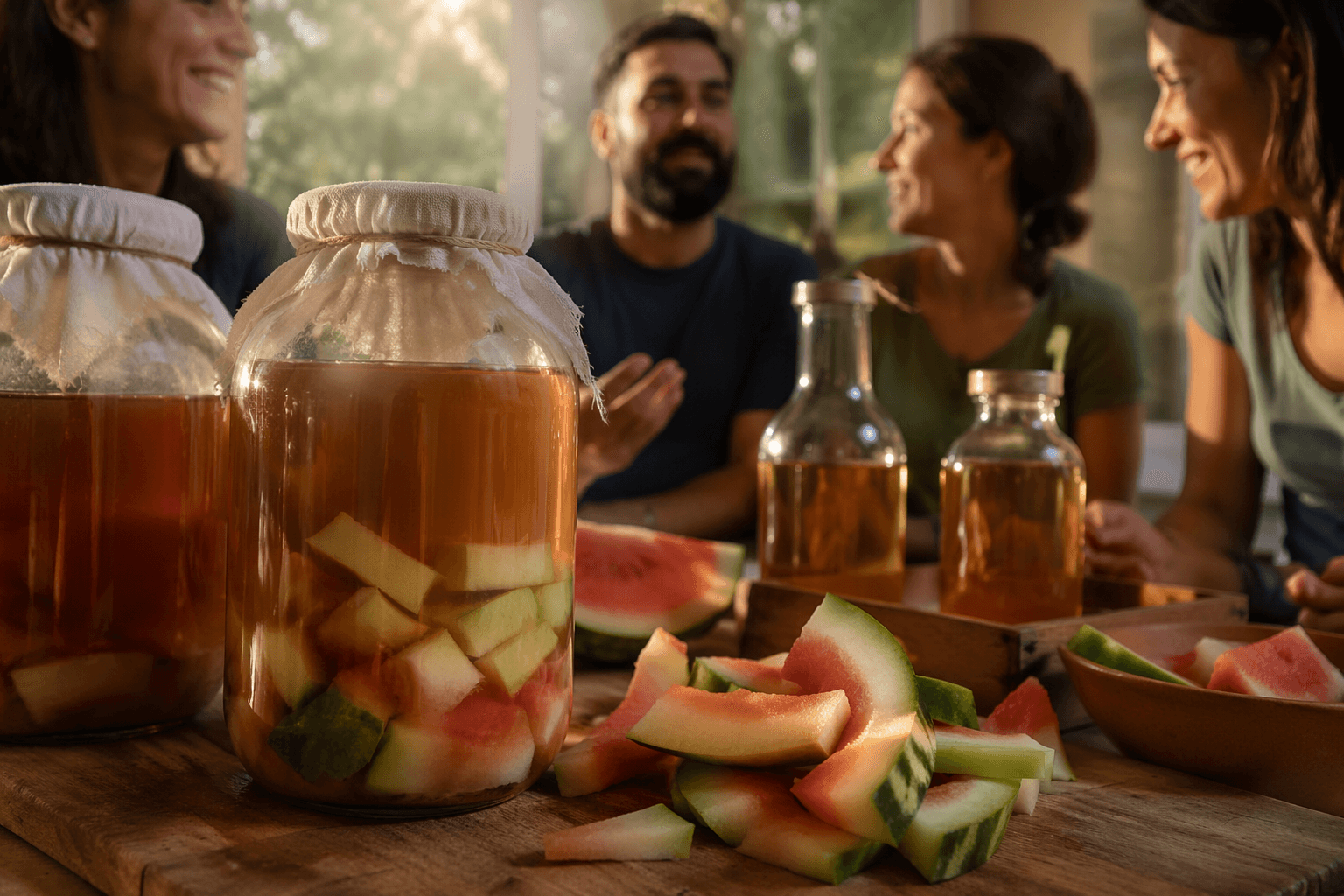
The test was simple and smart. Kombucha first went through a 10-day primary fermentation, then watermelon flesh or watermelon rind was added for five more days of secondary fermentation. That split lets you compare a plain kombucha base with two fruit-driven versions without muddying the main ferment.
The paper looked at microbiological, physicochemical, and antioxidant effects, which is the right way to study a fruit addition in kombucha. This is not just about aroma or sweetness. Once you add fresh plant material, you are also changing sugar availability, acidity, microbial growth, and the way the drink protects itself from oxidation.
Why the flesh and rind behave differently
The flesh-added kombucha encouraged stronger yeast proliferation during the second ferment, and that makes sense if you have brewed enough fruit kombucha to know the pattern. Sweet, fermentable fruit usually feeds yeast fast, which can drive more carbonation and a livelier bottle, but it can also move the drink further from a stable, low-sugar profile if you are not watching it closely.
The rind treatment went another way. Instead of chasing more yeast growth, it helped maintain higher antioxidant activity and kept the total polyphenol profile relatively stable. The headline number here is strong: the rind treatment preserved more than 89 percent DPPH radical-scavenging activity, which points to a fruit addition that supports function without stripping away the compounds brewers usually care about in a tea-based kombucha.
What changed in flavor chemistry
Both watermelon treatments led to reductions in soluble solids and pH over time, which shows the ferment kept moving in the expected direction. That matters because fresh fruit can make a batch feel sweeter and softer at first, but as yeast and acetic acid bacteria keep working, the drink does not stay put.
For home brewers, that means watermelon additions are not a static flavoring step. They are active fuel for the microbes in the jar, so the final taste depends on how long you leave it, how much fruit you add, and whether you want a brighter, fruitier drink or a sharper, more acidic one. The flesh leans more toward sweetness and microbial activity; the rind leans more toward a steadier functional profile.
The microbial cast is familiar, but the substrate changes the script
The SCOBY community in the study was dominated by acetic acid bacteria and fermentative yeasts, with Komagataeibacter, Zygosaccharomyces, and Starmerella called out as major groups. That is classic kombucha ecology, and it is a reminder that the drink is never one organism doing one job.
Yeasts hydrolyze sucrose into fructose and glucose, then convert sugars into ethanol, which acetic acid bacteria oxidize into acetic acid. That dance lowers pH and builds the drink’s familiar sour edge. The watermelon addition does not replace that system, it steers it, giving the microbes a different substrate and changing how far the batch goes in a given five-day secondary ferment.
How to turn this into a small-batch home experiment
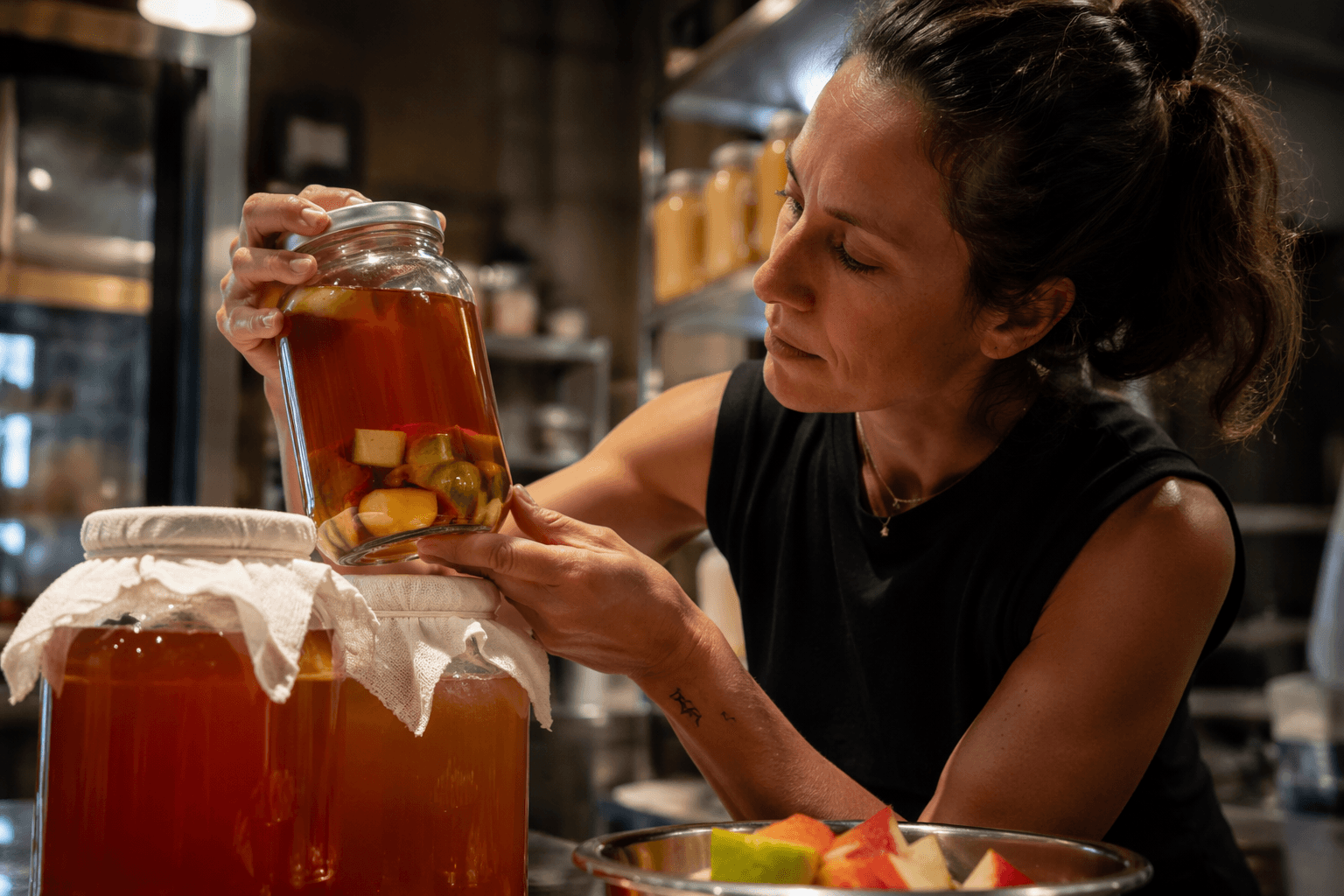
If you want to try the idea at home, treat watermelon as a secondary-fermentation ingredient, not a primary sweetener. Start with a finished kombucha base after your normal first ferment, then split it into two jars or bottles: one with flesh, one with rind. Use the same tea base, the same starter, and the same fermentation time so you can actually compare results.
A simple home approach looks like this:
1. Brew your kombucha through a complete primary ferment.
2. Strain or prepare cleaned watermelon flesh for one batch and cleaned rind for another.
3. Add the fruit only for secondary fermentation.
4. Track sweetness, fizz, acidity, and aroma over the next few days.
5. Chill the batches once they reach the profile you want.
The important part is sanitation. Fresh fruit brings wild microbes and extra particles, so wash the melon well, trim away any damaged sections, and keep your jars and bottles clean. If you are using rind, stick to the firm outer material and remove the bitter, overripe interior flesh clinging to it, because you want the low-sugar functional substrate, not a mushy fruit slurry that ferments too aggressively.
What to expect from rind versus flesh
If you are after carbonation and a more obviously fruity finish, flesh is the easier route because it feeds yeast more directly. That can be fun, but it can also push a bottle faster than you expect, especially in warm conditions. The study’s yeast result matches the way many brewers already think about fruit sugar: more available sugar usually means more microbial action.
If you want a more restrained, stable second ferment with a sustainability story attached to it, rind is the smarter play. The study suggests it can hold on to antioxidant activity better than flesh while still supporting fermentation, which is exactly why it feels useful rather than gimmicky. It gives you a way to make the most of watermelon while avoiding the usual assumption that the rind is just waste.
Why this matters beyond one recipe
Kombucha already has a long fermentation history, and the basic chemistry is well understood: sugars feed yeasts, yeasts feed acetic acid bacteria, and the drink’s acidity and flavor sharpen as the culture works. What keeps the category interesting is how flexible it is. Recent kombucha work has already explored honey, molasses, coffee, and fruit-based materials as alternative substrates, and fruit-forward formulations have been used to chase richer phenolic content and higher antioxidant activity.
Watermelon rind fits that broader shift perfectly. It is a familiar ingredient with an unfamiliar use, and it shows how kombucha can turn kitchen leftovers into a batch that is more distinctive, more functional, and less wasteful. That is the real win here: the part most people throw away may be the part that best steadies the second ferment.
This article was produced by Prism’s automated news system from verified source data, official records, and press releases, then run through automated quality and moderation checks before publishing. The system is built and supervised by the people who set the standards it runs under. Read our full AI policy.
Did this article answer your question?