Hawaii Clean Water Branch helps Kona divers check safe conditions
Check the Clean Water Branch before any Kona dive: it flags brown-water risks, sewage spills, and other alerts that can mean switching sites or canceling outright.
The Hawaii Department of Health’s Clean Water Branch page, dated July 15, 2026, pulls together water-quality advisories, beach monitoring information, and public health notices in one place. Before you drop into a Kona shore dive or load up for a snorkel run, it should be part of the same pre-check as surf, wind, and currents, with language options that make it easier to use fast when plans are shifting.
What the Clean Water Branch hub is telling you
For Kona divers, the value of the page is simple: it is built to flag water conditions that do not show up in a weather app. The Clean Water Branch system tracks beach advisories, beach notifications, brown-water advisories, sewage spills, and permit exceedances, all of which can change whether a site is worth entering. That matters on the Kona coast and across West Hawaii, where shore-access points can be close to runoff channels, tide pools, and reef shelves that collect whatever came down after rain.
The state page points you toward advisory tools, beach monitoring information, and public health notices, which makes it a practical planning screen instead of a vague warning page.
How to read an advisory before you commit to a site
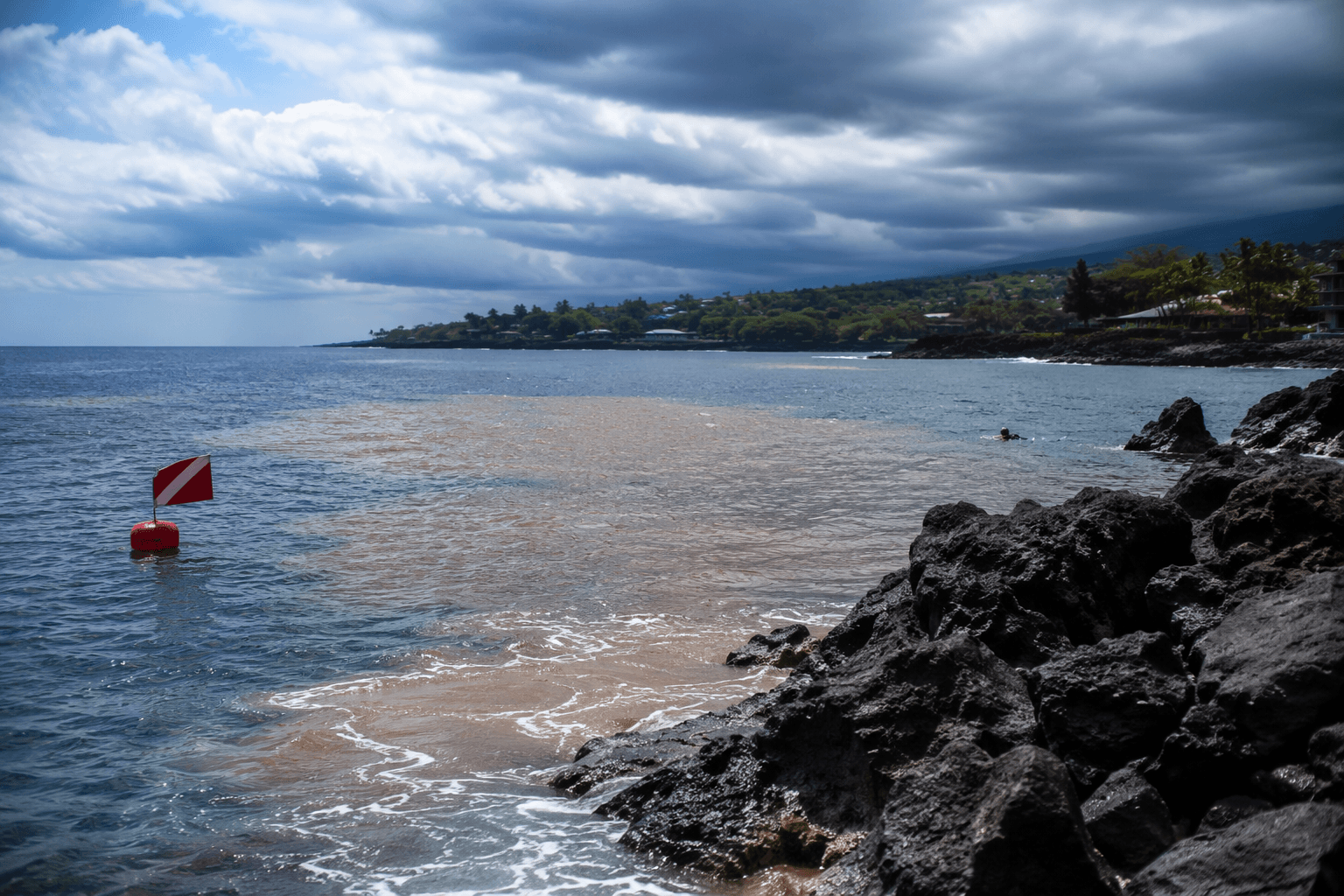
The first question is whether there is an active warning for the exact beach or bay you want. A beach advisory or beach notification is a sign to slow down and verify the current status before you get gear out of the truck. A brown-water advisory is more direct: it means runoff is affecting the water, and that is a strong reason to avoid a shore dive, skip a snorkeling session, or move the plan to clearer offshore water.
The Clean Water Branch framework also tracks sewage spills and permit exceedances, which are the alerts that should carry the most weight in a diving decision. If a site has an active wastewater issue, the safest move is to change locations or cancel the water entry altogether.
When rain should change the plan
Hawaii Department of Health guidance advises staying out of the ocean for 48 to 72 hours after rain stops, or until visible contamination has dissipated. That is a practical rule for Kona because heavy rain can send runoff into nearshore water even when the sea looks settled from the parking lot. Brown water, murk, or a fresh plume near an outflow should be treated as a stop sign, not a cosmetic issue.
This is especially important around reef entries, tide pools, and shallow shore sites where you spend more time in the water and are closer to what washed in from land. A charter captain may still decide an offshore run is workable, but a shore dive or snorkel stop near drainage paths can become a poor choice fast after weather. In practice, the safest checklist is not just “Is the surf down?” but “Has the water had time to clear, and does the Clean Water Branch hub show any advisory for this exact spot?”
Why Kona divers should trust the official hub first
The page’s biggest practical advantage is that it gives you an official place to verify conditions instead of relying on rumor or social media. That matters on the Big Island, where one beach can look fine while a neighboring bay is under a water-quality notice. For local divers, that means the advisory hub belongs on the same pre-dive checklist as tank fills, weight checks, and boat briefings.
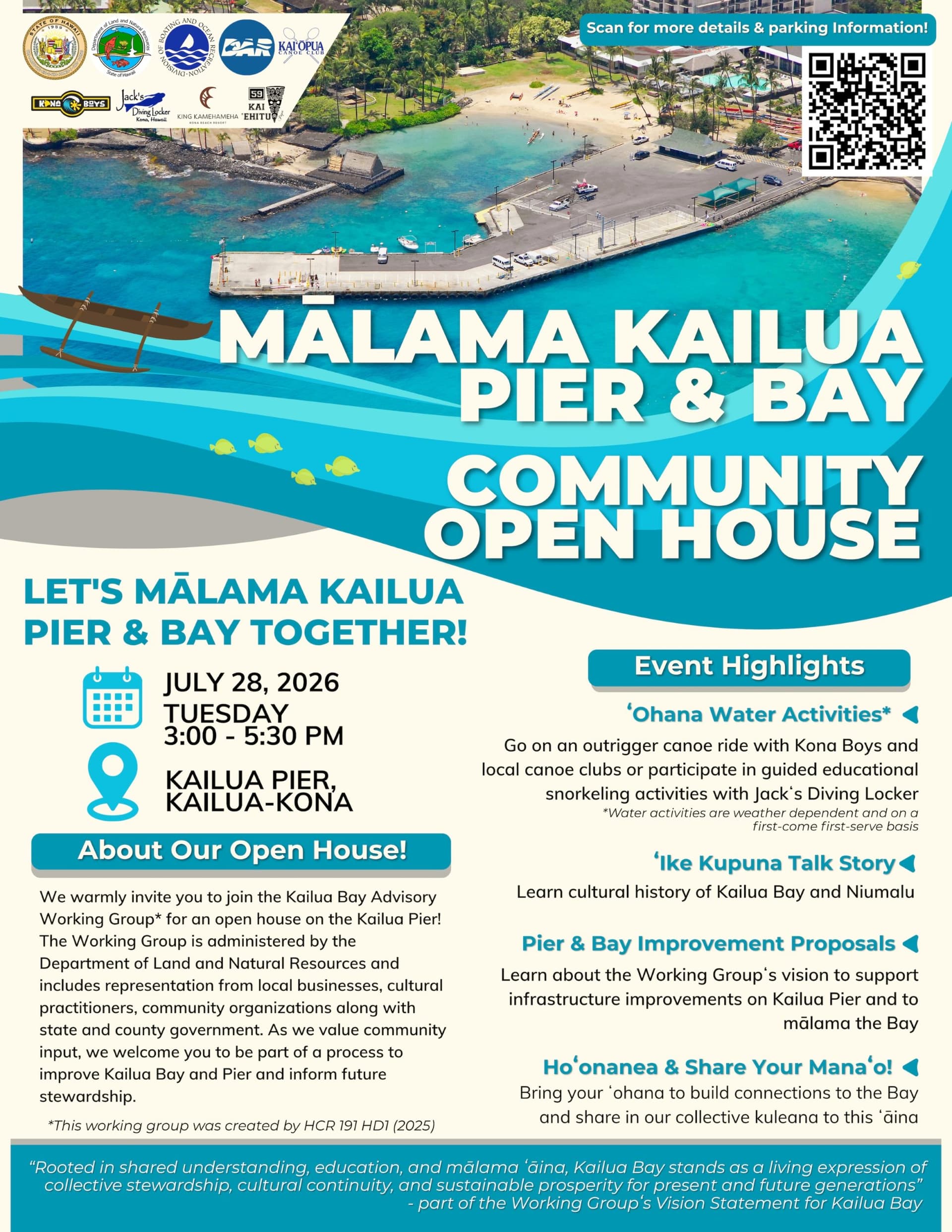
A recent Kailua Kona Pier sewage event shows how quickly the picture can change. The Clean Water Branch system logged an unconfirmed wastewater discharge at the pier on September 8, 2024, noted it as ongoing at 2:40 p.m., and later canceled the notice on September 11, 2024. After that spill, Hawaii County later said the water quality in Kailua Bay in Kona was safe for water activities on Thursday.
The broader monitoring system behind the page
The Clean Water Branch hub sits inside a larger statewide monitoring setup, not as a one-off alert page. The Hawaii Department of Health published a revised Hawaii Beach Monitoring Program on September 30, 2024, with earlier versions dated December 31, 2019, and May 22, 2017.
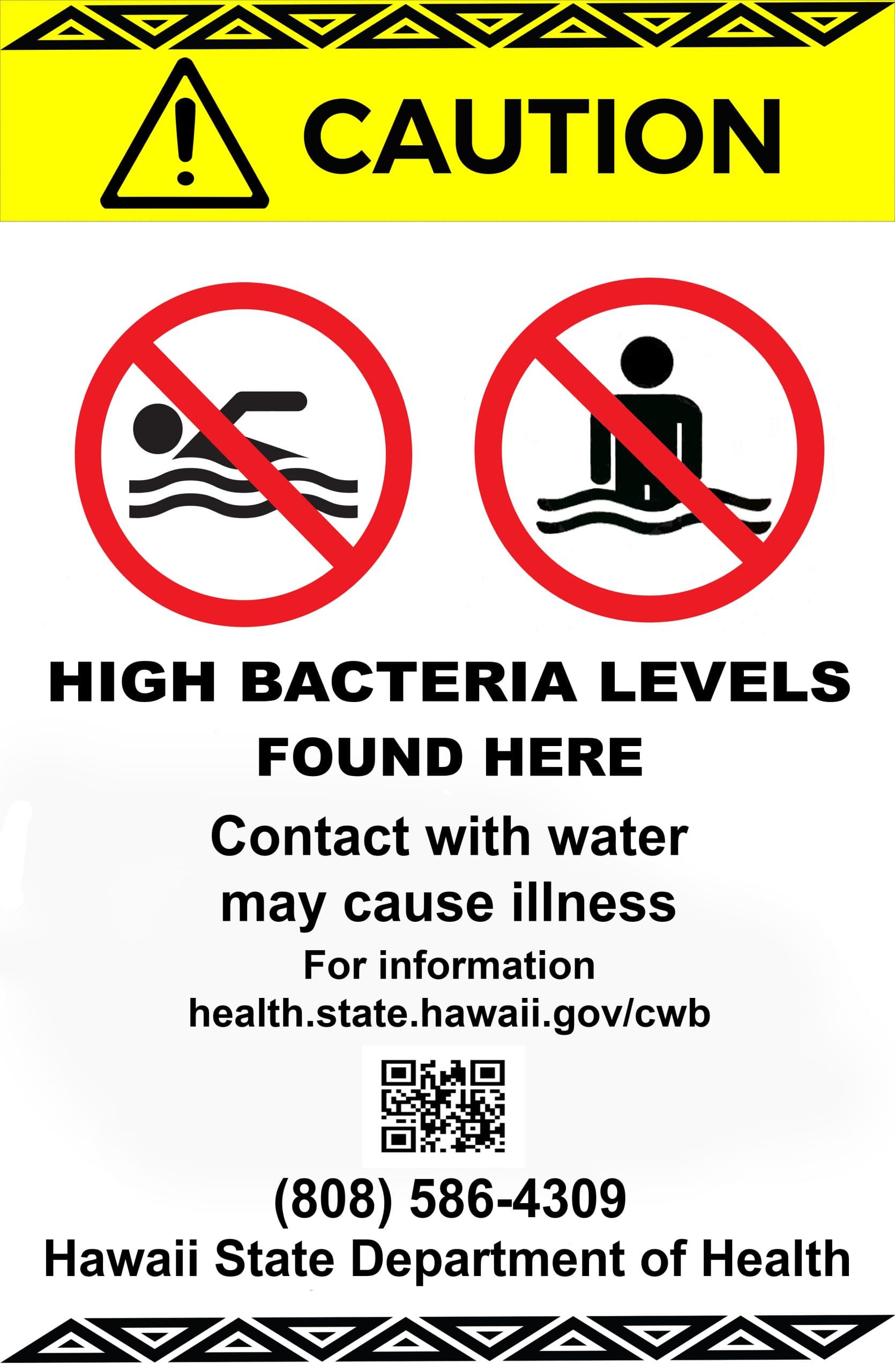
That broader framework also appears in the 2026 State of Hawaii Draft Water Quality Monitoring and Assessment Report, dated April 22, 2026. The draft is an integrated report to the U.S. Environmental Protection Agency and Congress under Clean Water Act sections 303(d) and 305(b), which places the Kona beach alerts inside a statewide compliance and monitoring structure.
Extra health context for swimmers, snorkelers, and divers
Vibrio bacteria are found in ocean and brackish waters, and most infections occur from late spring to early fall when water temperatures are higher. Large outbreaks are rare, but smaller local outbreaks do happen, which makes any advisory that points to contaminated or compromised water more than a visibility issue.
That risk does not mean you avoid the ocean every time conditions are warm. It does mean you should treat advisories, sewage alerts, and runoff warnings as a real health filter before extended time in the water. For freedivers and scuba divers who are in the ocean longer than a quick swim, the exposure window is bigger.
Why the local water-testing conversation keeps growing
Efforts to improve water testing at popular beaches were underway in May 2024. Surfrider Foundation’s Blue Water Task Force runs volunteer water-quality monitoring that provides information to the public, and its 2025 Clean Water Report shows the role these community efforts play in tracking beach conditions.
This article was produced by Prism’s automated news system from verified source data, official records, and press releases, then run through automated quality and moderation checks before publishing. The system is built and supervised by the people who set the standards it runs under. Read our full AI policy.
Did this article answer your question?