Why dive computers matter on Kona's morning two-tank charters
Kona’s two-tank mornings compress the whole nitrogen puzzle into five hours, and the dive computer is what keeps dive two honest.

On Kona’s 7:45 a.m. to 12:45 p.m. morning boat charter, the second descent starts with whatever nitrogen, fatigue, thermal stress, and current load you picked up on dive one. That is why dive computers matter on the Kona coast.
The Kona rhythm is what makes the computer useful
Kona Honu Divers lists a 7:45 a.m. to 12:45 p.m., 5-hour Kona Scuba Diving Morning 2 Tank Dive Charter. Kona Diving Company advertises a 5-hour 2-Tank Morning Charter, and Big Island Divers offers Kona local two-tank and advanced two-tank day dives. Across operators, the morning format is the same: a pair of dives that feed into each other, not one isolated reef drop.
In North Kona and around Kailua-Kona, many boat dives are reef-oriented and relatively shallow, so divers often come back aboard thinking the day is still wide open. The computer keeps the whole day in view. It tracks remaining no-decompression time, ascent speed, and the effect of the first dive on the second, which is far more useful than trying to treat each dive as if it happened in a vacuum.
Why tables fell out of the driver’s seat
Dive computers have replaced tables as the primary way recreational divers manage dive profiles. That change did not happen because tables became irrelevant on paper. It happened because real diving, especially repetitive diving, is not a single straight line. A morning on the Kona coast can include profile changes, different bottom times, and a surface interval that changes what your second dive can safely be.
A computer model represents an average diver, not you. That warning matters on a charter where the boat may head from one reef to another, where your first dive may be warmer or cooler than expected, and where your actual workload may be different from the model’s assumptions. A dive that looks well within limits on the screen can still leave a diver with symptoms of DCS, which is why the computer is a planning tool, not a guarantee.
The shift from tables to computers also has deep roots. The first modern, diver-carried electronic dive computer, the ORCA Industries EDGE, became commercially available in 1983. In Shearwater’s history of the device, the EDGE launched in January 1983 as the first commercially viable microprocessor-based dive computer. Divers on repetitive reef days across the Big Island of Hawaii now use descendants of that same type of tool.
What changes between dive one and dive two
The first dive sets the tone for the entire charter. If you come up near the edge of your no-decompression time, your options shrink on the second descent. If you spend too long against current, bounce around on the reef, or finish with a higher breathing rate than expected, the computer still sees all of that as part of your day’s loading.
Between dives, the decisions are practical and immediate:
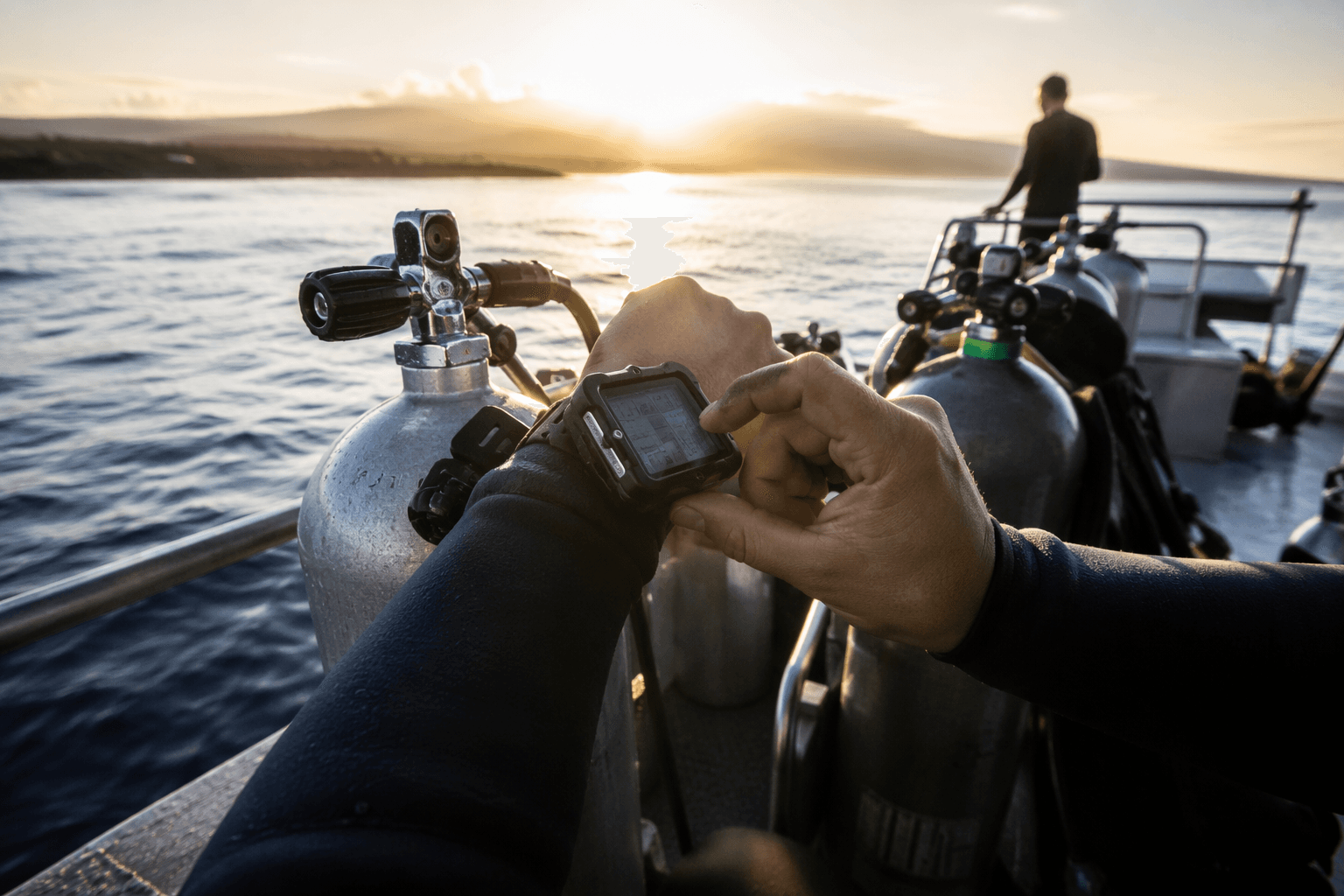
- Check your remaining no-decompression time before you leave the surface.
- Give the surface interval real value, not just clock time.
- Confirm the computer is in the correct mode and set for the gas you are actually breathing.
- Watch the ascent prompts on the way up, not just the bottom timer.
- Finish the safety stop cleanly before you think about the next descent.
DAN’s ascent-rate guidance includes common practices of 30 feet per minute and 60 feet per minute, with some divers following the rates recommended by their computer manufacturer. That is not a minor technicality on a Kona two-tank day. A controlled ascent on dive one preserves more flexibility for dive two, while a hurried rise narrows the margin for the rest of the charter.
Why surface interval planning is the real Kona skill
On a single scenic dive, planning is mostly about the bottom. On a two-tank morning, the surface interval is part of the dive plan. The interval is where the computer updates your residual nitrogen and tells you how much room you actually have left for the next reef run.
That is especially important when the second dive shifts depth, site, or current. A site that feels easy on the first drop may look different once your body is already carrying load from the first descent. Kona’s boat rhythm rewards divers who use the interval to reassess instead of assuming they can repeat the first profile exactly.
If dive one was deeper, longer, colder, or more effortful than expected, the computer should shape dive two, not optimism.
Rental gear in Kona makes computer use even more important
Visitors who rent gear in Kona should pay special attention to the computer because rental sets often add one more layer of adjustment. You may be changing from your usual buoyancy setup, moving between boat operators, or using a computer you do not know as well as your own. That makes pre-dive checks essential, especially gas setting, battery status, display layout, and ascent warnings.
Early worries about dive computers focused on repetitive diving and their ability to handle multiple deep dives. Those questions came from a real concern: once you start stacking dives, the math gets less forgiving. In DAN’s later validation discussion, the overall incidence of decompression sickness does not appear to have changed even as computers replaced tables in most recreational diving, which is a reminder that the device does not erase risk.
This article was produced by Prism’s automated news system from verified source data, official records, and press releases, then run through automated quality and moderation checks before publishing. The system is built and supervised by the people who set the standards it runs under. Read our full AI policy.
Did this article answer your question?