Kona blackwater diving reveals larval fish and pelagic life at night
Kona’s deep water, clear visibility, and seasoned operators make blackwater diving a rare classroom for first-timers, where larval fish and pelagic life rise out of the dark.
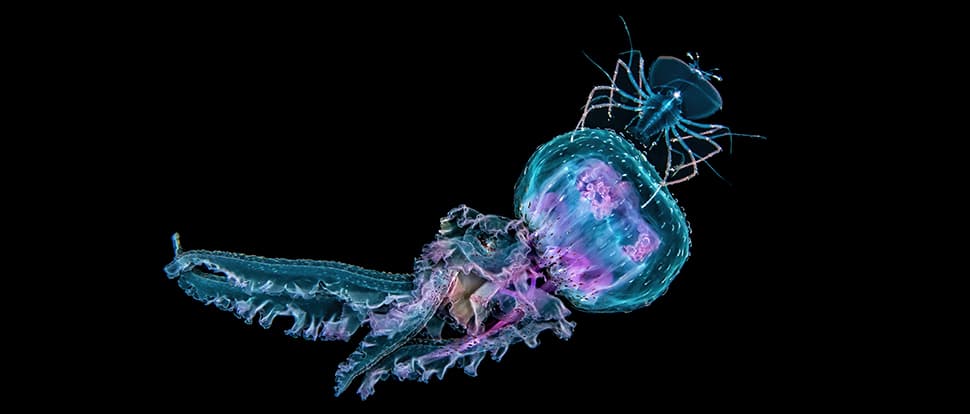
You drift or hang tethered over deep water, lit by strong beams, while the water column fills with larvae, jellies, siphonophores, and other pelagic life that rise from below as part of diel vertical migration. In Kona, the best blackwater dives feel less like a thrill ride than a night class held in the open ocean.
What blackwater diving really is
Blackwater diving is not a reef dive after dark. The setup is different from the start: instead of following a bottom, you stay suspended in open water, with light sources used to attract or reveal organisms that would otherwise stay invisible in the black between surface and seafloor. That difference changes everything, from buoyancy demands to how you read your surroundings.
Diel vertical migration is the nightly movement of organisms from deeper water toward the surface, and blackwater dives put you in the middle of that movement. Larval fish, crustaceans, cephalopods, jellies, and gelatinous zooplankton drift into view in a way reef dives never quite can.
Why Kona works so well
Kona is unusually well suited to this kind of dive because the deep ocean sits close to shore. Clear water, steep bathymetry, and fast access to offshore depth create the conditions that make blackwater diving both practical and compelling on Hawaii Island’s West Hawaii coast.
The area also has a research history. NOAA Fisheries maintains a dataset titled “Larval Billfish Data from Plankton Tows Conducted off the Kona Coast in West Hawai'i between 1997 and 2018.” The Kona Coast has long been a place where plankton and larval life have been sampled seriously.
A March 30, 2021 paper in Ichthyology & Herpetology by Ai Nonaka, Jeffrey W. Milisen, Bruce C. Mundy, and G. David Johnson framed blackwater diving as “an exciting window into the planktonic arena” and tied it directly to larval fish collection. It shows that the dive style can improve the quality of larval fish collections while also revealing organisms that are otherwise very hard to see and even harder to sample.
Why it suits a first-time blackwater diver
Kona is one of the strongest places to try a first blackwater dive because local operators have built the experience around it. Kona Honu Divers’ blackwater charter is one of its most sold-out dives, with trips that typically start between 5:15 p.m. and 6:15 p.m. and run until about 8:15 p.m. to 9:15 p.m., depending on sunset. The dive has a defined nighttime window without becoming an all-night expedition.
The dive profile also helps newer blackwater divers understand what they are signing up for. Instead of swimming a reef route, you stay in the water column, where buoyancy control and calm hands matter more than navigation around coral heads. The structure is simpler, but the mental workload is different, which is exactly why Kona has become a useful classroom for divers who want to learn blackwater without losing the support of experienced local crews.
What you are likely to see
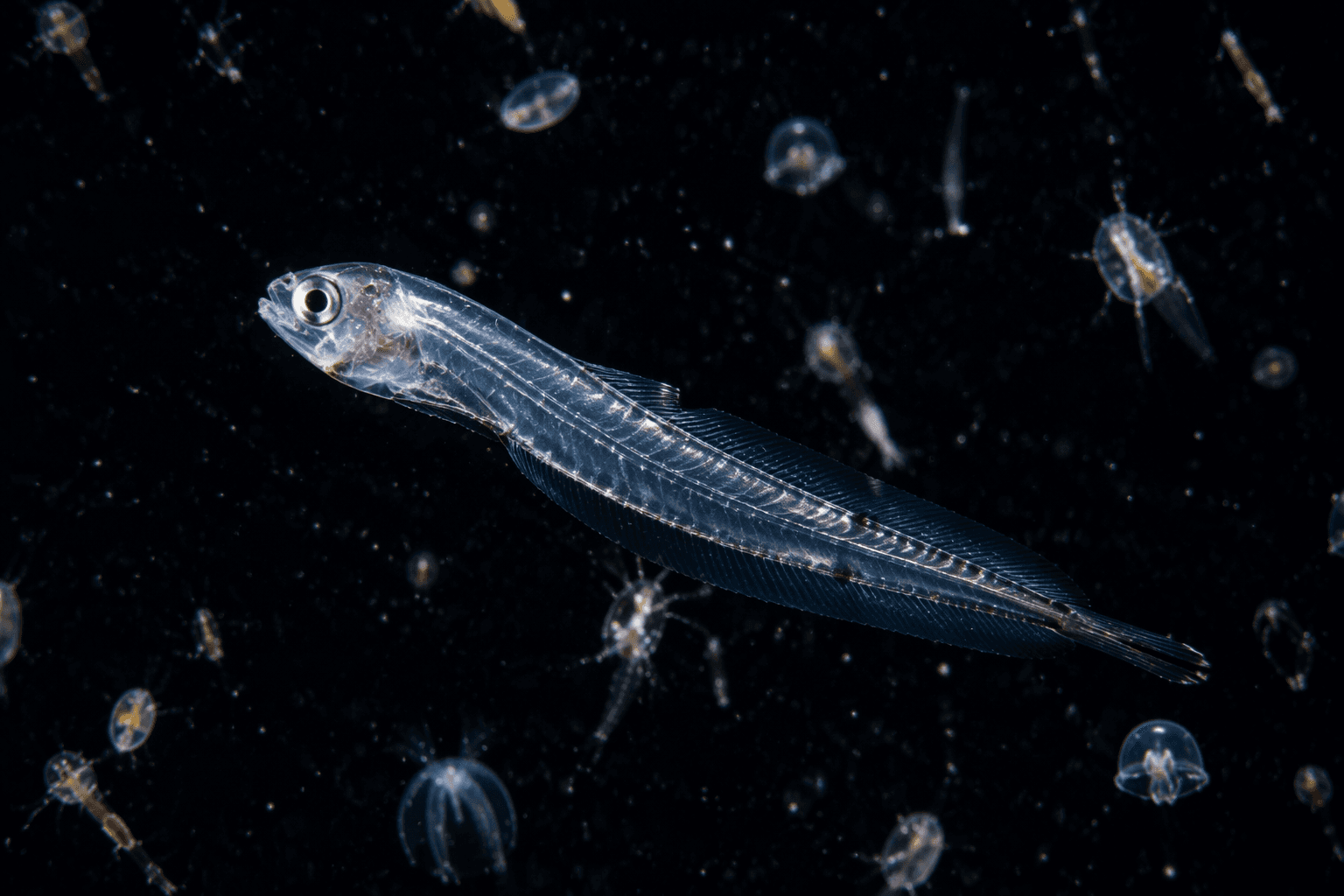
The best part of a Kona blackwater dive is not a single megafauna moment. It is the constant parade of small, strange life forms that rise from the dark and pass through your light beam. Larval fish are the centerpiece, but the encounters often include crustaceans, cephalopods, jellies, siphonophores, and other gelatinous planktonic animals.
That mix is what gives the dive its spacewalk feeling. Divers often describe blackwater as floating through outer space, and the comparison makes sense because there is no reef wall to anchor your sense of place. Everything happens in suspension, with translucent bodies and delicate appendages appearing, vanishing, then reappearing as the current and light shift.
How Kona operators frame the experience
Blackwater diving in Hawaii was gaining popularity by the time Scuba Diving magazine published its November 6, 2018 feature “Battle of the Blackwater Guides,” and the rise was visible in the way operators started branding it as a signature product. Jack’s Diving Locker promotes its Pelagic Magic Dive as “Jack’s Famous 1-Tank Black Water Dive Over the Abyss” and lists a Best Night Dive win in Scuba Diving magazine’s Readers Choice Awards.
Blackwater is a specialty dive, not a generic night excursion. The operation has to account for lighting, line handling, drift, separation in the dark, and the very particular rhythm of watching the open ocean for small organisms that can be missed if the dive is run casually.
What makes the dive learner-ready
A solid first blackwater dive in Kona depends on a few practical elements that keep the experience focused instead of chaotic:
- A weighted downline or drift setup that keeps the group oriented over deep water
- Primary and backup lights that let you read the water without overpowering your own view
- Redundant signaling so the team stays connected in darkness
- Excellent buoyancy control, because you are suspended in the water column rather than resting on a bottom
They separate a controlled introduction to pelagic night diving from a more improvisational drift in the dark. In Kona, the combination of local experience and ocean geography makes it possible to teach those skills while still giving divers a real look at the nightly migration happening above the abyss.
This article was produced by Prism’s automated news system from verified source data, official records, and press releases, then run through automated quality and moderation checks before publishing. The system is built and supervised by the people who set the standards it runs under. Read our full AI policy.
Did this article answer your question?