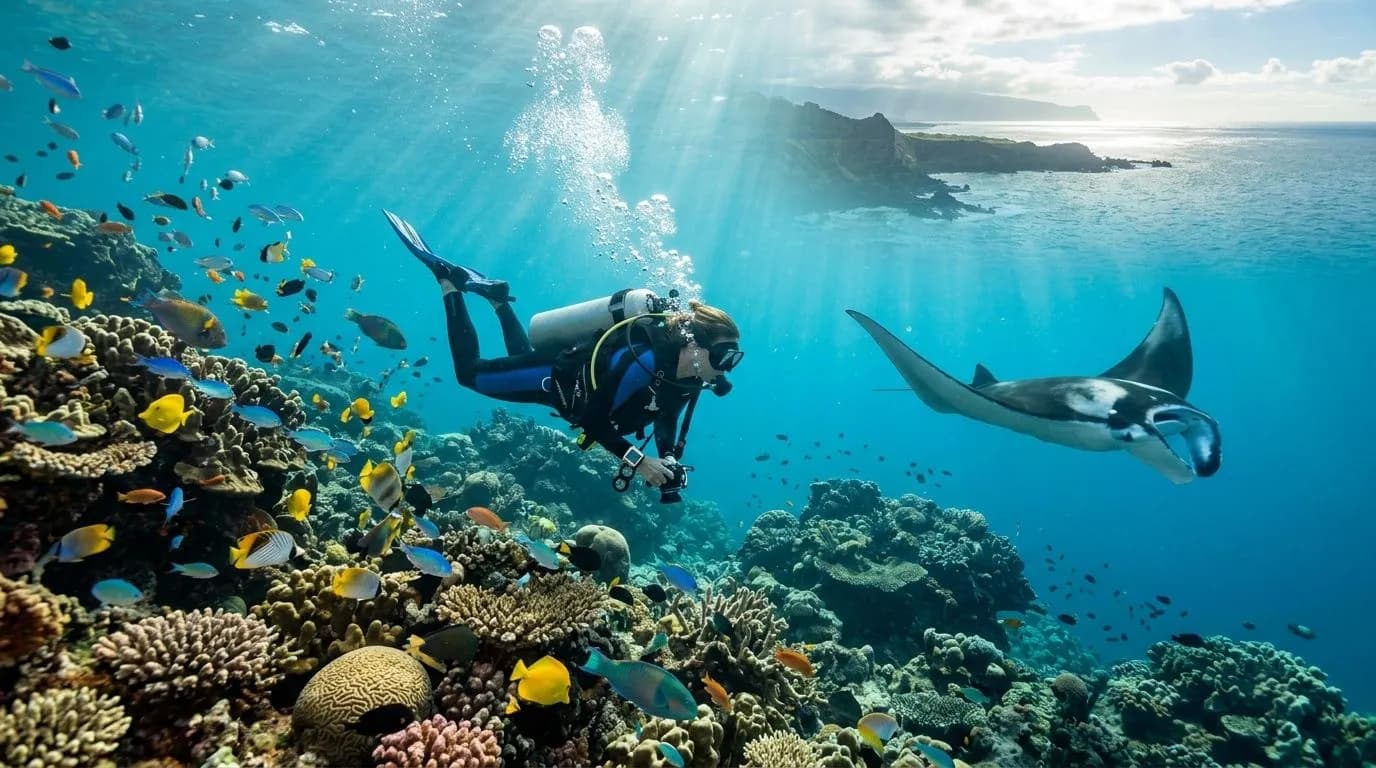
How to choose the right BCD for your diving style
The right BCD is the one that matches your dives, not the rack display. For Kona, that means fit, trim, packability, lift, and easy control.
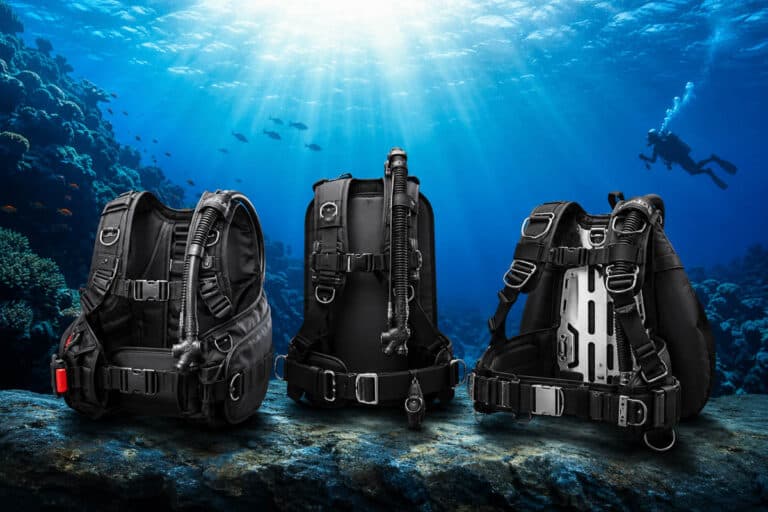
In Kona, boat dives, manta night dives, repeat vacation trips, and new-diver courses all ask different things from the same piece of kit. The easiest BCD mistake is choosing by price tag or style before you think about the dives you actually do.
Start with fit, not fashion
A buoyancy compensator affects comfort, trim, buoyancy control, weight integration, travel convenience, and confidence underwater. That makes fit the first decision, not an afterthought. If the harness shifts on the surface, rides up underwater, or makes it hard to reach your inflator and dump valves, the rest of the feature list stops mattering.
You want the BCD to sit close enough to the body that the tank feels stable, but not so tight that it fights your breathing or movement. That balance is especially important when you are carrying integrated weights or clip-on accessories, because poor distribution can pull you out of trim and make the dive feel busier than it should.
- Look for a stable tank band and back support that keep the cylinder from wobbling
- Check where the pockets sit when you are horizontal, not just standing on land
- Make sure dump-valve placement is reachable with either hand
- Try the inflator hose and oral inflation controls with gloves if you dive that way
Match the BCD to the dives you actually book
Kona diving is not one-size-fits-all. Big Island Divers offers Kona local two-tank, advanced two-tank, long-range two-tank, private charter, and manta ray night dive trips. Kona Honu Divers offers 2-tank local morning dives, premium advanced 2-tank dives, and manta ray night dives. Many local divers are doing repeated boat entries, changing conditions, and night dives, not just a single shallow shore splash.
For that kind of diving, a BCD that packs cleanly, dries quickly, and stays predictable in the water usually beats something bulky and overbuilt. If you fly in for tropical trips, travel-oriented models earn their place by saving weight and space. If you are diving locally and often, durability, easy rinse-out, and reliable weight integration may matter more than shaving a few ounces.
Jacket, back-inflate, or backplate-and-wing
Jacket-style BCDs still make sense for a lot of divers because they feel familiar and intuitive. That can be a real advantage if you are fresh out of an open-water class and still building muscle memory for buoyancy checks, surface control, and routine gear handling.
Back-inflate and backplate-and-wing systems appeal to divers who want better horizontal trim or more customization. SCUBAPRO says its back-inflated design helps position divers optimally at depth, keeping them horizontal and making forward motion easier. That is useful if you care about streamlined swimming, steady photo framing, or just hanging flat over a reef without feeling pitched forward.
The tradeoff is simplicity. A jacket may be easier to learn on, while a more modular setup can reward a diver who already knows how they like their weight distribution, accessory placement, and harness fit to work.
New diver comfort still depends on training
A BCD can support good habits, but it does not replace them. SCUBAPRO’s manuals warn that improper use of a buoyancy compensator, or any diving equipment, could result in serious injury or death, and that proper training in swimming, scuba diving, buoyancy control, and emergency buoyancy skills is required to use a BC safely. EDGE and HOG Scuba give the same warning in their manuals.
SDI’s open-water standards say graduates may conduct open-water dives in conditions similar to their training to a maximum depth of 18 metres, 60 feet. For newer divers, the best choice is usually the one that feels simple, stable, and easy to understand when you are learning the basics.
What is easy to overbuy
Some features look impressive on the sales floor but add little to the dives most Kona visitors actually do. Extra pockets, heavy lift capacity, and layers of hardware can be more gear than you need if your diving is mostly warm-water boat work and vacation travel.
The same goes for too much customization too soon. A diver still learning trim and buoyancy control usually benefits more from a clean layout, sensible weight placement, and a comfortable harness than from a complicated rig loaded with options that never leave the boat.
- Do not pay extra for lift you will never use
- Do not choose bulk if you fly to dive destinations often
- Do not let style outrank fit and tank stability
- Do not buy complexity before you know your trim habits
A better way to choose
The modern BCD’s design dates to 1961, and BCDs transformed diving almost overnight. Today’s market still includes different answers to the same problem: how to stay comfortable, stable, and in control underwater.
For Kona divers, pick the BCD that matches your body, your training, and the dives you book most often.
This article was produced by Prism’s automated news system from verified source data, official records, and press releases, then run through automated quality and moderation checks before publishing. The system is built and supervised by the people who set the standards it runs under. Read our full AI policy.
Did this article answer your question?