Kona manta ray night dives depend on careful, respectful viewing
Kona’s manta dive only works when divers hold steady, protect the animals’ mucus layer, and let guides run the light station that draws mantas in.
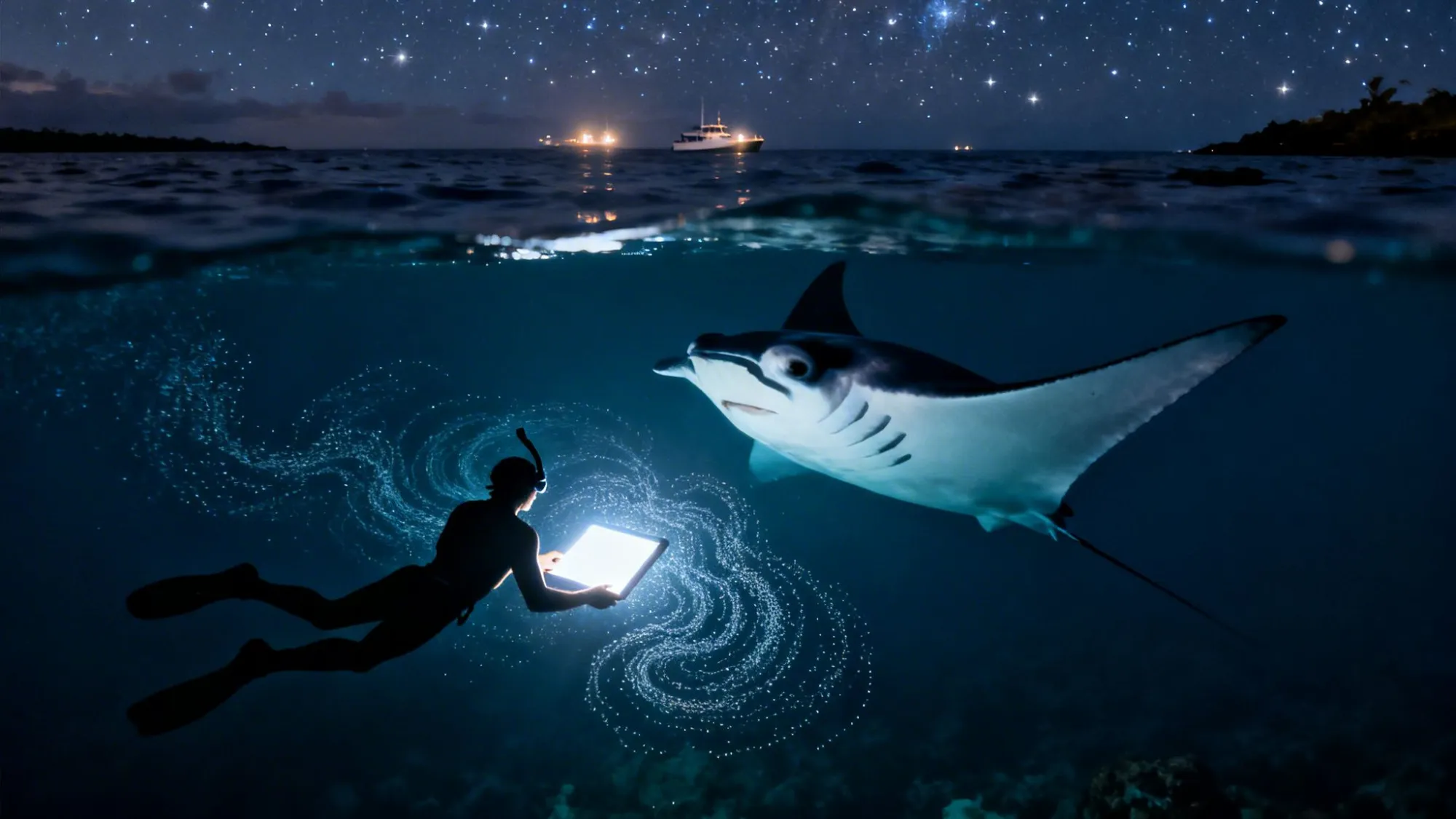
At Kona’s manta ray night dive, guides build a fixed light station, plankton gathers, and the mantas arrive to feed in a predictable lane. Break that pattern with bad buoyancy, chasing, or a stray hand, and the encounter turns from clean wildlife viewing into stress for the animals and chaos for the crew.
How the night dive works
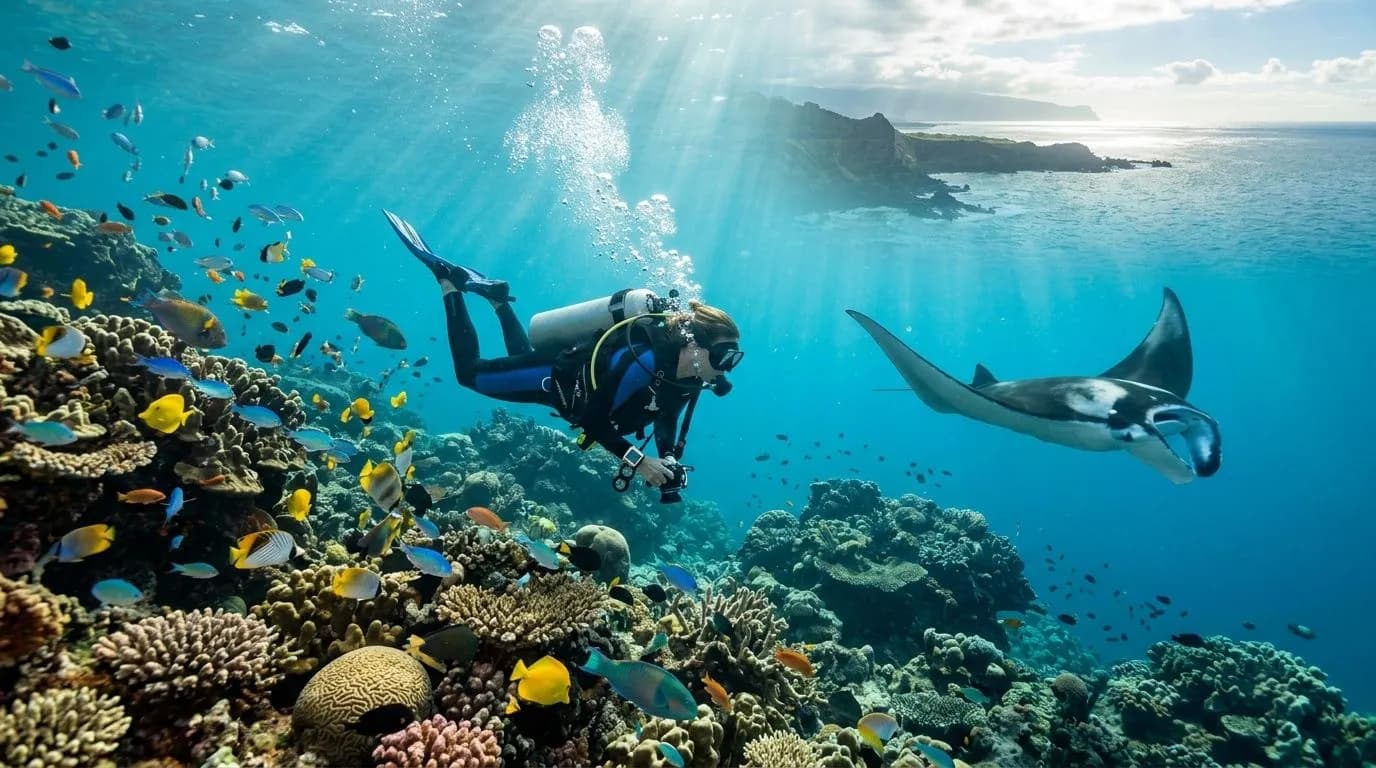
Lights attract plankton into the water column, the mantas follow the buffet, and divers stay low enough that the animals can glide overhead without fighting the current of bodies and bubbles. Manta Ray Advocates Hawaii has been compiling a database of sightings along the West side of the Big Island since 1998, and that long record helps explain why Kona’s manta run is so famous.
Researchers linked to Manta Ray Advocates Hawaii and the Manta Pacific Research Foundation have tied more than 450 individually identified reef manta rays to the area, the largest documented resident population in the Hawaiian Islands. The familiar site names, Keauhou Bay, Manta Village, Manta Heaven, and Manta Point, all sit inside that same living system, where the encounter works only if the water stays calm and organized.
The etiquette that keeps the encounter intact
Hawaii Ocean Watch’s manta guidance and NOAA Fisheries’ marine wildlife viewing rules treat the animals as wild, protected wildlife, not as props for a close encounter.
- Do keep excellent buoyancy and stay low and stable in the water column. If you drift upward into the space where the mantas are maneuvering, you force them to change course and you make the scene more crowded for everyone.
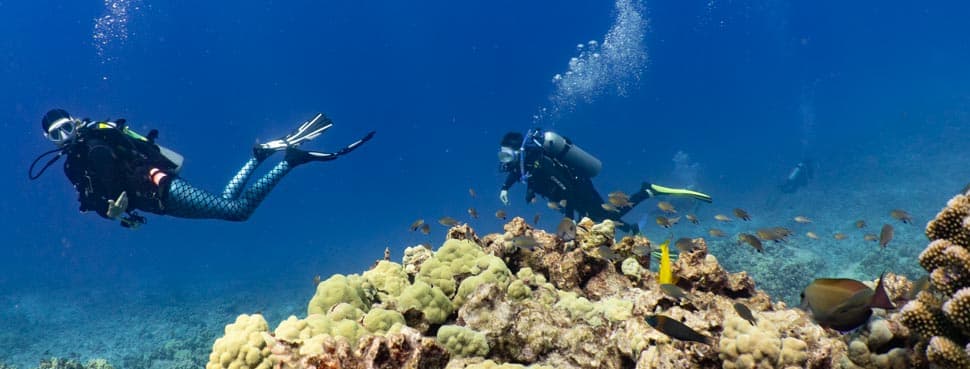
- Do stay over sand when the site layout allows it, and keep your fins off the bottom. Some Kona operator guidance places the viewing depth around 35 to 40 feet and steers divers away from live coral, where a misplaced kick can stir sediment and damage the reef.
- Do follow the guide’s light and placement instructions exactly. The guide is not decorating the dive, the guide is managing the light station that makes the feeding pattern work, and improvisation by one diver can throw off the whole group.
- Do not touch the manta rays. Touching can damage the protective mucus layer on their skin, which is part of their defense against infection and irritation.
- Do not free-dive toward them or swim after them. Chasing changes how they move and feed, turning a feeding pass into a stress response.
- Do not kick up sand or surge through the middle of the group. In a crowded site, one careless fin kick can reduce visibility, disrupt the mantas, and force the crew to spend the rest of the dive correcting avoidable mistakes.
Why the rules are getting more formal
Kona’s manta scene has been large enough to demand structure for years. A 2009 voluntary standard for recreational wildlife interactions in West Hawaii, prepared with assistance from the Coral Reef Alliance, framed the issue as one of environmental performance and operational safety, not just individual manners. By 2022, the Hawaii Department of Land and Natural Resources, through its Division of Aquatic Resources and Department of Boating and Ocean Recreation, proposed first-of-their-kind rules for manta ray viewing in Hawaii.
The proposals targeted the parts of the experience that create pressure: too many boats in one feeding zone, too many visitors in the water, and too little control over spacing. The proposals included limiting boats and visitors at feeding hotspots and requiring a guide-to-diver ratio, which would directly affect how operators stage the dive and how much room the animals have to feed.
Community input continued into 2023, and local watchdogs have said for years that the Kona manta rays are a precious natural resource and that parts of the industry are already over capacity. NOAA Fisheries keeps the wildlife-protection lens in view, while Hawaii Ocean Watch stresses respectful, non-invasive interaction.
What a good Kona briefing should sound like
If you book with a local operator, the briefing should feel less like hype and more like choreography. You should hear exactly where to hold position, where the sand patch is, what to do with your hands, and when to stop moving and let the mantas come to you. That kind of briefing is what protects the reef, preserves visibility, and keeps the guide in control of the light station.
Outrigger estimated in 2024 that 80,000 people snorkel and dive with Hawaii manta rays each year.
This article was produced by Prism’s automated news system from verified source data, official records, and press releases, then run through automated quality and moderation checks before publishing. The system is built and supervised by the people who set the standards it runs under. Read our full AI policy.
Did this article answer your question?