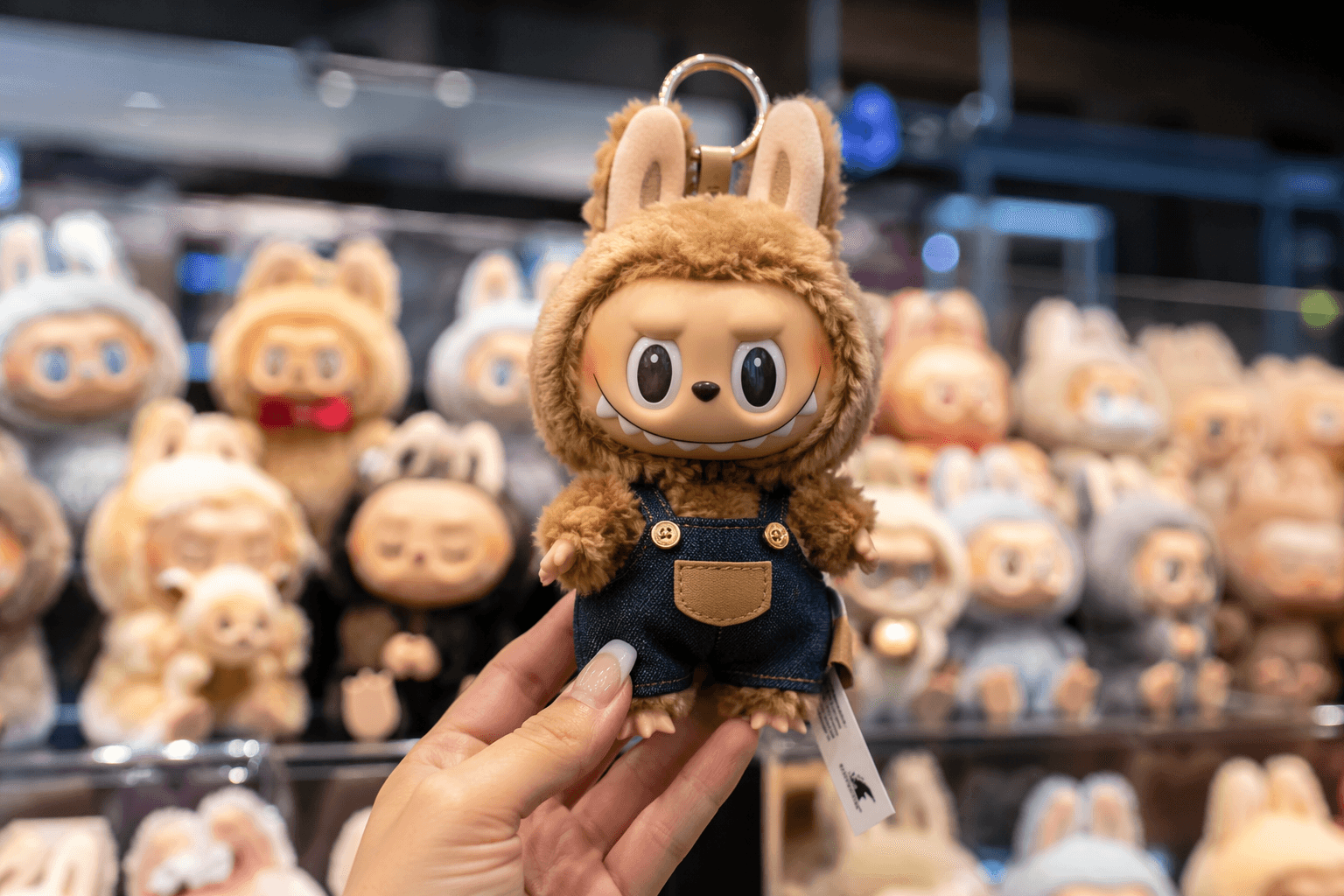
Forced Labor Allegations Target Factory Behind Viral Labubu Dolls
China Labor Watch filed forced-labor complaints with U.S. and German regulators over Shunjia Toys, the Jiangxi factory that exclusively makes Labubu for Pop Mart.

China Labor Watch submitted complaints with U.S. Customs and Border Protection and Germany's Federal Office for Economic Affairs and Export Control, alleging worker exploitation at Shunjia Toys, a factory in Jiangxi province that the New York-based nonprofit says exclusively manufactures Labubu dolls for Pop Mart.
The investigation, conducted through 51 in-person worker interviews and document review between summer and fall 2025, found that workers at the Shunjia Toys Xinfeng County factory reported overtime exceeding legal limits, six-day work weeks, insufficient daily rest, extensive misuse of labor dispatch arrangements, and opaque or blank labor contracts. Employees were reportedly working more than 100 hours of overtime per month, while Chinese labor law sets a strict limit of 36 hours.
At the time of the investigation, the factory employed more than 4,500 workers and is a key supplier in Pop Mart's latest Labubu series. While no child labor was identified, CLW found that workers aged 16 were employed as long-term production workers under the same conditions as adults, without the special protections required under Chinese law. Sections of contracts relating to working hours, duties, and contract terms were left completely blank; employees were told not to read the contracts, only to sign and date them.
In January, China Labor Watch wrote to Germany's BAFA under the Supply Chain Due Diligence Act, flagging potential forced labor issues in the Labubu supply chain. The submission was rejected within 10 days, said Li Qiang, CLW's founder and executive director, likely because Pop Mart has fewer than 1,000 employees in Germany and falls outside the law's current scope. The nonprofit tried again in February, this time focusing on three distributors in Germany that sell the dolls. After Li Qiang purchased a U.S.-sold Labubu labeled "Ganzhou 006-3," matching a code CLW had spotted during its Shunjia Toys investigation, he also wrote to CBP, which under Section 307 of the 1930 Tariff Act prohibits importing products manufactured wholly or in part by forced labor.
Shunjia Toys operates four packaging workshops with 10 to 15 production lines each, producing a conservative daily output of 182,000 toys under normal conditions, according to Li Qiang. With roughly 300 working days annually, that scales to 54.6 million units, dwarfing the factory's disclosed annual capacity of 12 million toys. Pop Mart's "The Monsters" series, of which Labubu is a flagship product, generated USD 670 million (RMB 4.81 billion), or 34.7 percent of the brand's total revenue, in the third quarter of 2025 alone.
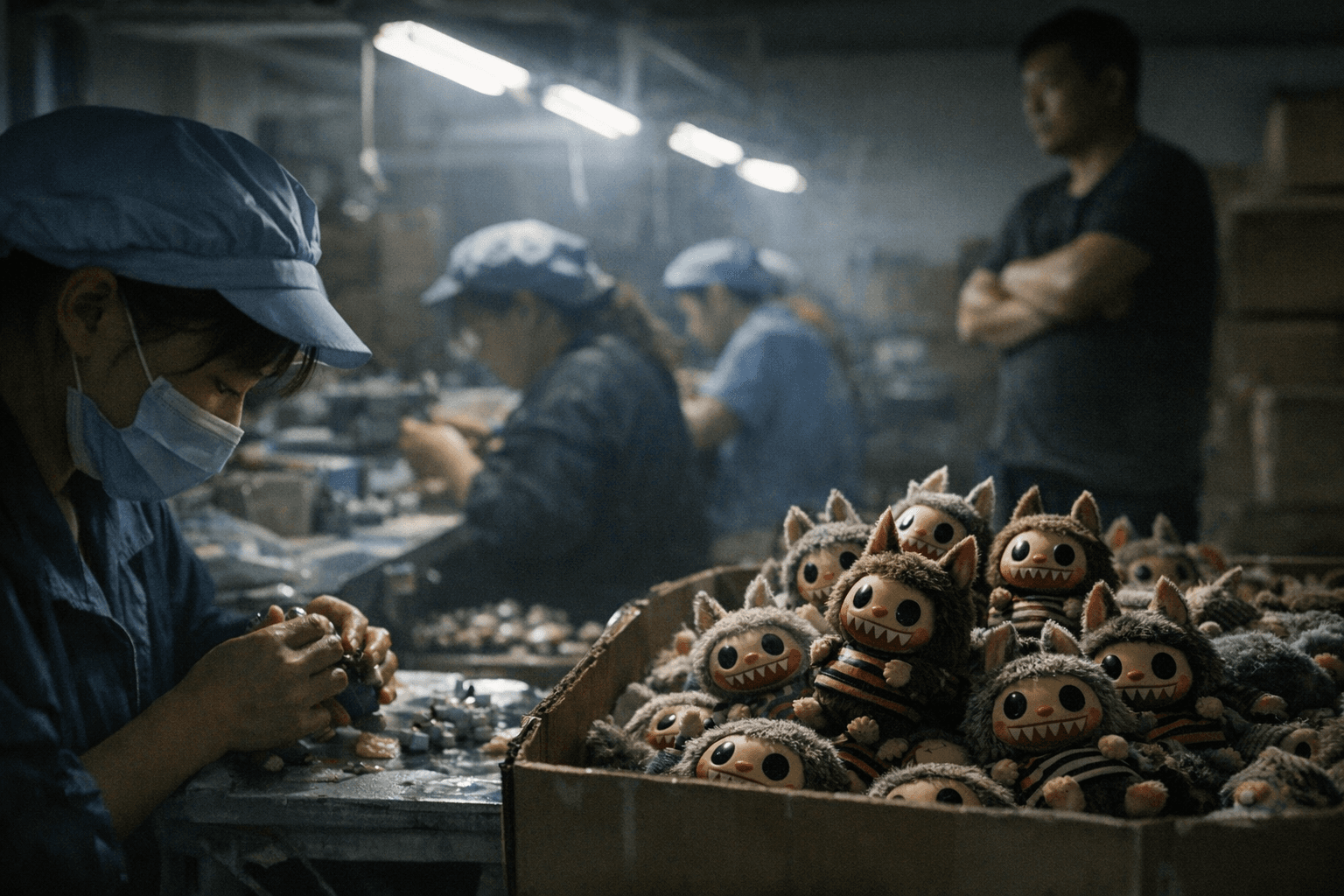
As an OEM manufacturer, Shunjia Toys produces Labubu toys under commercial terms set by Pop Mart, and CLW emphasizes that labor conditions at OEM facilities are closely linked to brand sourcing practices, production timelines, and pricing expectations. Using conservative assumptions, CLW estimates that the direct labor cost per Labubu toy is approximately USD 0.70 (RMB 4.95), underscoring the extreme cost pressures placed on frontline workers in Pop Mart's supply chain.
Li Qiang stated that "existing supply-chain oversight mechanisms do not appear sufficient to identify and prevent these labour issues in a timely and effective manner," and called on Pop Mart to "establish accessible grievance and communication mechanisms for workers." CLW is calling on Pop Mart, as the brand owner and primary beneficiary of Labubu's commercial success, to take immediate action to remediate labor violations within its supply chain, compensate affected workers, and ensure that future production complies with both Chinese labor law and internationally recognized labor standards.
Pop Mart denied the allegations, saying it takes worker welfare and safety at its manufacturing partners seriously and conducts regular, standardized audits of its OEM supply chain partners, including annual independent third-party audits carried out by internationally recognized professional audit firms. Shunjia Toys could not be reached for comment.
Shunjia Toys also operates within a multi-layered subcontracting system, outsourcing portions of Pop Mart's orders to smaller nearby factories such as Jiachang Toy Factory, extending its labor practices across the surrounding manufacturing network. With regulators in two countries now holding CLW complaints and a February follow-up targeting German distributors still pending, the scrutiny on the blind-box supply chain is far from over.
This article was produced by Prism’s automated news system from verified source data, official records, and press releases, then run through automated quality and moderation checks before publishing. The system is built and supervised by the people who set the standards it runs under. Read our full AI policy.
Did this article answer your question?