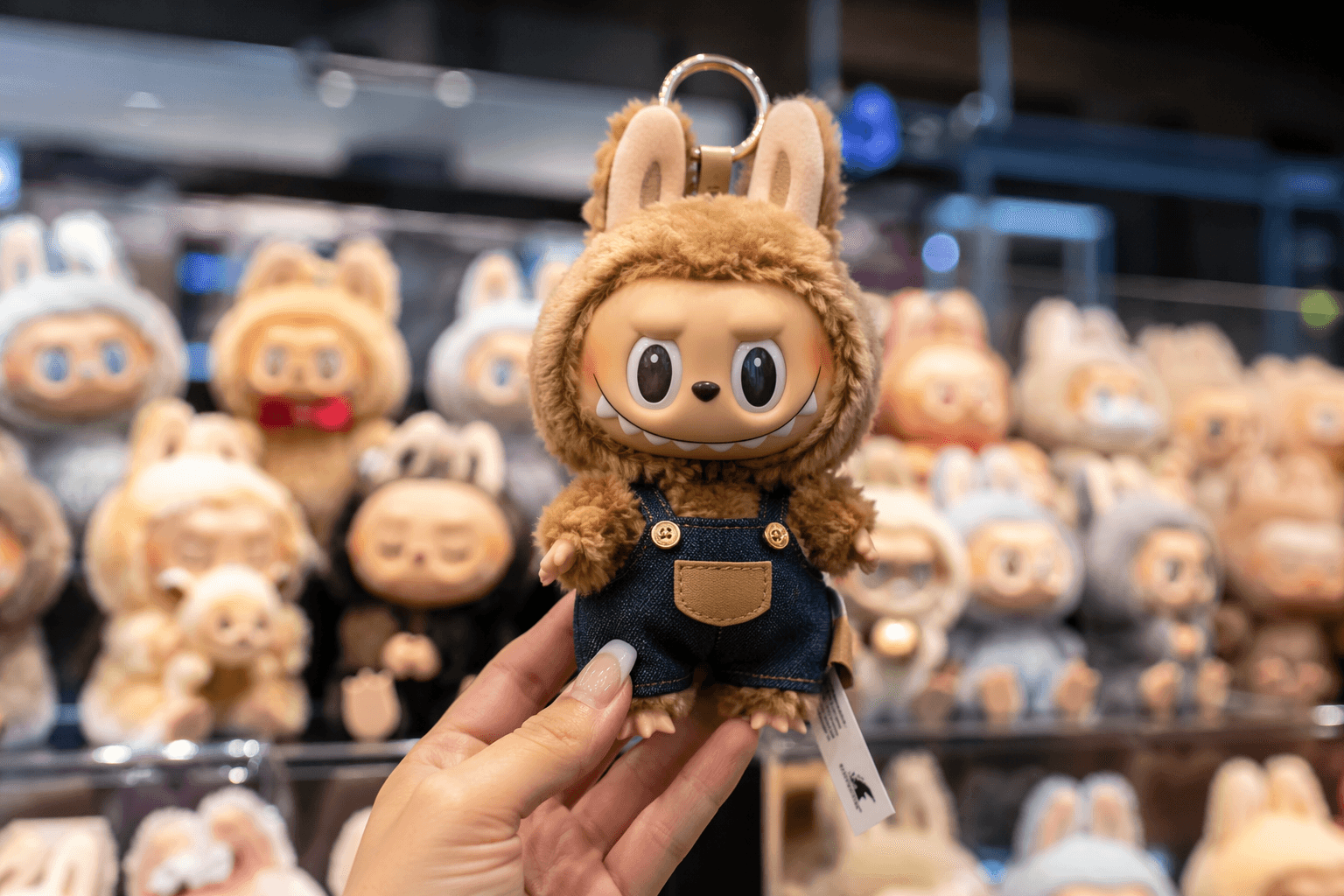
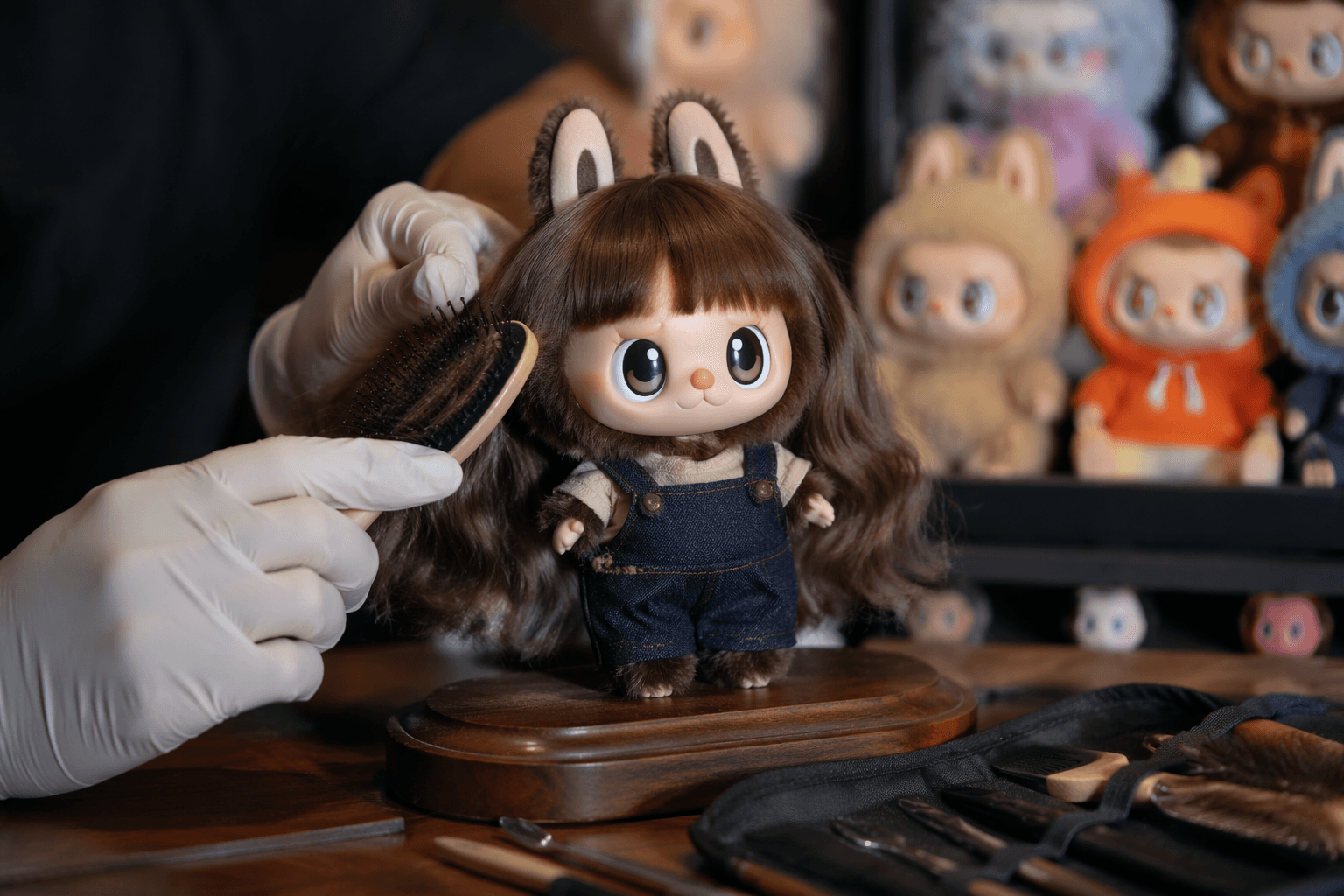
Labubu care tips help collectors clean plush and vinyl safely
One bad wash can flatten plush, cloud vinyl, and crush a box fast. The safest Labubu fixes are slow ones: dust gently, spot-clean, and store for resale before damage starts.
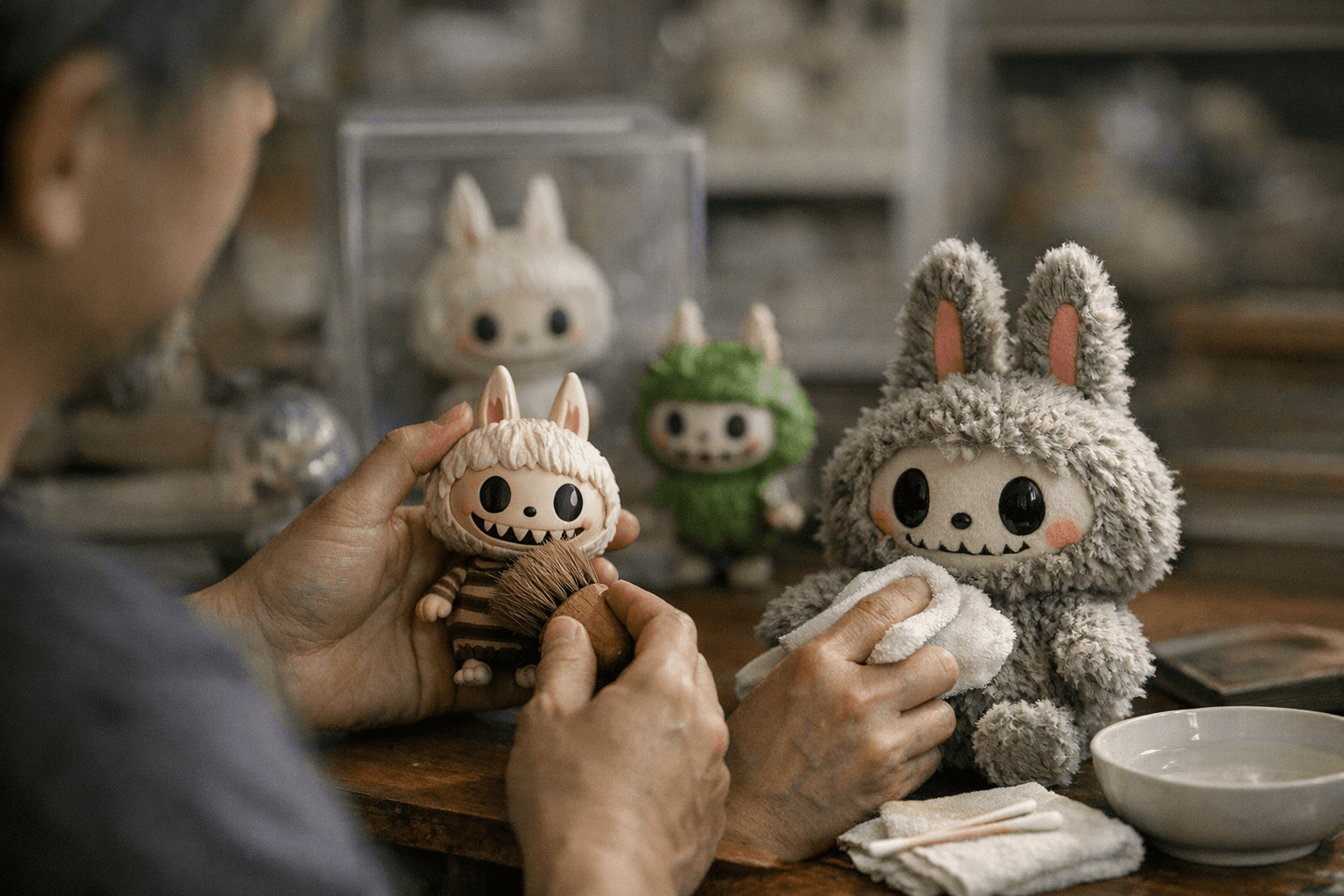
The fastest way to hurt a Labubu is to overclean it
The damage that stings collectors most is usually self-inflicted: a soaked plush that dries lumpy, a vinyl face rubbed until the print looks dull, or a crushed box that kills resale appeal even when the figure itself is fine. With Labubu, that risk is higher than it looks because many editions mix soft and hard materials on the same piece, and POP MART’s product pages show combinations like PVC, polyester, cotton, ABS, acrylic, wool, viscose fiber, nylon, and iron wire. That means one figure can need two different cleaning strategies at once, and the wrong one can leave permanent marks.
Labubu’s popularity has made care part of the hobby itself. POP MART presents Labubu as the most prominent character in THE MONSTERS line, a world the company says was created by Hong Kong artist Kasing Lung in 2015 and inspired by Nordic mythology. POP MART also describes Labubu as mischievous but kind-hearted, and its U.S. plush line is aimed at fans and cuddle enthusiasts. That mix of display piece and soft toy is exactly why collectors need to think like preservers, not just owners.
What you can safely clean at home
For routine dust, start with the least aggressive tool you own. On vinyl, hard shells, and other smooth surfaces, a soft dry microfiber cloth is the safest first move. On plush, use a lint roller or a gentle fabric brush to lift surface dust before it settles deep into the fibers. This is the kind of maintenance that keeps a shelf piece looking fresh without changing its feel.
If the piece has light grime, stop there and spot-clean only the affected area. Use a cloth with a small amount of water, work slowly, and let the figure air-dry naturally. The key is restraint: you are lifting the stain, not bathing the toy. For plush sections, once the area is dry, reshape the hair, ears, or trim by hand so they dry in a natural form instead of staying flattened.
A careful home clean is also the best time to check seams, printed details, and small accessories. If a loose thread is hanging, trim it cleanly rather than pulling. If an accessory has bent slightly, warm fingers and gentle pressure are enough in many cases. The point is to preserve the original finish, not force the figure back into shape.
What makes damage worse
Soaking is where a lot of collectors go wrong. Waterlogged plush can distort texture, weaken glue, and leave visible rings or uneven color on printed details. Strong detergent is just as risky, especially on mixed-material pieces, because it can strip surface finishes and create a cleaner look in one spot and a faded patch in another. Aggressive scrubbing is another common mistake; once the nap on plush is mashed down or a vinyl print is scuffed, that worn spot tends to stay noticeable.
Heat is a bad shortcut too. If an ear, tuft, or collar is out of shape, do not blast it with a hair dryer and hope for the best. Let the material dry on its own, then coax the form back by hand. That slower approach protects both the fabric and any glued or printed areas that can warp under heat.
This matters even more because POP MART repeatedly labels many Labubu items as not suitable for persons under 15. The products are collectible objects with specific condition sensitivities, not casual throw toys, and the company’s mixed-material builds make rough cleaning a bigger gamble than it would be on a simpler plush.
Display storage is preservation, not housekeeping
If you care about resale value, start protecting it before the figure ever gets dirty. Keep Labubu away from sunlight, moisture, smoke, and repeated compression inside bags or crowded boxes. Sun can fade color, moisture can affect fabrics and packaging, smoke clings to plush and cardboard, and compression can permanently flatten shapes that were meant to stay fluffy.
For display, dust covers and clear cases do more than make a shelf look neat. They reduce the amount of cleaning you need later, and they protect delicate textures from handling damage. For storage, tissue-wrapped bins are a good middle ground when you are not keeping a piece out on display. They help preserve the toy and the box together, which is exactly how serious collectors think about condition.
Packaging deserves the same discipline as the figure itself. Store the box upright and do not stack heavy items on top of it. A crisp box can matter as much as the figure for limited runs or special editions, because traders and buyers notice corners, creases, and shelf wear immediately. If the box is damaged, the market often treats the piece as less desirable even when the figure inside is pristine.
Why the box and unboxing matter so much
POP MART’s own product policies underline how much condition matters. On a MEGA Labubu 1000% product page, the company says no returns or exchanges are offered without reason and advises recording an unboxing video. That tells you everything you need to know about how seriously collectors and sellers treat condition, completeness, and proof of what arrived in the box.
It also explains why packaging care is not optional. If a figure is a special release, the box may be part of the object’s collectible value, not just a shipping shell. Once the corners bend or the insert is torn, that loss is hard to recover, even if the figure itself remains spotless.
When a home repair is worth it, and when to stop
Some damage is small enough to manage at home. A loose thread can be trimmed. A scuffed surface may look better after a careful clean. A slightly bent piece can often be reshaped by hand. Those are the repairs that make sense because they improve appearance without changing the figure’s structure.
Stop when the damage is structural. Torn seams, major vinyl cracking, and peeling printed details are the warning signs that a repair attempt could make the problem worse. At that point, the safest move is to leave it alone rather than overcorrecting and reducing the figure’s value further. A clumsy fix can be more damaging than the original flaw.
Why Labubu care has become its own collector skill
The reason all of this matters is simple: Labubu is no longer a niche shelf toy sitting in one market. POP MART says it operates in more than 23 countries and regions, with 350-plus offline stores and 2,000-plus Roboshops, and its U.S. site showed 129 Labubu-related results on the store at one point. The character has gone from cute to highly trackable, and that means condition, packaging, and handling now carry real weight.
That scale also explains why collectors trade care tips so obsessively. A clean, well-stored Labubu is easier to document, easier to trade, and easier to keep desirable. The shelf version and the resale version are often the same object, and the difference comes down to whether you treated plush, vinyl, and packaging like one collectible system instead of three separate things.
This article was produced by Prism’s automated news system from verified source data, official records, and press releases, then run through automated quality and moderation checks before publishing. The system is built and supervised by the people who set the standards it runs under. Read our full AI policy.
Did this article answer your question?