Chinese Labubu collectors weigh U.S. exclusives, shipping costs, and resale premiums
U.S.-only Labubu drops are turning Chinese collecting into a shipping calculation. The real question is whether the exclusivity premium beats local resale, customs risk, and waiting.
A U.S.-only drop changes the price of entry
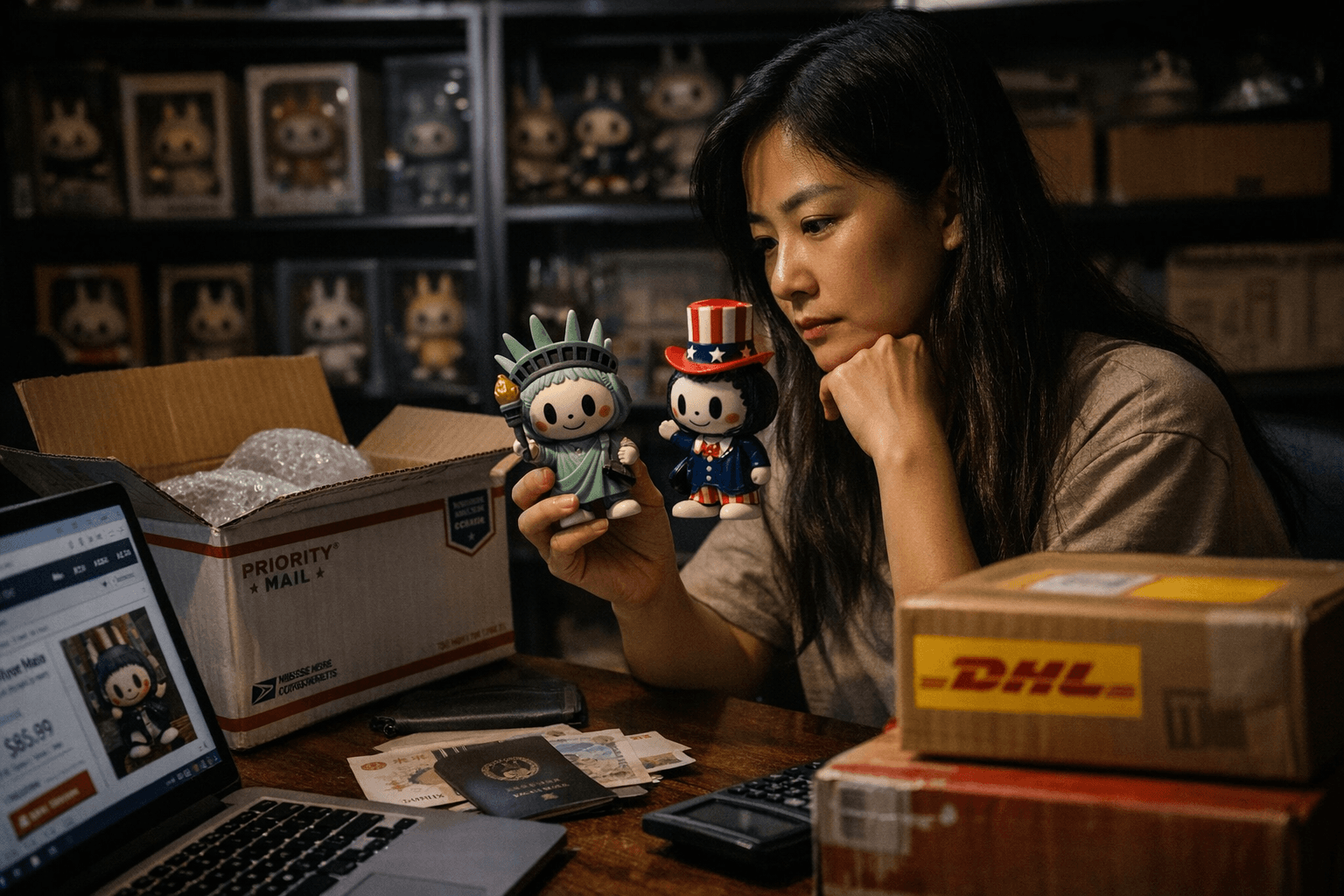
A U.S.-exclusive Labubu vinyl plush does not just create hype, it creates arithmetic. In China, collectors are already watching local resale prices climb on marketplaces while comparing them with direct-buy options from American retailers, and that split is pushing the hunt into a new phase where shipping math matters as much as taste.
The key question is simple: if the figure is only officially available in the United States, is it smarter to buy it there, forward it across the Pacific, and pay the logistics bill, or to accept the premium already baked into the secondary market at home? For a lot of Labubu fans, that choice now defines the chase.
Why Labubu scarcity keeps intensifying
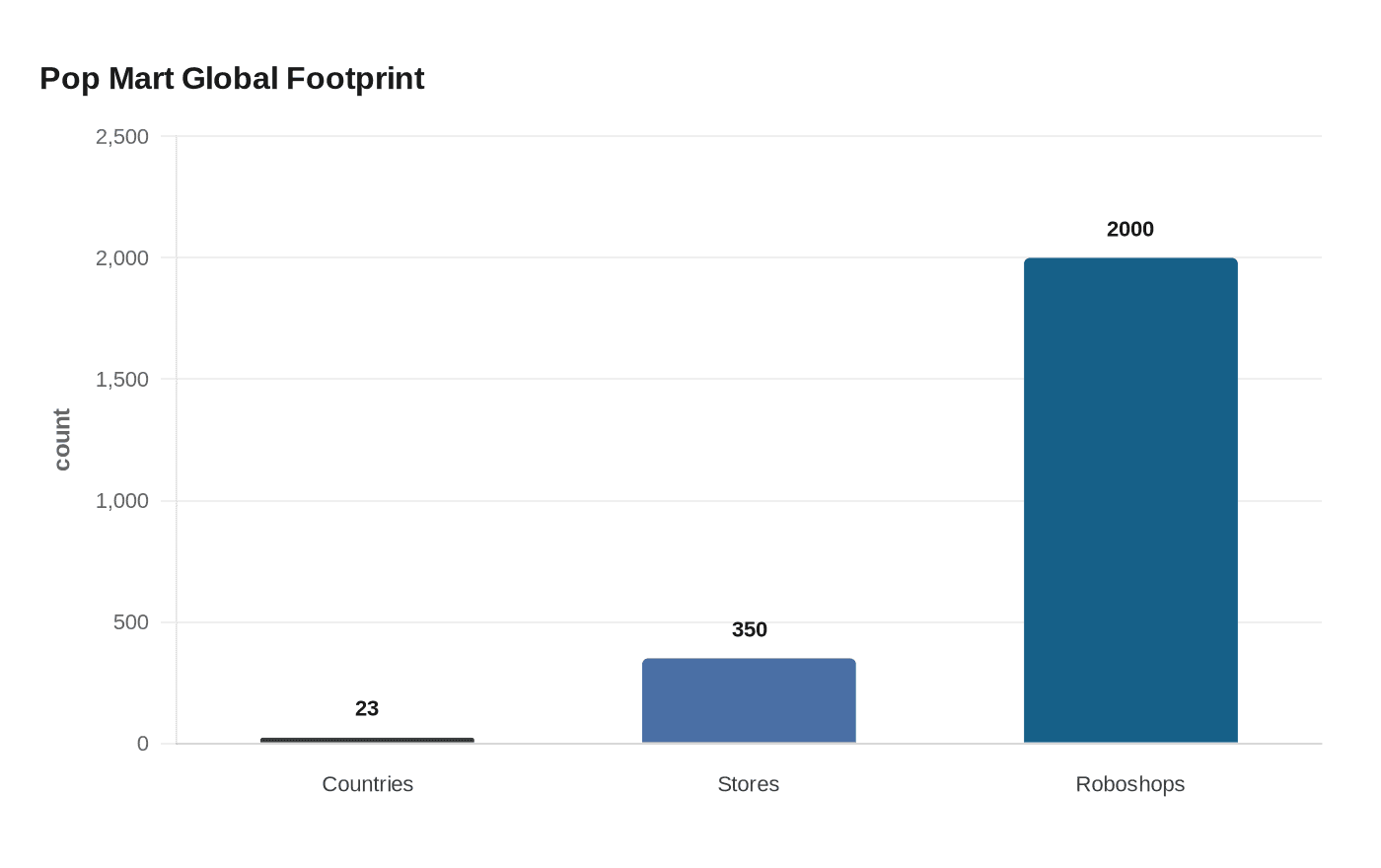
Labubu’s pull is not happening in a vacuum. Pop Mart says it operates in more than 23 countries and regions, with 350+ offline stores and 2,000+ Roboshops, which gives the brand a global footprint that can still feel uneven when a drop is region-locked. That gap is exactly what turns a U.S.-exclusive into a cross-border scramble.
The character’s mythology also helps explain why the demand stretches far beyond one market. Pop Mart’s U.S. site says THE MONSTERS, including Labubu, grew out of Kasing Lung’s 2015 fairy-world books, which drew on Nordic mythology. That mix of story, design, and scarcity has already proved powerful enough to send prices soaring when a piece is rare enough.
The numbers behind the business are hard to ignore. Pop Mart reported 2024 revenue of RMB 13,037,749,000, up 106.9% from 2023, then reported first-half 2025 revenue of RMB 13,876,276,000, up 204.4% year over year. Later coverage said Labubu and The Monsters made up 38% of Pop Mart’s 2025 revenue, a reminder that this is no longer a side character inside the company’s lineup.
The collector math: retail price versus imported landed cost
The practical decision starts with a landed-cost estimate. A buyer in China looks first at the U.S. retail price, then adds the forwarding service fee, international shipping, and the possibility that the parcel will be billed by volumetric weight rather than simple mass. That last point matters with boxed collectibles, because a small toy can still ship like a much larger package once protective packing is added.
From there, customs and delay risk enter the picture. A forwarded parcel can move smoothly, or it can sit longer than expected while documents are checked or duties are considered. Even without a sticker shock at the border, the real cost of buying abroad includes time, uncertainty, and the possibility that a hot drop cools off before the package ever arrives.
That is why the comparison is not just U.S. retail versus China resale. It is U.S. retail plus shipping friction versus a local premium that may already be inflated by scarcity and speculation. In some cases, the imported route still wins, especially when the domestic market has run far ahead of the original price.
Why counterfeit risk changes the equation
Counterfeit exposure is part of the calculation too. When a figure gets hot enough, a local secondary market can fill up with lookalikes, swapped parts, and listings that rely on blurry photos and collector urgency. Buying from an American retailer and forwarding the sealed package does not eliminate risk entirely, but it does reduce the chance of paying a premium for something that is not authentic.
That is one reason cross-border buying has become a collector utility story instead of just a fandom story. The real value is not only in finding the figure, but in knowing where it came from, how it was shipped, and whether the path to your shelf protected you from the most common traps.
The price of rarity is already on the record
Labubu’s resale history makes the current scramble easier to understand. A mint-colored first-generation Labubu sold for RMB 1.08 million, or $150,444, at Yongle’s 2025 Spring Auction on June 10, and that sale became a loud signal that rarity in this market can move from collectible to speculative asset very quickly. Once buyers see that kind of number, a U.S.-exclusive release feels less like a toy drop and more like a time-sensitive arbitrage window.
The broader market has reinforced that logic. CNBC reported in September 2025 that Pop Mart said making the product accessible is key and warned that a market driven solely by profit would eventually crash. Fox Business later reported that Labubu-related products generated $418 million in global sales in the first half of 2025, which shows how fast demand can convert into revenue when the right character hits the right moment.
When waiting is smarter than importing
For many Chinese collectors, the smartest move may still be restraint. If local resale has only just started to rise, waiting can be cheaper than paying forwarding fees, shipping surcharges, and customs uncertainty for a release that may later spread or cool. The imported route makes sense when the gap between U.S. retail and Chinese resale is wide enough to absorb logistics, but it loses appeal fast once the premium starts to outrun the urgency.
That is the real lesson in this Labubu moment. The chase is no longer only about getting the rare piece first. It is about deciding whether exclusivity is worth the full landed cost, or whether patience and resale discipline are the sharper collector moves.
This article was produced by Prism’s automated news system from verified source data, official records, and press releases, then run through automated quality and moderation checks before publishing. The system is built and supervised by the people who set the standards it runs under. Read our full AI policy.
Did this article answer your question?


