Labubu bubble warns of hype-driven growth and unsustainable investment risk
Ryan Cummings’s Labubu bubble warning matters most to buyers chasing the next drop. The real question is whether the hype still clears the shelves, or just props up resale prices.
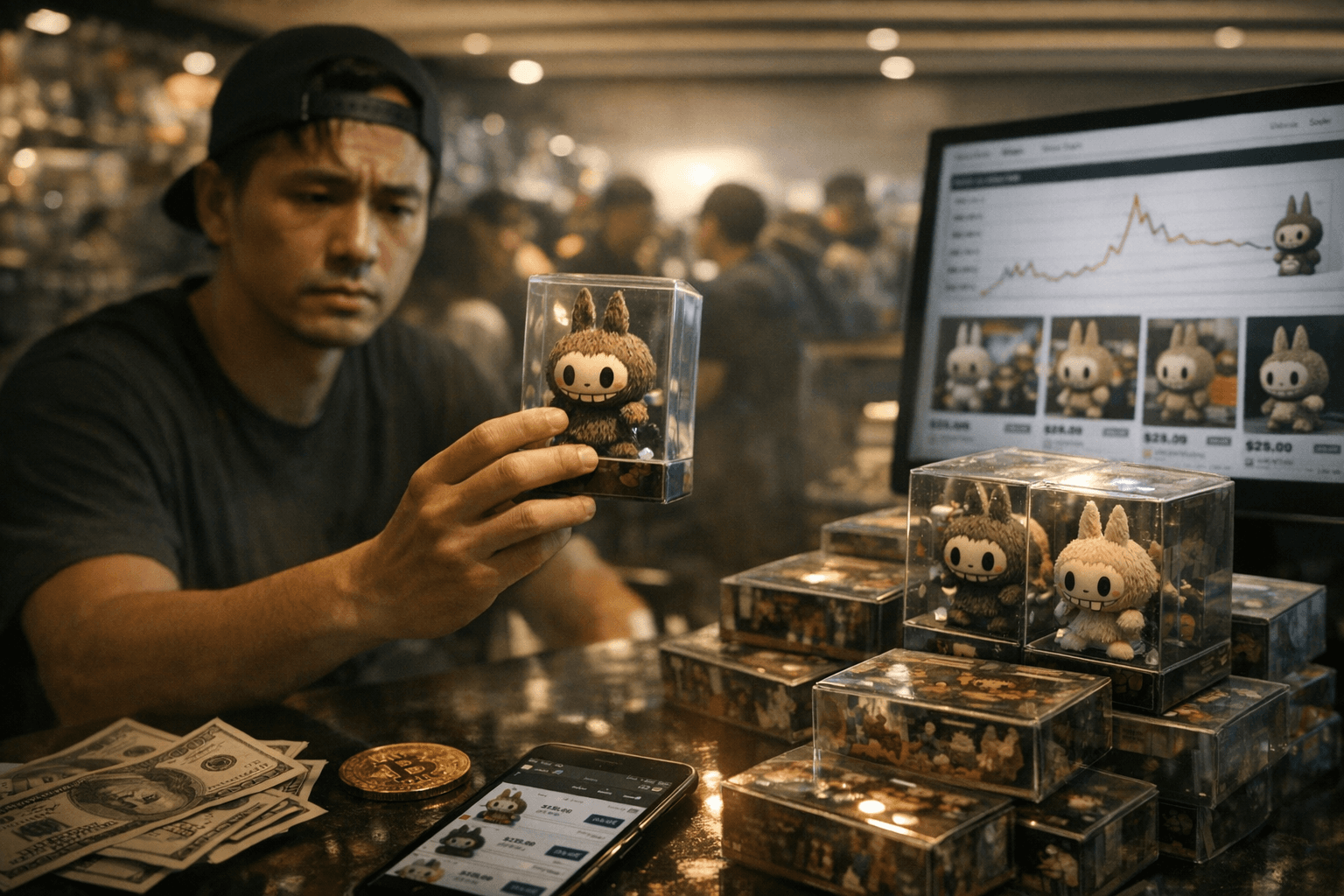
What Ryan Cummings is really warning Labubu buyers about
Economist Ryan Cummings used the phrase “Labubu bubble” in an Open to Debate clip about innovation bubbles, and the point lands because it is not really about one plush elf. It is about what happens when a collectible starts attracting money faster than the demand can prove itself. If you are deciding whether to buy into Labubu right now, that is the question that matters: are you paying for a franchise with staying power, or for a rush of attention that only looks permanent because every release vanishes fast?
That distinction matters more here than in a typical toy story because Labubu has already crossed from niche character to serious business line. POP MART says Labubu was created by artist Kasing Lung, originated in *The Story of Puca*, and belongs to The Monsters universe, a world the company says Kasing Lung created in 2015 and inspired by Nordic mythology. By the time POP MART marked Labubu’s 10th anniversary in its 2024 annual report, the character was no longer a novelty. It was a proof point for how far a single IP can run inside the blind-box economy.
The numbers explain why the market got overheated
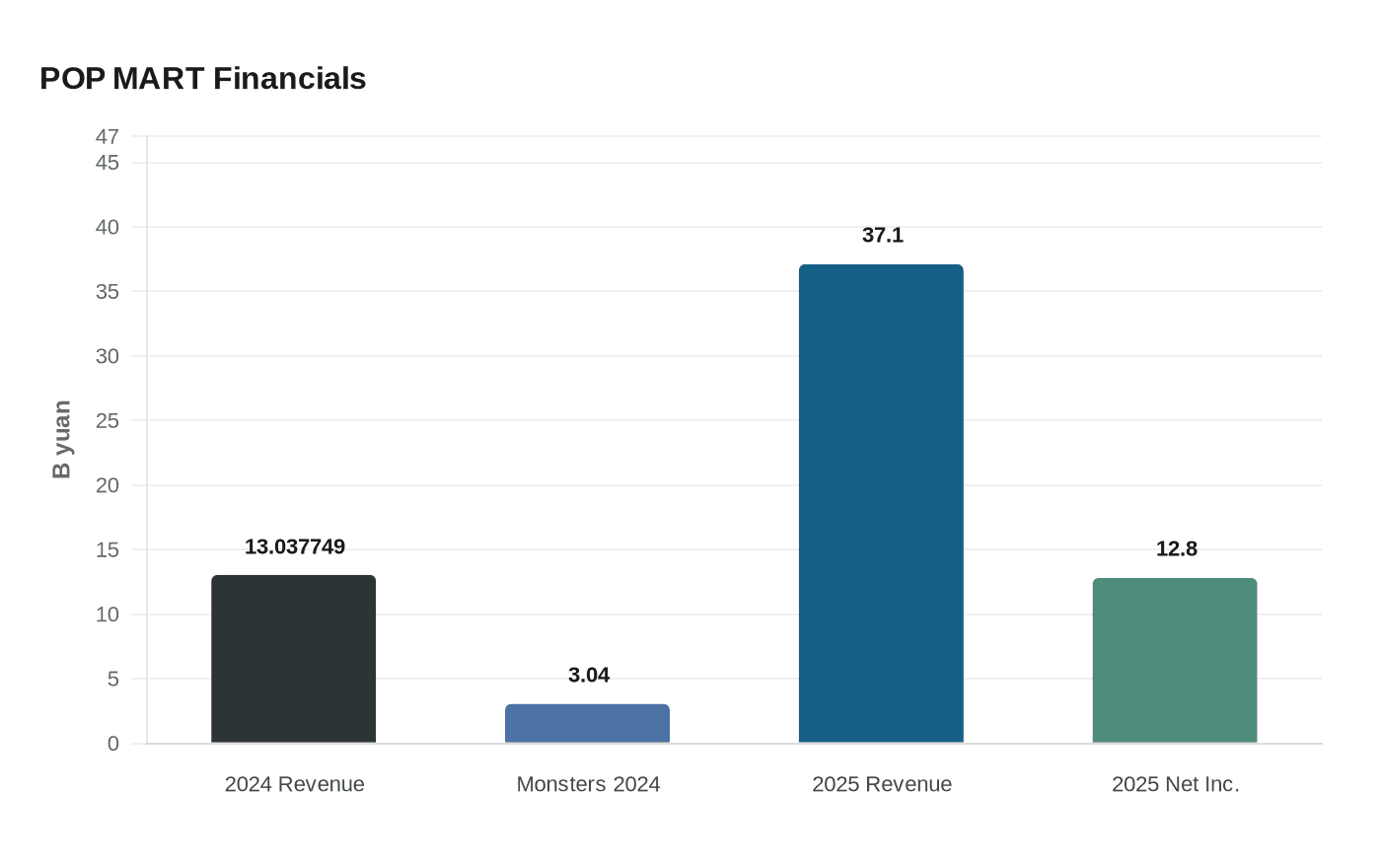
POP MART’s 2024 annual results show just how powerful the Labubu engine became. Revenue reached RMB 13.037749 billion, up 106.9% from 2023, while The Monsters franchise generated RMB 3.04 billion, up 726.6% year over year and equal to 23.3% of total revenue. That is not casual fan demand. That is a character family driving more than a fifth of the company’s top line.
The investor reaction in March 2026 shows where the bubble argument starts to bite. CNBC reported that POP MART shares fell more than 22% as investors worried Labubu-driven growth might not be sustainable, even after the company reported 2025 annual revenue of 37.1 billion yuan and net income of 12.8 billion yuan. Morningstar analyst Jeff Zhang said a material slowdown in the fourth quarter had amplified concern about the durability of POP MART’s top IP popularity, while CEO Wang Ning tried to steady the story with a simple reminder: the company has “more than just Labubu.”
That is the tension collectors need to keep in view. A franchise can be huge and still be vulnerable if one character carries too much of the excitement. The market does not need Labubu to collapse for the bubble thesis to matter. It only needs growth to become less explosive than the price tags around it.
How to pressure-test the bubble claim like a collector
If you are buying for your own shelf, the cleanest way to test the bubble story is to watch the signals that show whether demand is broadening or just getting louder. The research points to three practical checks that matter more than internet noise.
Restock patterns
A durable collectible line keeps showing up again and again in different forms, not just in one viral wave. POP MART continued expanding Labubu merchandise in 2024 with a steady release cadence, including the LABUBU Hip-hop Girl Figure on June 7, 2024, and the MEGA LABUBU TEC 1000% All About Us release on March 15, 2024. That kind of cadence tells you the company is feeding the market, not just milking one moment.
For buyers, the key question is whether restocks feel like healthy replenishment or like a treadmill. If every new batch disappears instantly, scarcity can keep resale prices elevated even when the fandom itself is plateauing. That is where bubbles hide.
Resale spreads
A wide resale spread usually means the aftermarket thinks the next buyer will pay up. That is fine until the spread gets detached from the actual object and starts reflecting pure momentum. Labubu has clearly lived in that kind of momentum, especially around new drops and special-format figures, but the difference between a hot collectible and a fragile one is whether those premiums stay believable after the first rush passes.
The company’s own release history suggests there is still enough heat to support a real market, not just a single speculative spike. But the more the premium depends on one character, one silhouette, or one oversized figure, the more fragile it becomes. The question is not whether resale exists. The question is whether it can survive a slower quarter.
Sell-through speed
Fast sell-through is a good sign when a line is growing into a broader audience. It is a warning sign when it becomes the only reason people keep calling the line strong. The more collector behavior is driven by fear of missing out, the easier it is for a product to look healthier than it really is.
That is why the 2024 product cadence matters so much. The Labubu Hip-hop Girl Figure and the MEGA LABUBU TEC 1000% All About Us release show a brand that was still pushing new forms into the market, not just recycling the same design. But quick sell-through alone does not prove durability. It only proves attention.
What looks hype-fueled, and what looks durable
The hype-fueled side of Labubu is the part that gets the fastest social traction: oversized display pieces, novelty variants, and drops that feel like events. Those are the releases most likely to attract short-term flippers and the sharpest resale moves. They are also the easiest to mistake for permanent demand because the excitement is so visible.
The more durable side lives in the world-building. POP MART’s insistence that The Monsters universe dates back to 2015, plus the 10th anniversary note in the 2024 annual report, shows a character ecosystem with real continuity. That is where Labubu looks less like a one-season meme and more like a franchise with room to evolve. POP MART also says it has a sustained capability in creating blockbuster IPs, and that claim matters because a company with a repeatable pipeline can survive if one character cools off.
If you are choosing where to be careful, the safer read is this: the core Labubu identity still has genuine cultural weight, but the most aggressive pricing usually sits in the loudest, most scarcity-driven corners of the market. The franchise can be real while the flip premium is not.
The practical buy-or-wait takeaway
Ryan Cummings’s “Labubu bubble” framing is useful because it forces the right question. Not whether Labubu is popular, that is obvious. Not whether POP MART made a lot of money, that is also obvious. The question is whether the excitement you are paying for is backed by repeatable demand, or by the kind of hype that needs constant new drops to stay afloat.
Right now, Labubu still looks like a real franchise with a deepening IP base, a huge revenue contribution, and a company that keeps expanding the line. But the investor wobble in March 2026 shows how quickly that story can get re-priced when people start doubting the staying power of the top character. For collectors, that means the safest buys are the ones you would want even if the aftermarket went quiet, because that is when you find out whether you bought a character or just rented a surge.
This article was produced by Prism’s automated news system from verified source data, official records, and press releases, then run through automated quality and moderation checks before publishing. The system is built and supervised by the people who set the standards it runs under. Read our full AI policy.
Did this article answer your question?


