Labubu hype cools as Pop Mart traffic drops, retail expands
The Labubu chart is cooling, but the trade is not dead. Web demand has fallen from its summer 2025 peak while offline retail, kids, and collectors keep the brand moving.
The clearest signal is the chart
The Labubu market has not vanished, but the heat has come off it. Pop Mart’s web traffic has dropped sharply from the summer 2025 peak, and that is the first thing collectors should read as a real shift: the frantic, check-every-drop urgency is no longer driving the whole market. When a toy moves from instant sellout energy to softer traffic, you are usually looking at a cooldown, not a collapse.
That matters because Labubu was built on urgency. For a stretch in 2025, online stock could disappear almost immediately, and that scarcity was part of the appeal. Now the signal is weaker. The chart says demand is no longer behaving like a fire alarm every time Pop Mart opens the gates, which is a very different buying environment from the one that sent everyone chasing drops.
What is falling fastest
The part that has cooled most clearly is the fashion-driven, social-media-fueled scramble around the brand. Labubu’s early surge depended heavily on visibility, celebrity placement, and the feeling that everyone else was already in on it. Rihanna and BLACKPINK’s Lisa helped turn the plush monster into something that read as an accessory as much as a toy, and that kind of crossover heat tends to move faster than the core collector base.
That adult fashion crowd looks less urgent now. The commentary around the traffic chart suggests that younger children still see Labubu as highly visible, but the style-forward grown-up audience that made it a cultural object may have already started rotating away. In collector terms, that is the difference between a broad pop moment and a sustained chase. The former can spike hard and fade quickly; the latter keeps the aftermarket tight.
What is still holding up
This is where the story gets more useful than a simple hype-is-over read. Labubu is still visible, and that visibility is not trivial. The toy is not disappearing from shelves or from conversation, and it still has a real audience among younger kids. That means the brand is not relying only on resale chatter or one narrow fashion lane to survive.
Just as important, the decline in website traffic does not automatically mean people stopped buying. It may mean they changed how they buy. If more sales are moving into physical stores and vending machines, the website stops being the best proxy for demand. For collectors, that is the key nuance: lower web visits can signal a change in distribution, not just a fall in interest.
The retail footprint has changed the game
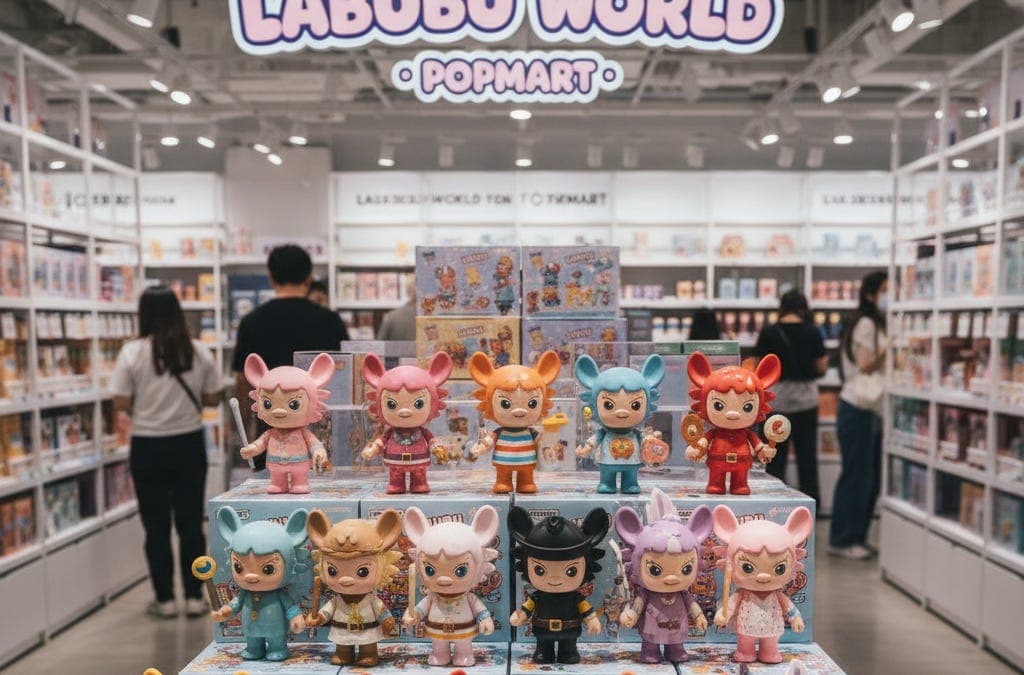
Pop Mart’s U.S. presence has expanded to more than 65 stores, and that is not a cosmetic detail. By the holidays, Labubu could be bought more easily, including through brick-and-mortar locations and vending machines in the United States. Once buying shifts from a pure online sprint to a broader retail footprint, the old web-traffic panic matters less than before.

That expansion changes the collector experience in a practical way. If you used to refresh a product page and watch stock vanish, you now have to think in terms of store access, machine inventory, and local availability. The market is no longer a single-channel chase. It is a mixed system, and mixed systems often look quieter online even when product is still moving.
How to read the cooldown as a collector
The safest read is not that Labubu is “over.” It is that the market is segmenting. Younger casual fans, adult collectors, and resellers are no longer acting like one unified wave, and that split shows up in traffic, visibility, and probably pricing behavior too. In other words, the same toy can be less frantic and still be commercially healthy.
- Web traffic is no longer enough on its own to judge demand.
- Store expansion can hide real sales from online charts.
- Social hype is softer, so overpaying for old momentum is riskier than it was at peak mania.
For collectors, that means three things:
That is why this cooldown feels less like a cliff and more like normalization. The most feverish phase has passed, but the brand still has enough pull to remain relevant in multiple lanes at once.
What the chart really tells you
The chart backed by Comscore data collected by Emarketer is doing the heavy lifting here. It shows a clear retreat from the summer 2025 high, and that is the strongest evidence that the buying frenzy has eased. But the chart also has a blind spot: it cannot fully capture sales that are now happening in more stores, more vending machines, and more offline channels.
So the right collector takeaway is not to treat the cooldown as a death notice. Treat it as a warning against assuming every Labubu is still a premium chase piece. The toy still has demand, but the market has become more segmented, more ordinary in some places, and less dependent on one explosive online signal.
That is the real story in the numbers. Labubu is not gone, but the era when every drop felt like a stampede is clearly behind it, and the new normal is a lot more forgiving if you know where to buy and a lot less forgiving if you are still paying peak-hype prices.
This article was produced by Prism’s automated news system from verified source data, official records, and press releases, then run through automated quality and moderation checks before publishing. The system is built and supervised by the people who set the standards it runs under. Read our full AI policy.
Know something we missed? Have a correction or additional information?
Submit a Tip