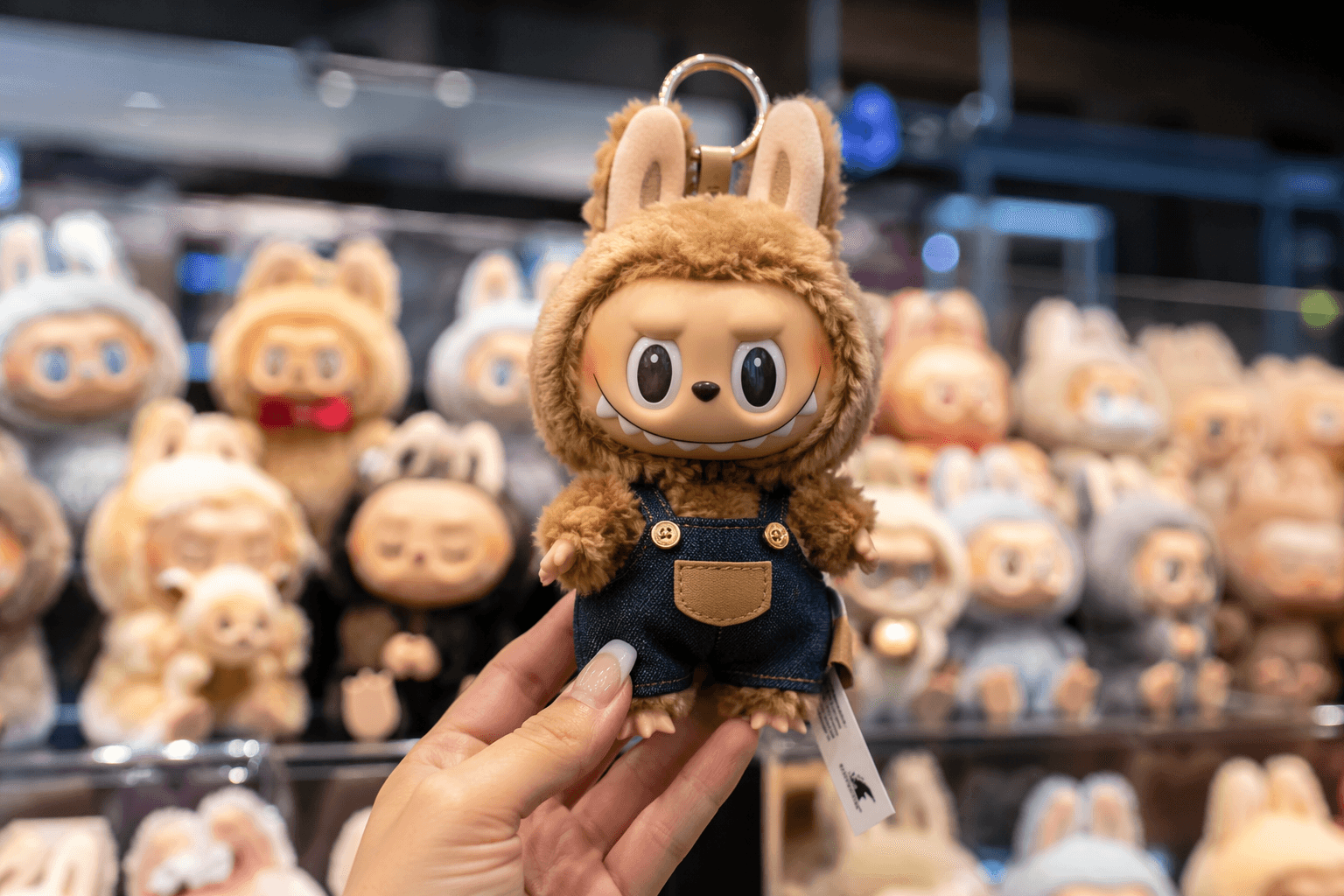
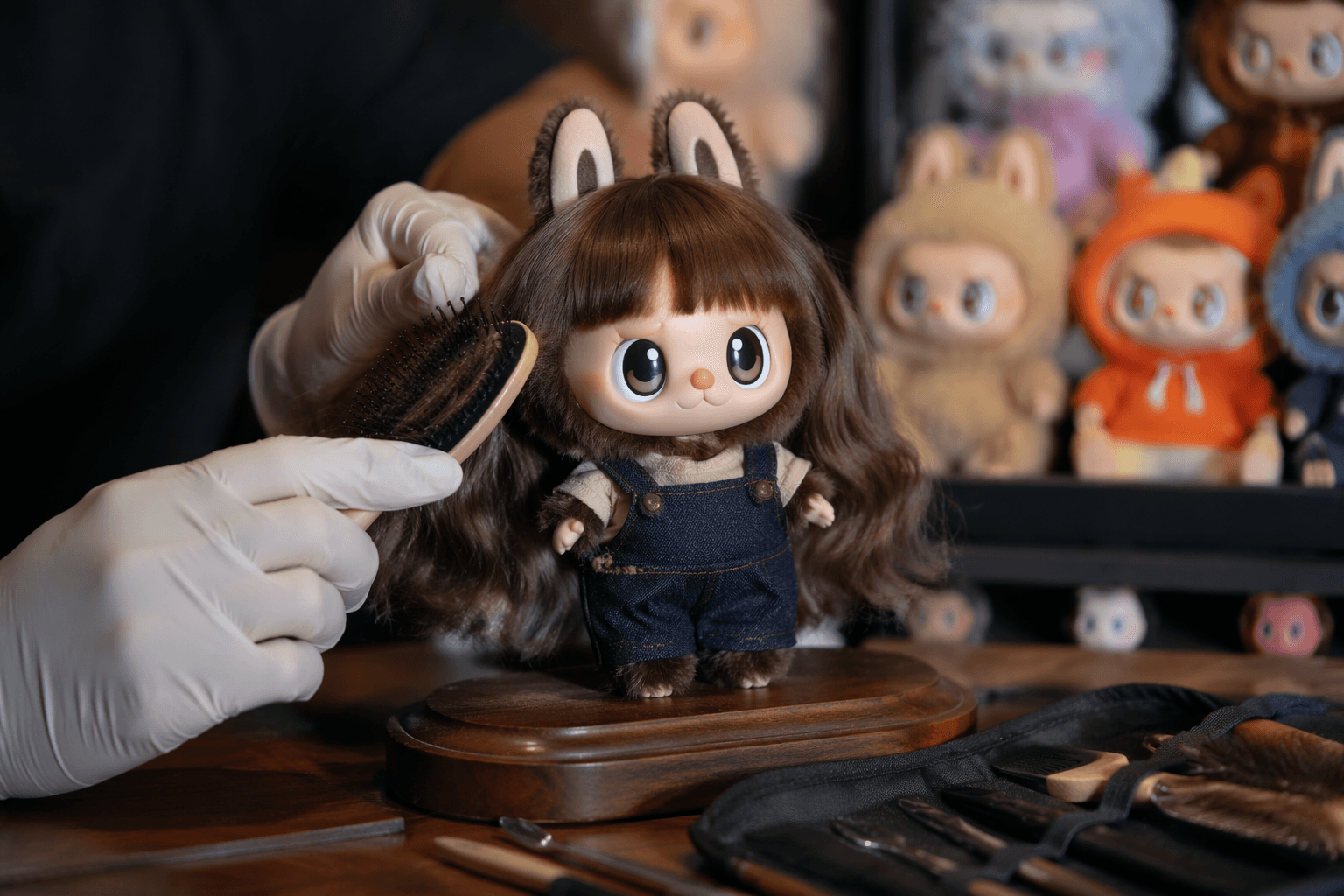
Labubu sets the standard, as rivals race to replace it
Labubu is no longer the surprise. Rivals are copying its cheap, bag-ready formula, but the market still wants the collector payoff that made it stick.

Labubu is the benchmark now
The question in the Labubu market is no longer whether the shaggy, toothy character broke out. It did that already. The real question is what comes next, and more important, which would-be successor can copy the full formula: the face, the scarcity, the bag styling, the celebrity pull, and the feeling that you might actually need to chase it.
That is the standard Labubu has set. It is not just a cute charm clipped to a designer bag. It is a culture object with enough reach to move from blind-box collecting into fashion, travel, film, and even official brand diplomacy. Once a collectible starts doing all of that, every rival gets measured against the same checklist.
What the Labubu formula actually is
Labubu’s advantage has never been one single gimmick. It is the combination of an instantly readable silhouette, a playful emotional hook, and a price that feels tiny next to the luxury bags it is usually paired with. That matters because the character does not need to be a stand-alone purchase; it can ride along as an add-on, a flex, a conversation starter, and a low-risk entry into the world of collecting.
That affordability is doing real work. Labubu blind boxes are described as averaging about $20, which is exactly the kind of number that turns a novelty into an impulse buy. Once people start seeing it on the right bags, in the right hands, and in the right social circles, the object stops being just merchandise and starts behaving like a badge.
The rivals trying to copy the playbook
The most interesting challenger in the current wave is Yukai Engineering’s Mirumi. It is not trying to win by looking like Labubu, but it is clearly chasing the same bag-side real estate. Mirumi is a robotic companion bag charm that reacts to sound and touch, which gives it a live, interactive personality instead of just static cuteness.
The rollout is telling. Mirumi launched in Japan on April 23, 2026, through 12 Tsutaya locations and the official online store, and it is priced at ¥19,800 including tax. That price alone makes the difference obvious. Labubu’s low entry price helped it spread fast; Mirumi is much closer to a premium gadget than a mass blind-box buy, landing around $125 in Japan.
Mirumi also shows how broad the competition has become. It debuted at CES in January 2025 and came out of Yukai Engineering’s internal Makathon hackathon in 2024. That means the market is not just being challenged by toy companies. It is being challenged by lifestyle-robot novelty, which is a very different kind of object but wants the same bag-adjacent attention.
Beauty brands are making the same move from another direction. Marc Jacobs and The Ordinary are leaning on keychain-sized accessories and mini treatment formats to catch the same fashion-minded buyer who once latched onto Labubu. The formula is familiar: make it small, make it carryable, make it visible, and make it feel like a little piece of the brand that can travel everywhere.
Why Labubu still wins the collector battle
This is where most rivals fall short. They can copy the silhouette of the trend, but they do not always copy the collectible payoff. Labubu works because it gives buyers the feeling that they are participating in a market with momentum, not just buying a cute object once and moving on. The blind-box system, the character world around The Monsters, and the constant spillover into fashion make the purchase feel collectible instead of merely decorative.
That difference shows up in the numbers. Pop Mart said The Monsters revenue reached 3 billion yuan in 2024, up 726.6% year on year from 368 million yuan, and the franchise accounted for 23.3% of the company’s total revenue. Then the scale got even larger: Pop Mart reported 2025 revenue of 37.12 billion yuan and Labubu sales of 14.16 billion yuan, about 38% of total revenue. That is not a fad living on borrowed time. That is a character carrying a huge slice of the business.
How Labubu escaped the toy aisle
Labubu’s reach has already gone far beyond collecting. In July 2024, the Tourism Authority of Thailand and Pop Mart ran a Labubu tourism campaign tied to Thai-Chinese relations, including a “Welcome Ceremony of LABUBU” in Bangkok. That is the kind of move that tells you a character has become a place-branding asset, not just a retail item.
The live-action movie push makes the same point. Sony Pictures and Pop Mart officially announced a Labubu film in March 2026, with Paul King attached to direct and co-write. The announcement came during The Monsters’ 10th anniversary exhibition tour stop in Paris, which is exactly the kind of event that turns a collectible into a franchise with cross-media ambition.
The messy side of being a phenomenon
When an object becomes this visible, the downside arrives quickly. Pop Mart’s rise has already brought counterfeit pressure, including Chinese customs seizures in 2025. That is part of the real cost of making something this popular: the demand gets big enough that knockoffs show up, supply gets strained, and the market starts testing how durable the hype really is.
That is also why the next Labubu-style hit will need more than just cuteness. It will need scale, supply discipline, and anti-counterfeit protection if it wants to behave like a lasting collectible rather than a short-lived accessory. Mirumi, the fashion miniatures, and the next wave of charms can borrow the look and the bag placement, but they still have to prove they can generate the same repeat chase.
Labubu has become the standard because it nailed all the parts at once: price, face, placement, and cultural spread. Everyone else is racing to replace it, but most of the field is still only copying the surface.
This article was produced by Prism’s automated news system from verified source data, official records, and press releases, then run through automated quality and moderation checks before publishing. The system is built and supervised by the people who set the standards it runs under. Read our full AI policy.
Did this article answer your question?