Pop Mart's Bambu Lab Lawsuit Puts Home 3D Printing of Labubu in Spotlight
Pop Mart is suing Bambu Lab as home 3D printing makes it possible to copy a Labubu for a fraction of the retail price.
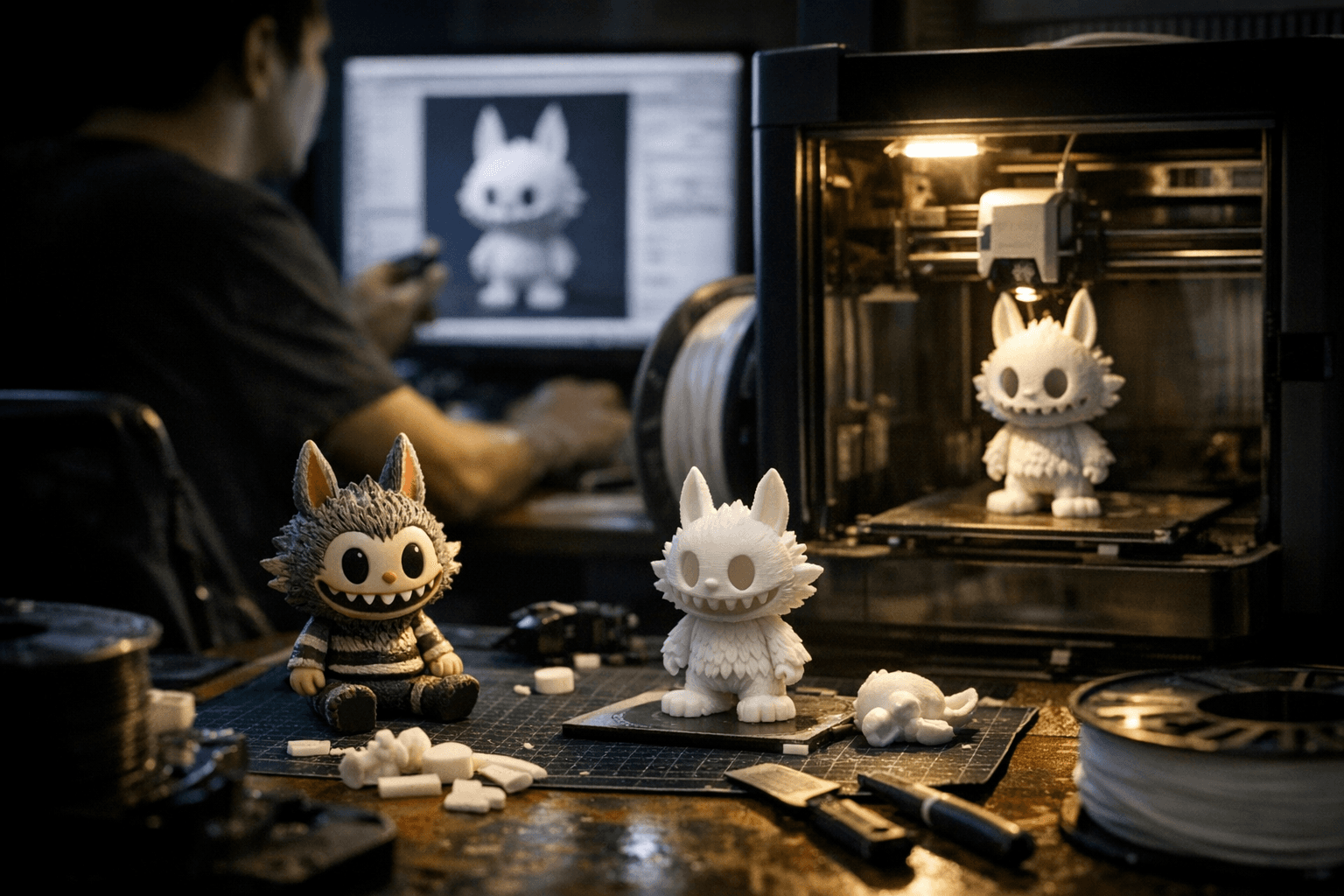
A lawsuit filed by Pop Mart against Bambu Lab has cracked open a conversation that the designer toy world has been quietly avoiding for years: what happens when the barrier between wanting a Labubu and owning one collapses to the cost of a spool of filament?
The case, which drew significant coverage from Manufactur3D Magazine in a feature published on March 11, 2026, sits at the intersection of intellectual property law, manufacturing economics, and the very specific devotion that Labubu collectors bring to their hobby. It is not just a corporate dispute. For anyone who has ever refreshed a Pop Mart app waiting for a blind box drop, or paid secondary market premiums for a hard-to-find colorway, this lawsuit touches something real.
What the lawsuit is actually about
Pop Mart, the Beijing-based designer toy powerhouse behind Labubu and dozens of other collectible figure lines, has taken legal action against Bambu Lab, one of the most prominent names in consumer 3D printing. Bambu Lab's printers, known for their speed, reliability, and comparatively accessible price points, have become a favorite among hobbyists who want to produce their own physical objects at home. The Manufactur3D Magazine feature frames the case around a core commercial tension: inexpensive home 3D printing now makes it possible to reproduce a Labubu figure at a fraction of the cost of buying one through official channels.
The manufacturing implications are significant. Pop Mart has built its business model on scarcity, artistry, and the thrill of blind box randomness. A figure that retails for $20 or commands $200 on the resale market represents not just plastic and paint but a carefully controlled ecosystem of licensing, limited runs, and brand mystique. When a home printer can approximate that object for the price of a few grams of resin or PLA, that ecosystem faces a challenge that no restocking schedule or regional exclusive can easily solve.
Why Bambu Lab is at the center of this
Bambu Lab occupies an interesting position in the 3D printing landscape. The company has aggressively pursued the mainstream consumer market with machines that require far less technical knowledge to operate than earlier generations of desktop printers. That accessibility is precisely what has made them popular, and it is also what makes them a meaningful target in a case about unauthorized reproduction. Earlier 3D printers demanded calibration expertise that functioned as a practical barrier; Bambu Lab's machines have lowered that bar considerably.
The Manufactur3D Magazine analysis focuses on the commercial and manufacturing implications of the lawsuit rather than its narrowly legal dimensions, which signals how the industry is reading this case. The question is not only whether any specific file or print violated Pop Mart's intellectual property rights, but what the existence of fast, affordable, user-friendly 3D printing means for any company whose value rests on the physical uniqueness of its products.
The Labubu community's complicated position
Labubu collectors are not a monolithic group. The community contains devoted resellers, casual blind box fans, hardcore completionists chasing every seasonal release, and customizers who already modify official figures with paint and sculpting tools. 3D printing sits closest to that last group, the kitbashers and artists who see Pop Mart's figures as a starting point rather than a finished object.
For collectors who have spent real money building grails lists and hunting chase figures, the idea of printed reproductions circulating in the secondary market raises legitimate concerns. A printed Labubu passed off as authentic could deceive buyers in ways that a hand-painted custom typically cannot. The lawsuit, regardless of its ultimate legal outcome, has surfaced these anxieties in a community that has not always had a clear framework for discussing them.
At the same time, many in the designer toy world have long celebrated the culture of fan-made tributes, 3D-printed accessories, and unofficial colorways as evidence of a healthy, creative fandom. The line between homage and infringement has always been blurry in hobby spaces, and this lawsuit is unlikely to draw it any more cleanly.
What this means for the broader designer toy market
Pop Mart is not the first collectibles company to wrestle with unauthorized reproduction, but the scale and visibility of the Labubu brand makes this case a potential landmark. The Manufactur3D Magazine feature treats it explicitly as a commercial and manufacturing story, suggesting that the implications extend well beyond Pop Mart's specific product catalog. Other designer toy labels, blind box brands, and limited-edition collectible companies are almost certainly watching this case with their own legal teams on standby.
The economics are straightforward and uncomfortable. If home printing technology continues to improve in resolution and material quality while prices for machines like Bambu Lab's continue to fall, the cost advantage of the official product narrows to branding, authenticity, and the collector's desire to own the real thing. For a community where provenance and authenticity matter enormously, that last factor is not trivial. But it also cannot be assumed to hold indefinitely as print quality rises.
Where things stand
The lawsuit is in early stages, and its resolution could take considerably longer than the news cycle that surrounds it. What the Manufactur3D Magazine coverage makes clear is that the 3D printing industry itself is now being asked to reckon with its role in intellectual property disputes that previously played out mostly between large manufacturers and overseas counterfeiters. Bambu Lab is not a back-alley operation; it is a major player in a legitimate, growing industry. That is precisely what makes this case different from previous enforcement actions in the collectibles space.
For the Labubu community specifically, the lawsuit is a reminder that the figures at the center of so much devotion, collecting energy, and secondary market activity exist within a legal and commercial framework that Pop Mart actively defends. The blind box model, the regional exclusives, the chase figure scarcity: none of that works if the physical object can be replicated cheaply and freely. Pop Mart's legal action against Bambu Lab is, at its core, a defense of the conditions that make Labubu collecting feel meaningful in the first place.
Know something we missed? Have a correction or additional information?
Submit a Tip