UK report alleges forced labor in Pop Mart’s Labubu factories
A core Labubu factory is accused of forced labor, underage workers, and punishing overtime, raising new questions about future drops and buyer trust.

A key Labubu production site in Jiangxi Province is now at the center of a collector-market credibility crisis. The Select Committee on China said findings tied to Pop Mart’s supply chain pointed to forced labor, underage workers, and excessive overtime at Shunjia Toys Co. Ltd. in Xinfeng County, where Labubu toys were made for one of the brand’s fastest-growing lines.
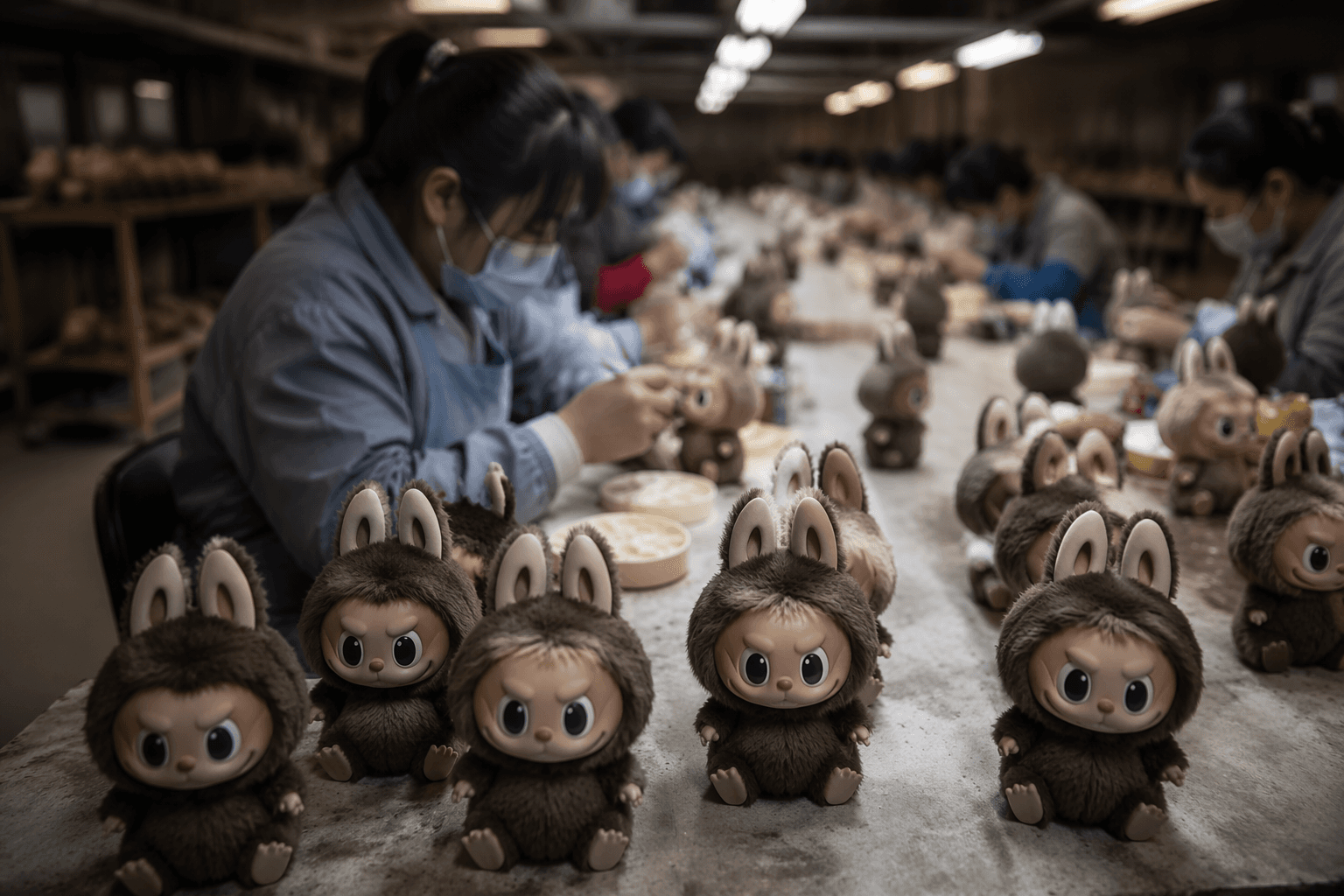
China Labor Watch said it investigated Shunjia Toys in the summer and fall of 2025 and found a factory with more than 4,500 workers. The group said it interviewed more than 50 employees, including three under 18, and reported that 16- and 17-year-olds were hired as long-term workers without the special protections required under Chinese law. The report also said workers were required to sign blank or poorly explained contracts, were denied paid leave, and received inadequate health and safety training.
The overtime claims are the most damaging for a brand that trades on scarcity and speed. Chinese labor law limits monthly overtime to 36 hours, but China Labor Watch said workers often logged more than 100 additional overtime hours a month. Some summaries of the findings said a team of 25 to 30 workers had to assemble at least 4,000 Labubus a day, a production pace that puts pressure on every rest break, shift change, and quality check.
Pop Mart said it takes worker welfare and safety seriously, conducts regular standardized audits of its OEM supply-chain partners, including annual independent third-party audits, and is investigating the allegations. For collectors, that response will now be judged against the next wave of launches, especially if any future Labubu release slips, ships slower, or comes with tougher supplier disclosures.
The allegations landed as Labubu remained one of Pop Mart’s most valuable engines. The company said 2024 revenue reached RMB 13.04 billion, up 106.9% year on year, and said revenue from THE MONSTERS, the IP family that includes Labubu, surpassed RMB 1 billion. One company summary put THE MONSTERS at about RMB 3 billion in 2024, up 726.6% from the prior year, while overseas revenue climbed 375.2% to RMB 5.07 billion and Pop Mart opened first offline stores in Vietnam, Indonesia, the Philippines, Italy, and Spain. Reuters-linked reporting in 2026 said 2025 revenue nearly tripled to RMB 37.12 billion.

The scrutiny is widening beyond one factory. In April 2026, John Moolenaar said a test confirmed by The New York Times found Xinjiang cotton in some Labubu clothing, calling that finding “unsurprising and unacceptable.” Add the counterfeit “Lafufus” flooding the market and the message to collectors is blunt: the next drop is no longer just about rarity. It is now about where the doll came from, who made it, and how much trust still sits behind the blind box.
This article was produced by Prism’s automated news system from verified source data, official records, and press releases, then run through automated quality and moderation checks before publishing. The system is built and supervised by the people who set the standards it runs under. Read our full AI policy.
Know something we missed? Have a correction or additional information?
Submit a Tip