10 quick leathercraft projects beginners can finish in under an hour
Small leather projects keep the bench moving: these 10 quick builds sharpen cutting, stitching, edge work, and finishing without a big tool buy.
The appeal of a short leather project is momentum. Tandy Leather, Inc., which has served leathercrafters since 1919, leans into that energy with ten beginner-friendly builds that can be finished in under an hour, using minimal leather, a few essential tools, and no prior experience. It is a practical way to make something useful, use up scrap, and build confidence one small piece at a time.
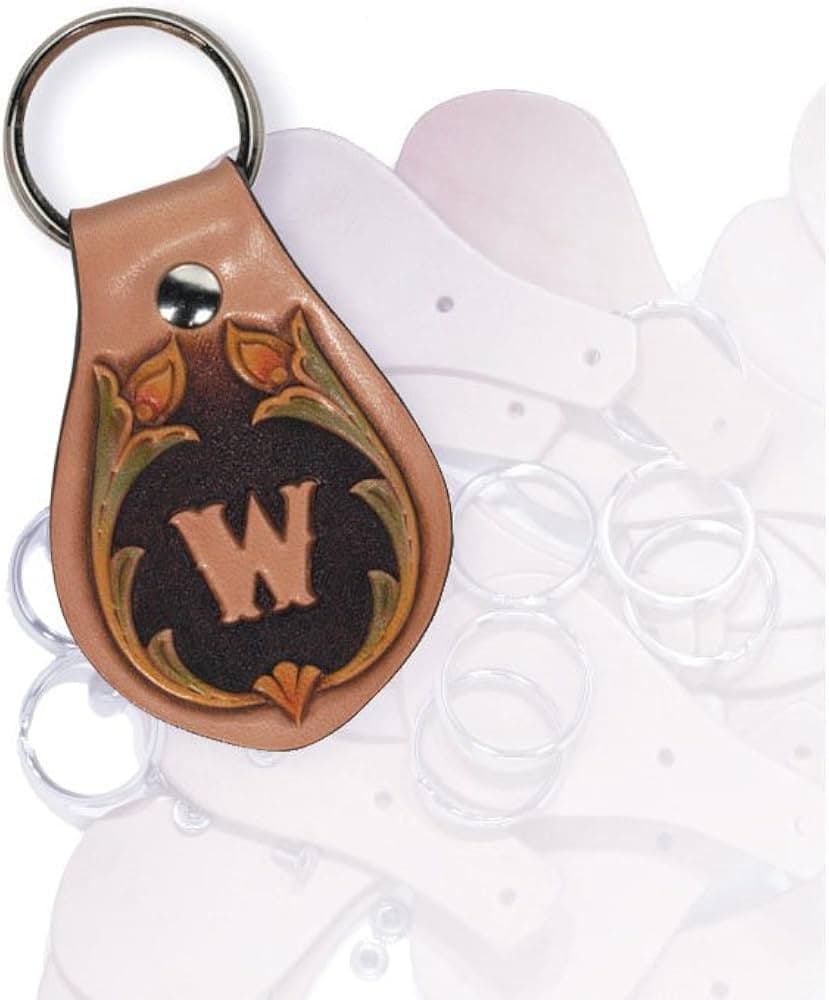
Leather key fob
The key fob is the classic first win, the kind of project that feels complete almost as soon as it leaves the bench. It uses little material, invites personalization, and doubles as an easy gift add-on, which is part of its charm for makers who want quick turnaround without a lot of setup.
It is also a clean introduction to the rhythm of leathercraft: cut, punch, assemble, and finish. If you are just getting comfortable with a sharp knife or rotary cutter and a cutting mat, a key fob gives you a tiny surface to practice on without wasting expensive stock.
Minimalist card holder
A minimalist card holder is a small project with real bench value because it puts stitching front and center. Tandy points to saddle stitching here as a skill worth learning early, and the company notes that this hand-stitched, two-needle method is stronger than machine stitching.
That makes the card holder more than a pocket-sized accessory. It becomes a compact lesson in layout, hole spacing, and consistency, all on a project small enough to finish before attention drifts.
Leather cable wraps
Cable wraps are the sort of scrap-friendly builds that make a half-used offcut feel useful again. They are simple, practical, and easy to repeat in batches, which makes them ideal for maker tables, classroom demos, or a quick stack of useful gifts.
They also reinforce good habits without demanding a lot of leather or hardware. When you are trying to get comfortable with cutting clean shapes and making repeatable parts, a cable wrap is about as efficient as it gets.
Simple bracelet or wrist cuff
A bracelet or wrist cuff turns a basic shape into something that feels finished and personal. Tandy’s roundup treats it as a quick build that can be elevated with stamping, dye, or other personalization, which is exactly where simple leather starts to look polished.
The project is useful because it teaches restraint. A small band leaves little room to hide uneven edges or sloppy spacing, so even a straightforward cuff becomes a good exercise in control and finishing.
Quick leather coasters
Coasters are one of the best examples of a small project carrying a lot of technique. They are practical, easy to make, and a natural place to practice burnishing, since Tandy notes that burnishing gives veg-tan projects smooth, clean edges.
That matters because a coaster lives or dies on its finish. A set of coasters can also become a fast gift run or a useful booth item, and they show how a simple shape can look polished once the edges are cleaned up and the surface is stamped or dyed.
AirTag or Tile holder
An AirTag or Tile holder is a good reminder that modern leathercraft often lives alongside everyday carry gear. The form is small, but it rewards careful cutting and clean assembly, especially when you want the finished piece to feel secure and tidy in the hand.
Projects like this fit neatly into Tandy’s beginner logic: small enough to finish quickly, useful enough to keep around, and just technical enough to build comfort without turning into a full-scale case project.
Leather bookmark
A leather bookmark is one of those projects that looks almost too simple until the details start to matter. Even a thin strip becomes a place to practice trimming, edge cleanup, and personalization, and it takes very little leather to make something worth using.
Because the material investment is so low, a bookmark is also easy to experiment with. It is a good place to test a stamp, a dye color, or a clean cut line before moving on to a larger project.
Cord keeper or pen loop set
Cord keepers and pen loops are the kind of small-batch builds that make scrap drawers disappear in the best way. Tandy positions these kinds of pieces as daily-use items that are easy to repeat, which is why they work so well for quick gift production and make-and-take tables.
They are also quietly useful for learning how parts relate to one another. A simple cord keeper rewards accuracy, while a pen loop introduces the logic of sizing and fit without asking for a long build.
Snap-closure coin purse
The snap-closure coin purse brings hardware into the conversation, which makes it an especially useful beginner step. It stays compact, but it asks for a little more confidence with placement and assembly than the flattest projects in the roundup.
That is what makes it satisfying. A small pouch with a working snap feels like a true leather good, not just a cut shape, and it shows how fast a beginner can move from raw material to something functional.
Luggage tag
A luggage tag is a clean way to end the list because it turns a simple form into something polished and personal. Tandy highlights it as a project that benefits from stamping, dye, or other personalization, and that is exactly where the piece gains character.
It is also a natural fit for gift production, event booths, and travel-minded makers who want something finished in a single session. With a little attention to layout and edge work, even a plain tag carries the kind of confidence that small projects are meant to build.
Tandy’s broader beginner path reinforces the same lesson these ten projects teach on the bench: start small, use a few essential tools, and let each finished piece make the next one easier. A sharp knife or rotary cutter, a cutting mat, and a strap cutter are enough to get moving, and from there the projects, the videos, the classes, and the gift ideas all point in the same direction: build skill by keeping the work achievable. That is the real momentum here, the kind that turns a scrap bin into practice and a short evening at the bench into something complete.
This article was produced by Prism’s automated news system from verified source data, official records, and press releases, then run through automated quality and moderation checks before publishing. The system is built and supervised by the people who set the standards it runs under. Read our full AI policy.
Did this article answer your question?