Leathercraft Mastery turns worn red heels royal blue with dye work
Worn red heels turn royal blue here, but the real lesson is the prep, thin coats, and sealing that make a leather dye change hold.
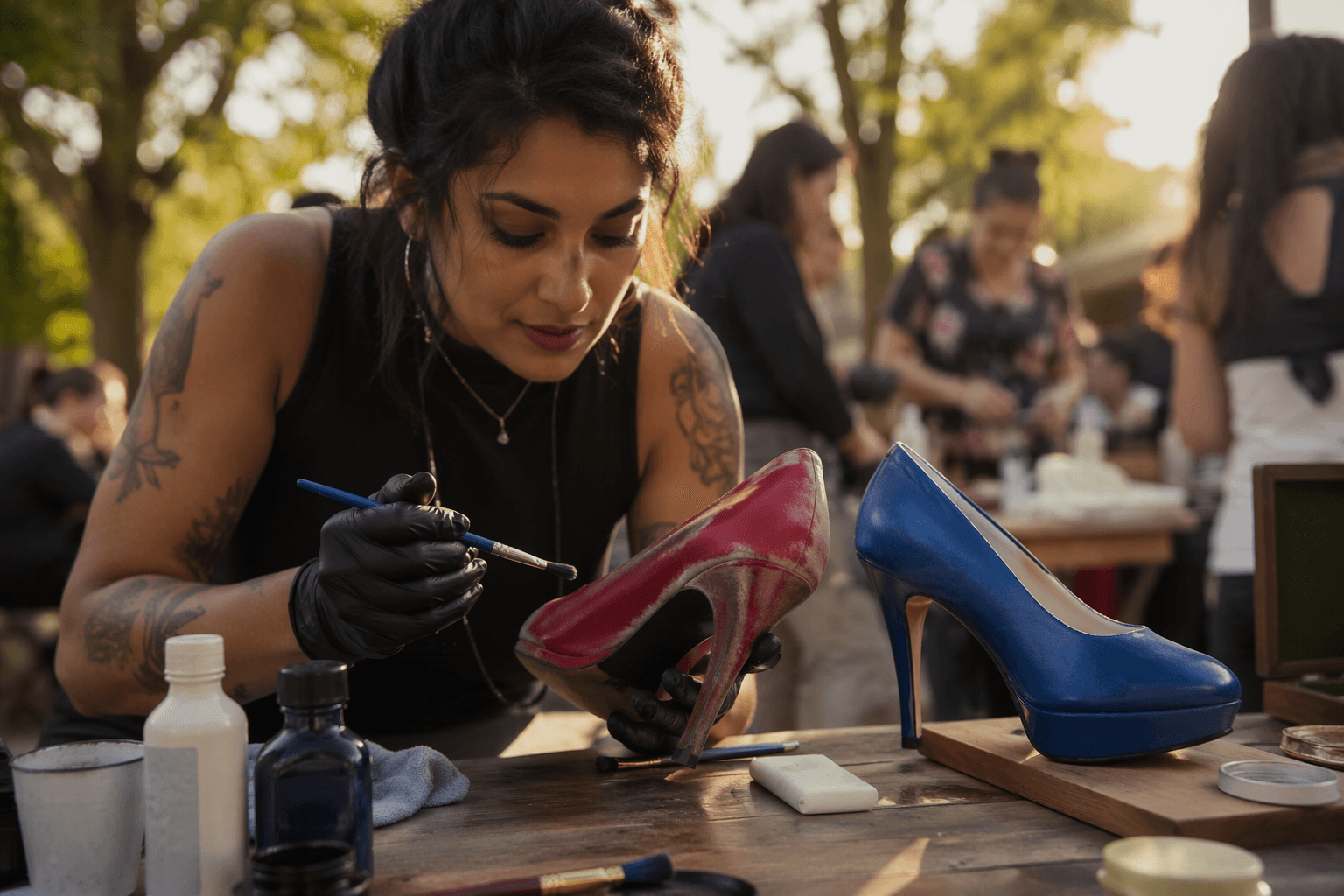
A faded pair of red heels becomes a royal-blue statement piece, and the transformation only works because every layer of the process is handled with care. LeatherCraft Mastery’s shoe revival turns color change into a craft lesson: clean the surface, strip the old finish, lay dye in controlled coats, and seal it so the new shade can survive real wear.
A color swap that asks for discipline
The appeal of this kind of project is obvious the moment the red gives way to blue. Royal blue does more than refresh the look of the heels, it shows how leather can be redirected instead of discarded, which is exactly why dye work matters so much in small-batch repair and customization. The visual payoff is immediate, but the process behind it is the part that decides whether the shoe looks reborn or simply stained.
This is also not a one-off experiment. LeatherCraft Mastery has been posting multiple shoe-restoration videos, including other royal-blue heel makeovers, so viewers can compare how the channel approaches different surfaces, shades, and levels of wear. That repetition gives the project extra value: each upload becomes a reference point for the next restore-and-dye job.
What the video shows in practice
The project, titled “Red Heels to Royal Blue! DIY Leather Dye Transformation,” was published on June 1, 2026. It runs about 21 minutes and had 951 views shortly after upload, while the LeatherCraft Mastery channel showed about 29.7K subscribers in the same search result. Those numbers matter because they place the video squarely inside an active maker niche where restoration content is being watched as both entertainment and instruction.
The structure of the video fits the way leatherworkers actually think about a dye job. It is not just about changing color; it is about rescuing a surface, understanding how finish behaves, and making the new color sit cleanly on the shoe instead of fighting the old one.
Why prep is the whole game
Fiebing’s keeps the process blunt and practical: re-dyeing smooth leather is basically a three-step job, starting with stripping the old finish, then dyeing the leather, and finally sealing it with a top finish. That order is the backbone of the whole transformation, because dye has to reach the leather and the final finish has to lock in the result.
Tandy Leather pushes the same logic from another angle. Its dyeing and finishing guidance stresses surface preparation to remove oils, waxes, and old finishes so the dye can penetrate evenly. In other words, the old red has to be treated like a barrier, not a backdrop. If it stays in the way, the blue won’t read cleanly and the finish will look uneven before the shoe even leaves the bench.
How the blue gets its depth
Fiebing’s describes its Leather Dye as a penetrating, alcohol-based dye that absorbs into the leather. That matters because it explains why color work on shoes is so unforgiving: you are not painting over the surface, you are asking the leather itself to take on a new tone. Once that dye is in, the evenness of the application is what separates a rich royal blue from a blotchy one.
Tandy Leather’s advice points to the same discipline. It recommends several thin coats rather than one heavy pass, then buffing after the final coat to remove residue. That sequence is what gives the color a cleaner finish and keeps excess dye from sitting on top of the shoe where it can rub off later.
Seal it or risk losing the work
The last step is the one that protects everything that came before it. Fiebing’s says the leather needs a top finish after dyeing, and Tandy Leather is equally direct that a topcoat is essential for more vibrant color and for sealing the project. Without that layer, the new royal blue may look convincing in the moment but fail under wear.
That is what makes this kind of work high-risk and high-reward. The risk comes from the fact that a shoe has curves, seams, and stress points, all of which can expose weak prep or uneven coating. The reward is a finish that looks intentional, durable, and fully transformed rather than simply recolored.
When the project is worth taking on
A red-to-blue heel swap is worth attempting when the shoe gives you a workable smooth-leather surface and you are ready to respect the sequence. If you can strip the old finish cleanly, apply the dye in thin layers, buff the residue, and seal the result, you are working with the same core method promoted by Fiebing’s and Tandy Leather. That is the point where a shoe stops being a candidate for replacement and becomes a candidate for reinvention.
It is less forgiving when the prep cannot be done evenly or when the old finish keeps fighting the new color. In that case, the transformation can still be possible, but the process becomes more demanding and the margin for error shrinks fast. That is why this kind of color-change project sits in the sweet spot between restoration and custom work: it rewards control, not speed.
A useful lesson for the bench
The reason this royal-blue heel makeover stands out is that it treats dye as a design tool, not a shortcut. The shoe’s value comes from the craft behind it, from stripping the surface with care to sealing the final color so it can hold up in use. LeatherCraft Mastery’s latest upload makes that lesson easy to follow, and the ongoing series of heel revivals shows how much can be learned by watching one careful transformation after another.
By the end, the worn red heels are not just blue. They are proof that when the prep is right, the coats are thin, and the finish is sealed, a leather shoe can come back with a completely new identity.
This article was produced by Prism’s automated news system from verified source data, official records, and press releases, then run through automated quality and moderation checks before publishing. The system is built and supervised by the people who set the standards it runs under. Read our full AI policy.
Did this article answer your question?