Artioli’s deer leather loafer turns comfort into luxury storytelling
Artioli’s Viareggio loafer makes deer leather the headline, showing how softness, lightness and construction can define luxury as much as color or trim.
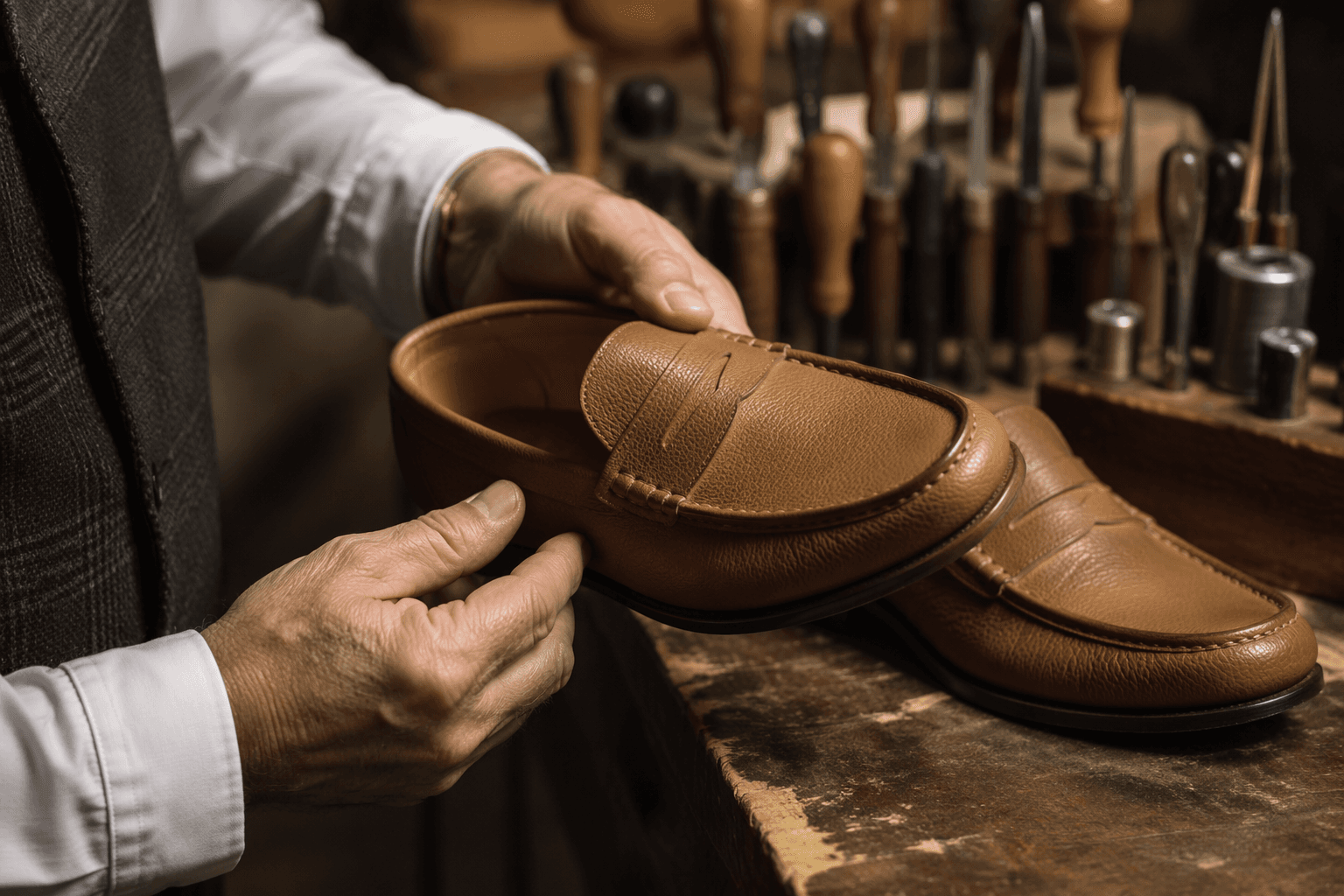
Artioli’s Viareggio loafer puts a familiar idea in a sharper frame: comfort can be the luxury story, if the leather and construction are chosen with intent. The brand’s black deer-leather version is priced at €1,140, pairs the hide with a lightweight natural flat rubber sole, and is pitched as a shoe meant to feel like effortless comfort and freedom.
Deer leather as the design decision
For leathercraft eyes, the key move here is not simply that Artioli used a premium hide, but that it made deer leather the center of the product. The company describes the material as exceptionally soft, and that softness is doing the heavy lifting in the shoe’s identity. In practical terms, deer leather changes the feel of the whole object: it shifts the emphasis away from stiffness and toward drape, touch and ease.
That is a very different proposition from calf or cowhide when the goal is structure, firm shape and a more assertive body. Deer leather, as framed here, is chosen for the handfeel first. The result is a loafer that reads less like a piece of formal armor and more like a polished comfort shoe, which is exactly why the material choice matters so much in this launch.
Why the construction matters as much as the hide
Artioli does not treat the leather as an isolated feature. The company pairs it with a lightweight natural flat rubber sole, and that detail is crucial because the sole keeps the shoe in the same comfort language as the upper. A softer leather with a heavy, rigid sole would fight itself; here, the construction supports the same sensory promise from top to bottom.
That is a useful lesson for anyone working in leather: the hide cannot carry the whole brief alone. When a project is meant to feel supple and relaxed, the welt, sole, lining and overall build need to reinforce that idea. Artioli’s Viareggio does not sell itself on structure or sharp architecture. It sells a specific tactile experience, and every component appears chosen to protect that experience.
What the brand is really selling
The company’s language is strongly artisanal. Artioli says every line is designed with precision and every detail is shaped by Italian craftsmanship, and that framing matters because it turns the shoe into more than a seasonal loafer. It becomes part of a long-running Made in Italy narrative in which leather is not just material supply, but a platform for fit, finishing and expression.
Artioli describes itself as a historical Made in Italy brand with four generations of Italian craftsmanship, and says it has been producing high-quality shoes since the early decades of the 1900s. The brand also says its shoes involve more than 200 manufacturing operations, which underlines how much labor sits behind a shoe that looks quiet on the surface. In this case, the luxury story is not decoration for its own sake. It is craft turned into a sensory claim.
Why the black deer finish feels seasonal
Artioli also leans hard into visual mood. The brand says the deep black of the deer leather should contrast with the tones of a summer garden, which is a restrained but effective way to position the loafer. Instead of shouting with hardware or color blocking, the shoe lets the material and silhouette do the work, and that is a classic move in premium leather goods.
The seasonal language lines up with the brand’s Spring-Summer 2026 presentation, which emphasizes breathable soft materials, light lines and versatile colors. A matching belt option extends the same logic into a coordinated set, giving the material story a second life beyond the loafer itself. For leatherworkers, that is a reminder that luxury often starts with control rather than excess: one hide, one finish, one mood, all pulled together cleanly.
Where deer leather makes sense in your own work
This launch is a strong case study in when deer leather earns its place. It makes sense where softness, flexibility and a light hand are the point, especially in footwear, gloves and other projects that move with the body. It is a better fit for comfort-led pieces than for projects that need crisp edge definition, hard structure or a very rigid silhouette.
In other words, deer leather is not a universal upgrade. It is a specific tool for a specific result. If the project needs elegance, ease and a supple feel under the hand, deer leather can be the right answer. If the goal is a shell that holds sharp form, another hide may be a better match. That trade-off is exactly what Artioli is exploiting in Viareggio: it has chosen softness over stiffness and made that choice look like refinement.
- Use deer leather when the project needs drape and movement.
- Use it when handfeel and comfort are part of the product story.
- Avoid assuming it will behave like a firm veg-tan or a more structured shoe leather.
- Build the rest of the construction to match the softness of the hide, not fight it.
A broader market signal
The timing also fits a wider footwear shift toward softer leathers and suede. Leather industry trend coverage for 2025 and 2026 points to continued interest in comfort-led materials, lighter constructions and wearable styling, which makes a deer-leather loafer feel less like an outlier and more like a read on where the market is headed. The luxury angle is still there, but the language has changed: refined ease is becoming part of the premium sell.
Artioli’s broader footprint reinforces that positioning. The brand lists itself in Lombardy, with headquarters in Tradate and an appointment boutique in Milan, and presents Viareggio through its online shop as a casual shoe with a clear luxury price point. That combination of heritage, retail reach and material storytelling gives the launch weight beyond one model. It shows how a shoe can be built around leather first and still speak fluently to modern luxury.
In the end, Viareggio works because it makes a simple point with precision: if you want comfort to read as luxury, the leather has to feel as good as it looks. Deer leather gives Artioli that softness, the rubber sole keeps it easy, and the whole shoe turns material choice into the headline.
This article was produced by Prism’s automated news system from verified source data, official records, and press releases, then run through automated quality and moderation checks before publishing. The system is built and supervised by the people who set the standards it runs under. Read our full AI policy.
Did this article answer your question?