Avon Hills Folk School offers hand-sewn leather forager bag workshop
Avon Hills Folk School’s forager bag class turns leathercraft into trail-ready gear, with saddle-stitched builds, beginner-friendly instruction, and real-world utility.
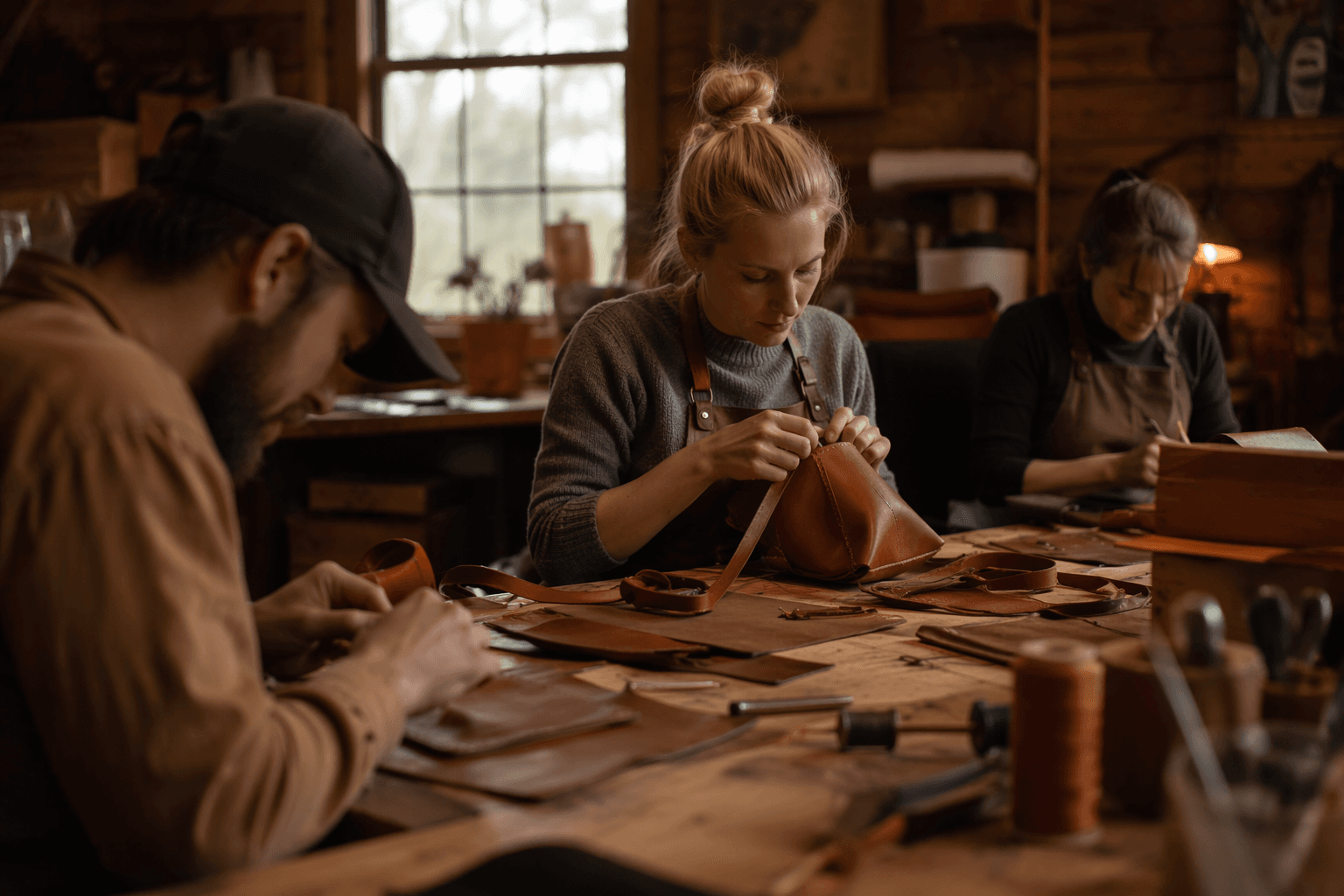
A forager bag workshop at Avon Hills Folk School gives leathercraft a practical hook: students spend a half-day making trail-ready gear they can actually carry, not a decorative sample that stays on the bench. Dan Horan of Merchant Leather leads the June 27, 2026 class from 1 p.m. to 5 p.m., and the project centers on the traditional saddle stitch, the two-needle hand-sewing method that still anchors classic leather work.
A bag project built for use
The class leans into one of leathercraft’s strongest crossover appeals: utility. A good bag is one of the oldest tools a person can carry, and long before pockets or backpacks became common, people relied on leather pouches to keep essentials close at hand. That makes this workshop feel especially natural for makers who already spend time hiking, foraging, or moving outdoors with a small kit of tools and supplies.
Avon Hills folds the class into its foraging programming rather than presenting it as a generic leather accessory lesson, which gives the project a clear purpose. Instead of building around fashion first, the workshop starts with the way the finished piece will be used, carried, and worn in the field. That practical framing is exactly what can pull new people into the craft, especially makers who may not be tempted by a wallet or belt class but will commit to gear they can actually use outside.
What students can make
Students choose their project and leather color in advance, so the workshop works more like a guided build than a one-size-fits-all demo. The available options cover several forms of carry, each with a different silhouette and use case:
- Leather Bucket, a classic cylindrical shape
- Small Forager Satchel, a snap-closure crossbody for essentials
- Large Forager Satchel, with more room for carry
- Large Forager Sling, an open-topped shoulder bag suited to trail use or everyday carry
That range matters because it lets the class meet different needs without losing the common thread of hand-sewn construction. The leather options are described as waterproof and durable, which reinforces the point that this is gear meant to get used, not just displayed. For leathercrafters, that combination of function and finish is often where the hobby feels most satisfying.
How the workshop runs
The class is explicitly beginner-friendly, and all tools are provided. No prior leatherworking experience is required, which lowers the barrier for anyone curious about hand-sewn leather but hesitant to invest in a full bench setup before trying it. The session is designed around the basics of making, with students marking, punching, and stitching their way to a finished bag they can keep using for years.
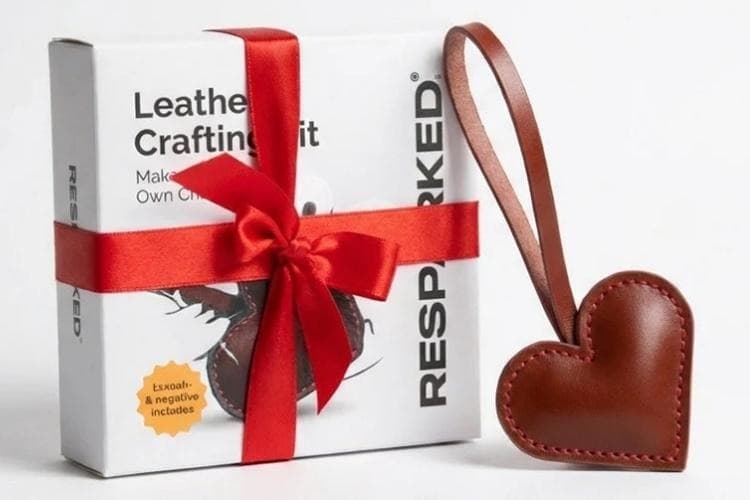
The cost structure is clear as well: tuition is listed at $65, with an $80 materials fee. That transparency helps a class like this feel accessible, especially when the value is tied to a finished object with immediate use. Merchant Leather says its kits are designed to bring leather craft into the home with pre-cut leather, hand-waxed linen thread, solid hardware, and instructions, and that no machines or prior experience are needed. In practice, that is a good fit for a workshop built around steady hand skills rather than a machine-heavy shop environment.
Why Dan Horan keeps drawing makers back
Dan Horan is a self-taught craftsman based in Minnesota, and his teaching record helps explain why the class has a loyal following. Merchant Leather says more than 1,500 students have learned hand-sewn leather through its workshops, and Avon Hills identifies Horan as a teacher who has shared leatherworking with students across folk schools, galleries, and the American Craft Council. That kind of range suggests a teaching style built for beginners as well as returning makers who want cleaner stitching, better hardware placement, and more confidence with traditional hand methods.
Avon Hills has also made clear that Horan’s classes draw attention. The school has described his leather classes as “super popular and always fill up fast,” which lines up with the kind of hands-on, practical project that tends to travel well by word of mouth. The appeal is easy to understand: students get a bag they can use, a method they can repeat, and a project that feels rooted in real craft rather than a single afternoon novelty.
A very old idea, still carrying weight
The workshop also fits into a longer history of carried gear. A museum history notes that men’s bags declined in the 17th century after inner pockets became common in men’s clothing, while another history places wearable pouches thousands of years earlier, including a pouch found with Ötzi the Iceman. That lineage gives the class a stronger frame than a simple accessory lesson: it connects modern makers to one of the oldest forms of portable storage.
That is what makes Avon Hills’ forager bag class stand out in leathercraft. It brings saddle stitch back to the kind of object it has always served best, a sturdy carrier with a job to do, and it does so in a format that welcomes first-time makers as readily as seasoned hands.
This article was produced by Prism’s automated news system from verified source data, official records, and press releases, then run through automated quality and moderation checks before publishing. The system is built and supervised by the people who set the standards it runs under. Read our full AI policy.
Did this article answer your question?