British Leather Supplies guide explains the best knives for leathercraft
The right blade saves leather before it saves time. British Leather Supplies turns knife choice into a practical match between the cut you make and the knife you buy.

Every leather project starts with a cut, and that is why knife choice sits so close to the heart of the craft. British Leather Supplies frames the decision in the simplest possible way: if you want cleaner edges, less waste, and more control, you need a blade that fits the work in front of you, not just a tool that looks versatile on the pegboard.
Why the knife matters before anything else
Leather is dense, fibrous, and often thick, which is exactly why a utility knife or craft knife can feel like the wrong answer once you move past basic cutting. Purpose-built leathercraft knives give you better control, cleaner cuts, improved edge quality, and less hand fatigue, especially when you are working through hides that fight back instead of yielding neatly. That difference shows up fast at the bench, because a good knife is not just about getting through material. It is about getting through it cleanly enough that the rest of the build does not have to compensate.
There is also the hidden cost of ownership, the part a lot of beginners underestimate. A sharp blade needs maintenance, and a knife that rides close to the hand demands respect every time it comes off the bench. Stropping, sharpening, and safe handling are part of the real purchase, not extras you think about later.
Match the blade to the job, not to the fantasy of a full tool roll
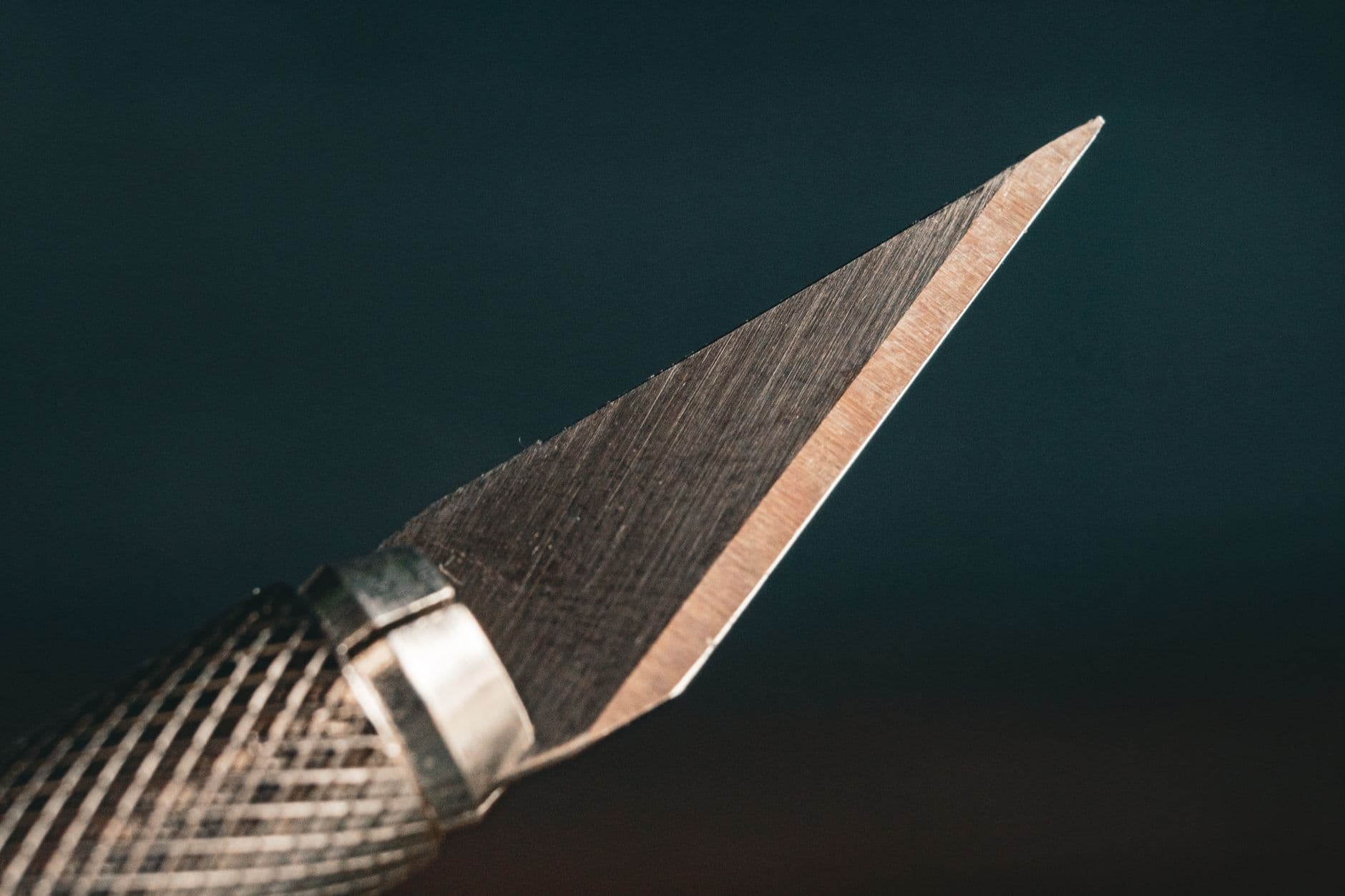
Trim knives are the quiet all-rounders in this conversation. British Leather Supplies presents them as compact, versatile, and beginner-friendly, with uses that make immediate sense in a small workshop: general cutting, pattern work, edge trimming, and detailed pieces like wallets and bags. If you are building wallets, pouches, and other small goods, a trim knife may end up being the blade you reach for most often because it is practical before it is dramatic.
Curved blade knives serve a different kind of need. Their sweeping edge makes curved cuts smoother and more controlled, which is why many professionals treat them as favorites for pattern cutting and detailed work. They do bring a small learning curve, but that is part of the appeal rather than a warning label. Once you get comfortable with the arc of the blade, the knife starts to feel like an extension of the cut line instead of a fight against it.
Clicker knives belong in the same serious-tool conversation, but for a different reason. They are built for repeated precision cuts, which matters when you need consistency more than flair. If your work involves making the same shapes over and over, this is the sort of blade that keeps your process tidy and your output uniform.
The specialist tools that change how you finish an edge
Skiving knives deserve their own lane because skiving is not a side task. Weaver Leather Supply describes skiving knives as precision tools for thinning, beveling, and transition work, and that is exactly how they function in a clean leather workflow. When you need an edge to taper smoothly, a skiving knife gives you the control to reduce bulk without mangling the surrounding leather.

Weaver’s skife knife pushes that specialization even further. It is designed to horizontally split leather to the right thickness and taper edges, which makes it a useful tool when the job is about weight and finish as much as shape. Weaver also notes that sharp, well-balanced skiving knives make thinning and shaping leather edges a smooth, controlled process. That combination of balance and edge control is what turns skiving from a rough necessity into a precise part of the build.
Round knives sit near the center of the leatherworker’s toolkit for a reason. Tandy Leather says they are among the most versatile and most used tools for cutting and skiving leather, from the thinnest to the heaviest hides. Tandy’s Al Stohlman Brand Round Knife is described as having a polished, mirror-like blade that helps it glide through thick leathers like saddle skirting, which makes it a strong choice when you need one tool to handle serious material with authority.
Choose the knife that fits the projects you actually make
That practical match matters more than collecting categories. If your bench mostly sees wallets, card holders, and small bags, a trim knife or curved blade knife may be the smartest first buy because those blades align with the cuts you actually make most often. If you move into larger, heavier work, the equation changes and so does the knife.
British Leather Supplies reinforces that point by pointing readers toward heritage and trade brands like George Barnsley, C.S. Osborne, and Ivan. That kind of lineup tells you something important about knife buying in leathercraft: trust in the maker matters almost as much as blade shape, because you are buying a tool that has to hold an edge, feel right in the hand, and stay useful after real shop wear.
A craft with very deep roots
The logic behind all of this reaches far beyond one modern buying guide. Ancient peoples used leather for clothing, footwear, bags, armor, saddles, animal trappings, tents, and sails, so cutting leather has always been tied to everyday making. A Smithsonian Magazine report in September 2021 described a 400,000-year-old bone tool found in Italy that researchers linked to smoothing leather, which is a vivid reminder that this work has been refined over an almost unimaginable span of time.
The industrial story lands in the same place. Histories of the leather industry say cutting leather with a knife was central to shoemaking and other leather goods production, and Jan Matzeliger’s lasting machine is remembered for reducing shoe manufacturing costs by one-half. Even as production changed, the basic truth did not: good leatherwork still begins with precise cutting, and the right knife still shapes everything that follows.
In the end, the smartest knife purchase is the one that respects the cut in front of you. Choose the blade that matches your bench, keep it sharp, and the whole craft starts to feel less like wrestling leather and more like working with it.
This article was produced by Prism’s automated news system from verified source data, official records, and press releases, then run through automated quality and moderation checks before publishing. The system is built and supervised by the people who set the standards it runs under. Read our full AI policy.
Did this article answer your question?