Hermès saddle stitch defines durable luxury leathercraft
Hermès turns saddle stitch into a durability lesson: two needles, one thread, and a hand-sewn seam that still shapes luxury repair, finish, and longevity.
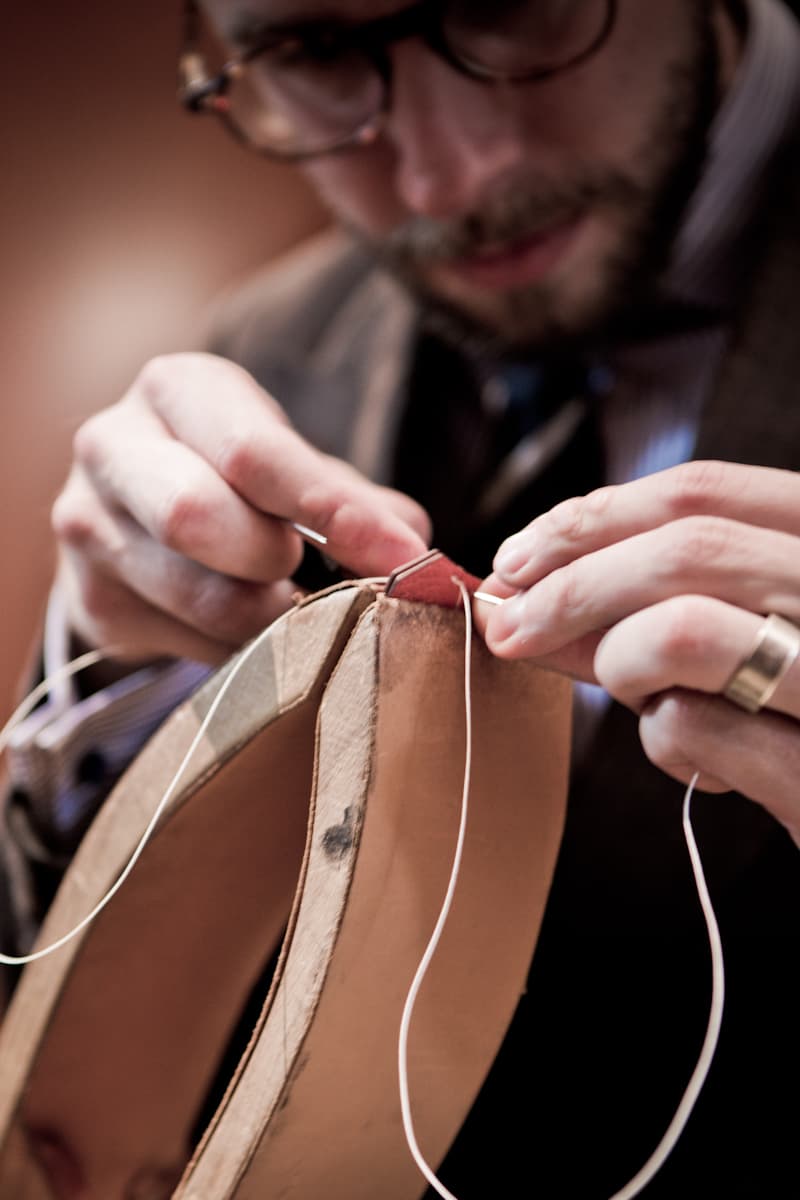
The same hand-applied saddle stitch runs through Hermès bags, belts, agendas, saddles, bridles, and tack accessories, a line the house traces back to 1837, when Thierry Hermès founded the business making harnesses and saddles for European nobility.
What saddle stitch actually consists of
Saddle stitch begins before the thread moves. The maker marks or opens the line of holes with an awl, keeps the spacing even, and works with two needles and one thread, passing each needle through the same hole from opposite sides. That rhythm is why the seam stays neat: the stitch line is built hole by hole, not blasted through by a machine that can run a seam in one pass.
The practical value is easy to understand on the bench. If one thread breaks, the seam does not unravel the way a machine stitch can. That is one reason contemporary luxury leather makers still treat saddle stitch as a marker of durability and craftsmanship, often pairing it with waxed linen or similarly robust thread so the line stays controlled and the edge stays clean.
Awl spacing determines the look of the seam, the two-needle rhythm determines whether the line stays even, thread tension keeps the seam snug without distorting the leather, and edge consistency keeps the whole piece looking deliberate rather than rushed. Once those pieces are in place, the stitch becomes a structural feature.
Why luxury leather kept the stitch
The method comes from saddle making, where a seam failure could have serious consequences for the rider. It was built for strength, reliability, and repairability. Before mechanized vehicles took over, horse-drawn transport dominated mobility, so saddlery shaped the standards for how leather had to perform under strain.
Hermès still leans on that inheritance in its own equestrian world. Its saddles, bridles, and tack accessories are crafted with saddle stitch, which keeps the technique anchored in use rather than display. The same logic carries into high-end bags.
The handwork also explains why the stitch remains such a visible marker of labor-intensive luxury. A single artisan can spend roughly 24 hours hand-sewing one Kelly bag, and each Birkin or Kelly bag is made start to finish by one artisan.
What a home leatherworker can borrow
You do not need a luxury workshop to borrow the right parts of the method. What you can realistically take from Hermès-style saddle stitch is the structure of the process, not the full production budget or time commitment.
- Mark the hole line carefully with an awl before you stitch.
- Keep the spacing even so the seam reads clean from end to end.
- Use two needles and one thread if you want the classic saddle-stitch structure.
- Pull with consistent tension so the seam sits flat instead of wavering.
- Keep the edges aligned, because edge consistency is what makes the line look finished.
- Choose saddle stitch for straps, belts, small goods, and stress points where seam failure would matter.
That approach is especially useful on pieces that take abuse. A belt loop, a strap attachment, or a wallet fold benefits from the same logic Hermès uses in saddles and bridles: if the seam is built to survive one point of failure, the whole object gains resilience.
Repair is part of the design, not an afterthought
Reworking the saddle stitch can help restore bags, belts, and agendas. A seam designed around two needles and one thread can be opened and rebuilt in a controlled way, which is one reason saddle-stitched goods age differently from many machine-sewn pieces. The structure is meant to be serviceable.
Old Hermès pieces show the stitch doing its job over time. The seam remains readable, the labor remains visible, and the construction still makes sense when the bag needs attention.
Why the finish still matters
The reason saddle stitch keeps its place in luxury leathercraft is not sentiment. It is finish. A carefully marked line, a steady two-needle rhythm, and controlled tension produce a seam that looks deliberate from the first hole to the last, and that visual order is part of the appeal of high-end bags as much as their strength.
This article was produced by Prism’s automated news system from verified source data, official records, and press releases, then run through automated quality and moderation checks before publishing. The system is built and supervised by the people who set the standards it runs under. Read our full AI policy.
Did this article answer your question?