How to choose a leather stitching kit that actually works
The right stitching kit should fit the first project you actually want to make, from wallet repairs to small bags, and it should stay useful once your skills move on.
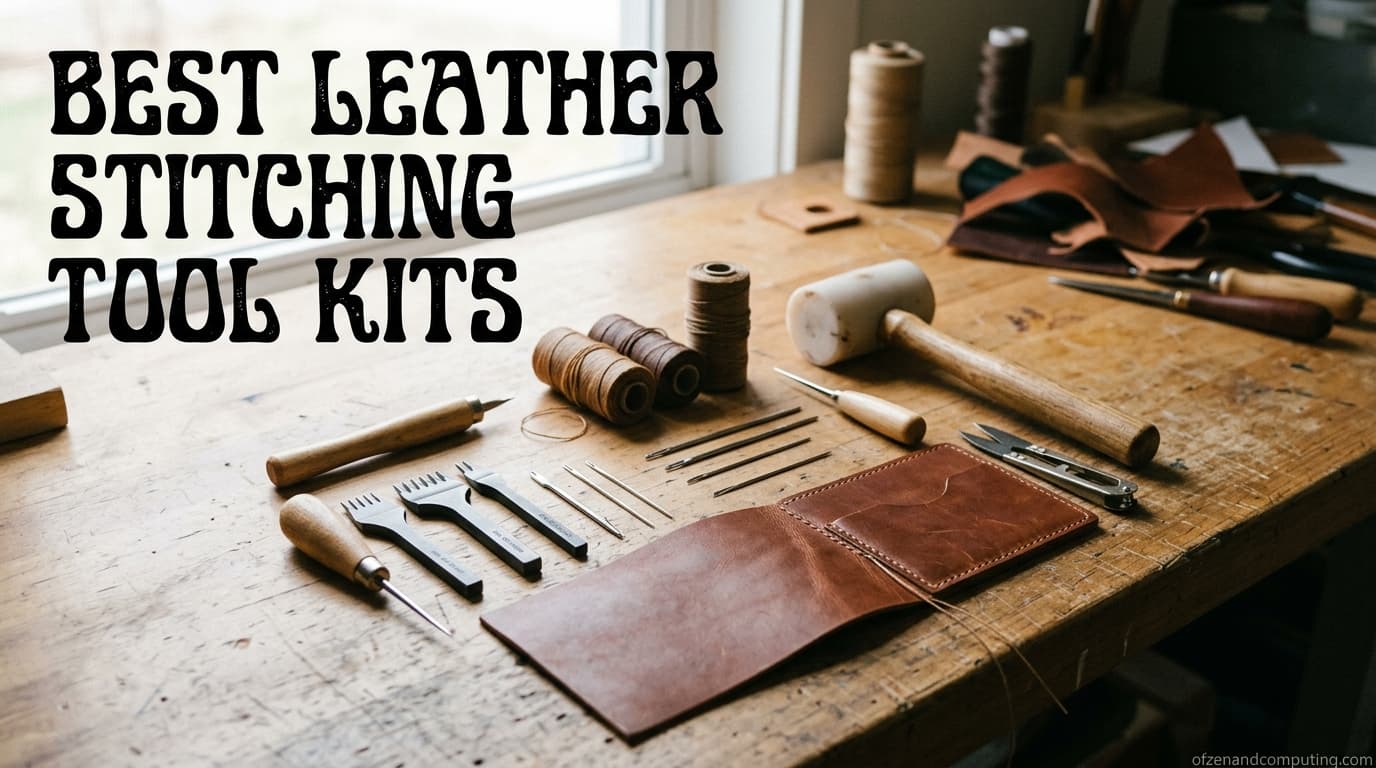
A leather stitching kit should do more than open a new hobby. The real test is whether it helps you finish a first wallet, belt, repair, or small good without fighting weak thread, sloppy spacing, or tools that go soft after a few seams. The best kits are the ones that make the first build feel manageable and still leave you room to grow.
Why the right kit matters
Hand sewing got a real boost during the pandemic, when the craft world saw more books, online classes, kits, and other hand-stitching products. That shift carried into leathercraft, where the appeal is obvious: you get a slower, more tactile process, plus the control that makes hand work feel different from machine stitching. Leather is not a tiny niche either, which helps explain why a beginner-friendly entry point matters. Grand View Research estimated the global leather goods market at USD 282.1 billion in 2025, with growth projected to USD 538.2 billion by 2033, while the U.S. leather and fur products market was valued at USD 18.47 billion in 2024 and projected to grow at 7.9% CAGR from 2025 to 2030.
Those numbers do not mean a stitching kit drives the whole category, but they do show why the entry-level tools matter so much. If you are starting with leathercraft, the kit you buy now shapes whether your first few projects feel like real progress or a frustrating detour.
Match the kit to the first project
The smartest way to choose is to start with the project in front of you, not the prettiest box on the shelf. If your first goal is a wallet, card holder, or pouch, you want a kit that gives you consistent hole spacing and thread that behaves well on short, precise runs. Even small unevenness shows up fast on compact goods, so pricking consistency matters more than extra accessories you may never touch.
If you are thinking belts or straps, durability moves to the front of the line. Longer seams expose weak chisels, poor awl control, and thread that does not pull cleanly, so a kit that feels fine on one small case can become limiting fast. For repair work, portability and speed matter more than a full bench setup, because you are often fixing a seam, a wallet edge, or a favorite piece that needs a reliable patch rather than a deep tooling bench.
For small goods and your first bigger build, a more complete kit starts to make sense. Once you move from a simple card holder to a messenger bag or another larger project, you will care less about novelty and more about whether the tools keep pace with steady, repeatable work.
What to look for in the tools themselves
The strongest kits are the ones that respect the basics: awl quality, pricking consistency, thread usability, and storage that keeps everything usable instead of scattered. Tandy Leather says stitching chisels or pricking irons are ideal for creating evenly spaced holes for hand stitching, and that is exactly the kind of detail that separates a clean stitch line from a crooked one. If the spacing is off, the whole project looks off, no matter how good the leather is.
Material matters too. Tandy says some premium diamond stitching chisels are made from 41xx steel and are case hardened for strength and toughness, while some fine diamond chisels use hardened stainless steel for consistent spacing. That is the kind of build quality that helps a kit stay useful after the novelty wears off. A bargain set that bends or loses its edge quickly may get you through one project, but it will not carry you far.

Thread is just as important. Weaver Leather Supply’s hand-stitching kit includes Ritza Tiger Thread, Saddler’s needles, a stitch groover, a flat chisel set, and a stitching pony, which is a strong reminder that a kit is only as good as the materials it gives you to work with. If the thread feeds cleanly and the needles pair well with it, the whole rhythm of the stitch gets easier.
How the guide’s top picks separate out
The three kits highlighted here each serve a different kind of beginner. The PLANTIONAL Upholstery Repair Sewing Kit leans toward a compact, practical repair package, which makes sense if you want something you can grab for mending and smaller fixes. The MORFEN Leather Sewing Kit is positioned as the budget-friendly choice, so it is the kind of set that can get you started without a big upfront commitment.
The Nicpro 85PCS Leather Tooling Kit lands on the other side of that spectrum, with a larger, tooling-oriented setup and more thread colors plus storage. That makes it better suited to someone who wants room to experiment beyond the very first project. The key point is not which one is “best” in the abstract, but which one fits the stage you are actually at.
Hand stitching still earns its place
Hand sewing remains a foundational leathercraft skill because of the strength and character it brings to a project. Weaver Leather Supply notes that once you get the hang of it, you can sew about 2 1/2 inches per minute, which is slow compared with machine work but completely workable for the kind of seams most leather projects demand. That pace is part of the tradeoff, and it is worth accepting if you care about the finished look.
There is also a durability argument that machine stitching cannot fully match. Tandy Leather says saddle stitching is stronger than a machine stitch because if one side is cut, the overall seam can still retain integrity. That is why a good starter kit is not just a stopgap until you buy a machine. It is a real on-ramp into the craft.
When a starter kit starts to feel small
A kit becomes limiting when it can no longer support the next project you want to tackle. If you started with a wallet and now want belts, bags, or repeat repair work, you will notice quickly whether the chisels hold spacing, whether the awl feels precise, and whether the thread is still pleasant to use after a few builds. Storage matters too, because a kit that stays organized is easier to grab for a quick repair and easier to trust when you sit down to stitch.
That is the real lesson here: the right stitching kit is not the one with the most pieces, it is the one that fits your first build and still feels solid when your skills move forward. If it can get you through a wallet without frustration and still help on the next repair, you bought the right one.
This article was produced by Prism’s automated news system from verified source data, official records, and press releases, then run through automated quality and moderation checks before publishing. The system is built and supervised by the people who set the standards it runs under. Read our full AI policy.
Did this article answer your question?