India backs Ranipet leather waste-to-salt plant with 50 crore funding
Ranipet’s 50 crore waste-to-salt plant could clean tannery runoff and reshape the ethics behind the leather stock makers buy. The test is whether cleaner compliance reaches the bench.

Ranipet’s tannery belt is getting a 50 crore Zero Solid Waste Discharge facility that aims to turn leather-processing waste into industrial-use salt, a move that could matter far beyond the treatment plant fence line. For makers who buy sides, crust, and finished stock, the real question is whether cleaner upstream handling translates into steadier supply, better compliance, and fewer environmental liabilities baked into the leather trade.
The plan was put in front of the sector at an interactive meeting organized by the Council for Leather Exports on June 8, 2026, at Taj Connemara in Chennai. Nidhi Kesarwani of the Department for Promotion of Industry and Internal Trade, Petal Dillon and Taruna Doliya from the Department of Commerce, and CLE leaders Mukhtarul Amin, Abdul Wahab and Aqeel Panaruna were among those in the room as officials reviewed the Make in India push and its impact on leather, footwear and leather products. Kesarwani described the facility as “one of its kind in the world,” and said the idea was to make waste conversion economically useful, not just cleaner on paper.
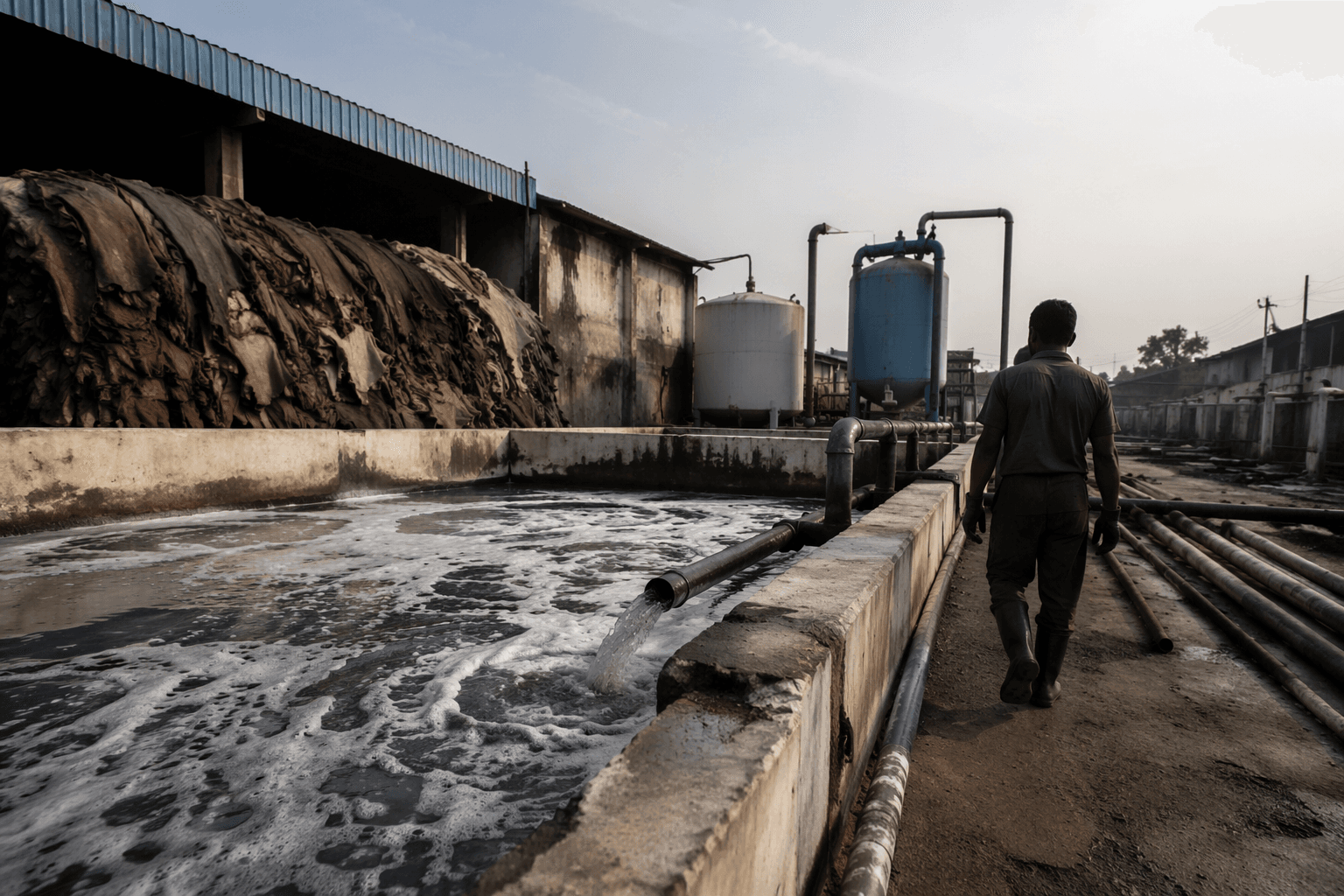
The project is being framed as a tripartite effort involving the Tamil Nadu government, industry-led special purpose vehicles and the Centre, with completion targeted for December 2026. That matters in Ranipet, where the leather economy already depends on a dense treatment network and a hard-earned reputation for staying within environmental limits. One local operator says the Ranipet and adjoining Melvisharam clusters are served by five common effluent treatment units, while the region has also lived through the financial and regulatory pressure of an effluent case that led tannery operators to deposit 75 lakh in compensation.
This latest investment sits inside a wider infrastructure buildout. The Hindu reported on June 9 that Ranipet district is getting both a Mega Leather Footwear and Accessories Cluster and a zero-solid-waste CETP, while Panapakkam is being developed as a plug-and-play hub for non-leather footwear manufacturing. The Panapakkam cluster spans 290.58 acres and has received 125 crore in central assistance. Tamil Nadu is already a major beneficiary under the Indian Footwear and Leather Development Programme, which approved upgradation of 12 CETPs across states, and an EU SWITCH-Asia circularity project launched in 2022 has worked with 100 tanneries and 1,000 workers across Ambur, Pallavaram, Ranipet and Vaniyambadi.
For small leatherworkers, the clearest upside is not an immediate discount on hides. It is the chance that cleaner tannery infrastructure will keep more suppliers compliant, more export orders moving and more material flowing out of a region that still sits at the center of India’s leather trade. CLE says India’s footwear, leather and leather-products exports reached US$4.83 billion in 2024-25, and Ranipet’s new waste facility is meant to protect that base by changing what happens before a side ever reaches the bench.
This article was produced by Prism’s automated news system from verified source data, official records, and press releases, then run through automated quality and moderation checks before publishing. The system is built and supervised by the people who set the standards it runs under. Read our full AI policy.
Did this article answer your question?