Lab-grown T. rex leather handbag fails to sell at Paris auction
A lab-grown T. rex leather handbag drew attention in Paris but no buyer, exposing how novelty hype can outrun trust in a luxury material.
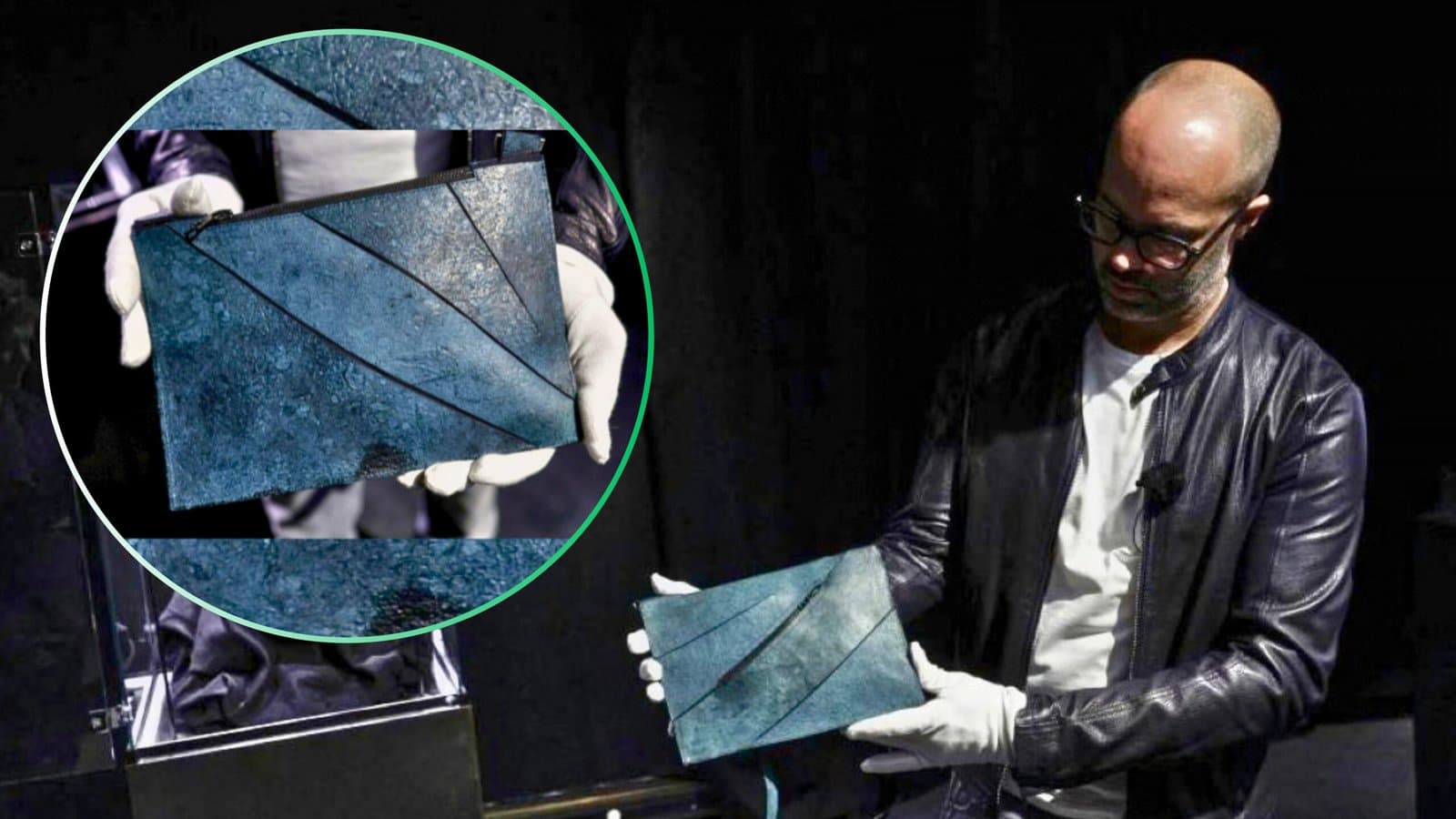
A handbag billed as the world’s first made from T-Rex Leather™ went unsold in Paris, after Giquello put it under the hammer on June 11 at Hôtel Drouot as part of Tentation°4. Drouot had valued the 26 x 18 cm piece at €300,000 to €500,000, and the spectacle had been built months earlier with an unveiling in Amsterdam beside a dinosaur skeleton.
The bag was presented as the product of years of research by Lab-Grown Leather Limited, a subsidiary of BSF Enterprise PLC, and The Organoid Company. The material was said to come from reconstructed T. rex protein sequences introduced into specialized cellular systems to create a collagen-based leather, then vegetable-tanned. The bag itself was made by Enfin Levé, the techwear label founded by Polish designer Michal Hadas, and the finish included silver fittings, a lost-wax cast buckle and a cold-forged silver element referencing the DNA double helix. At the Amsterdam display, the piece was shown alongside a 10 x 15 cm swatch valued at €10,000 to €20,000 and finished with sterling silver and black diamonds.

The Paris sale exposed the gap between a gripping origin story and actual market appetite. More than 200 people had registered interest before the auction, but bids barely crossed $150,000, far below the level Giquello had expected and well under the figure that framed the sale. Drouot had cast Paris as a symbolic stage because of its luxury and auction history, and had chosen Maison Giquello for its experience with rare objects and natural history. Even so, the room did not translate the publicity into a serious buying war.

That mismatch is the real lesson for leathercraft and luxury buyers alike. A dramatic provenance can grab headlines, whether it is tied to dinosaurs, science labs or a museum display, but price discovery still depends on trust. Buyers want more than a clever narrative: they want material that feels credible in the hand, performs like leather and is labeled honestly. In this case, some skeptical scientists questioned the T-Rex leather label and said other animal-derived material was involved, while concerns about commodifying prehistoric remains may have cooled the room further. The auction ended up proving that a spectacular concept is not the same thing as a material a collector will actually buy.
This article was produced by Prism’s automated news system from verified source data, official records, and press releases, then run through automated quality and moderation checks before publishing. The system is built and supervised by the people who set the standards it runs under. Read our full AI policy.
Did this article answer your question?