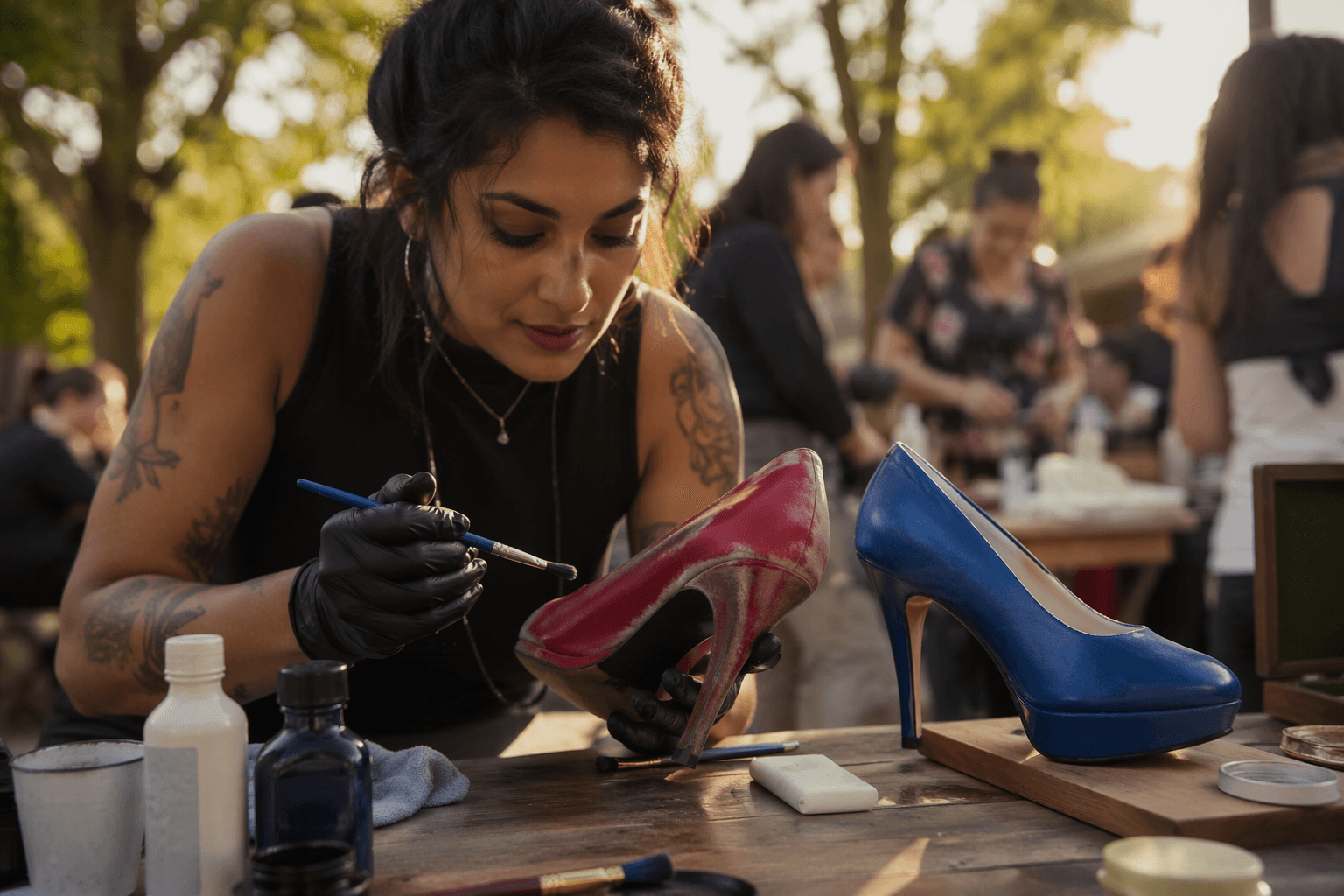
Leatherworking shifts from women’s task to specialized male craft, study finds
Leatherwork wasn't always a male specialty. Cross-cultural data and Mande craft traditions show gender roles shift with farming, trade, and social status.
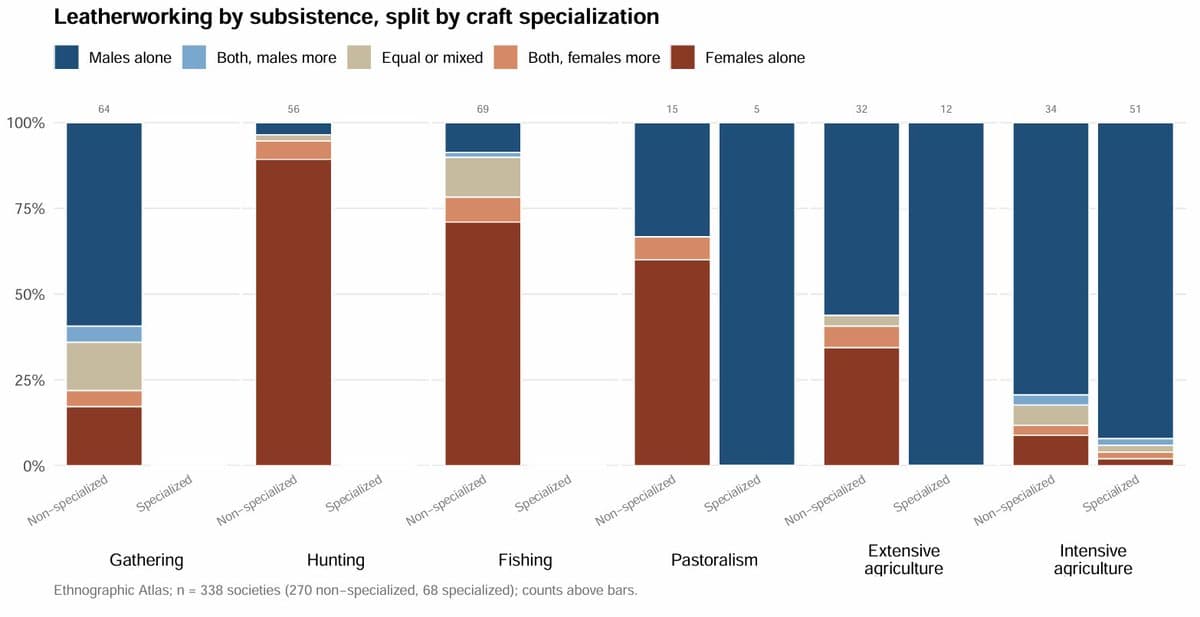
Leatherworking has never belonged to one fixed gender line. Across societies, the craft moves with subsistence systems, trade routes, religion, and the way work gets specialized, which is why a sheath, amulet case, or pair of shoes can tell a social history as clearly as a technical one. The modern assumption that leathercraft has always sat with men looks much newer when measured against the long record.
What the cross-cultural study actually shows
George P. Murdock and Caterina Provost built one of the clearest cross-cultural tests of sex division of labor, coding 185 societies and 9,250 items of information. Their 1973 study treated division by sex as one of the original and most basic forms of economic specialization and exchange, then traced how that division changes as work becomes more specialized. The pattern they found is blunt: as occupational specialization grows more complex, societies tend to assign fully specialized tasks to male craftsmen.
Leather sits right inside that pattern. In their analysis, the manufacture of leather products, the preparation of skins, and the making of clothing loaded together in a factor they labeled “processing of animal products.” The study also found that when the plow enters agriculture, masculine participation in agricultural operations rises, and that the sex using a product tends to be the sex that produces it. For leathercraft readers, that is a reminder that production lines are rarely just about skill. They are also about who is tied to farming, who is tied to exchange, and who gets pushed into formal specialization.
Mande craft traditions make the pattern concrete
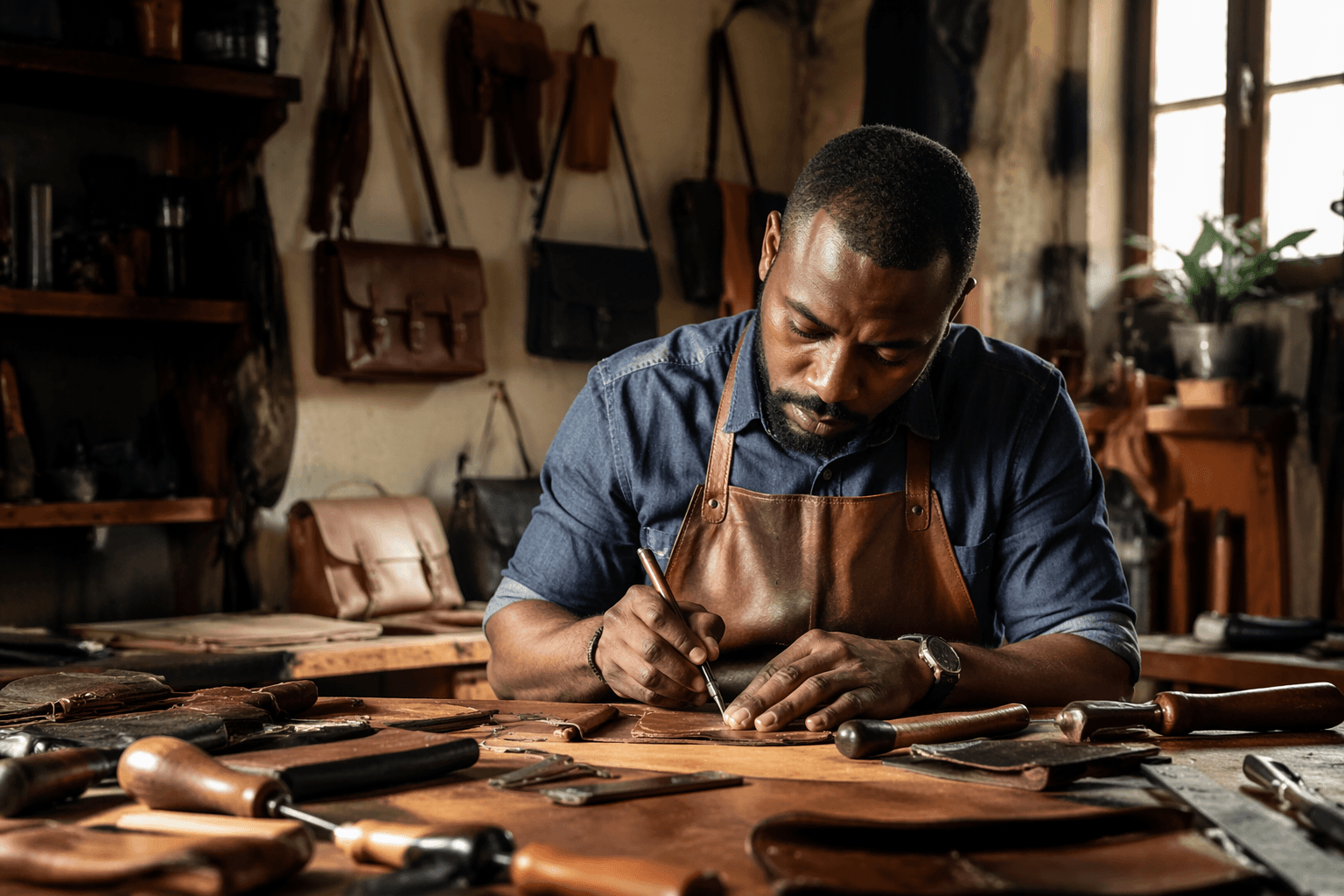
Barbara E. Frank’s 1998, 192-page book on Mande craft traditions gives the abstract pattern a very specific West African shape. Among Mande-speaking groups, gender determines craft specialization in both pottery and leatherworking. Ceramic water jars and cooking pots are made only by the wives and female relatives of blacksmiths, while leather objects are produced by male leatherworkers.
Those leather objects are not generic either. Frank identifies knife sheaths and amulet cases as long-standing forms, then shows the tradition extending into more recent western-style shoes and bags. That matters because it shows leatherwork changing with demand without losing its social coding. The craft is not frozen in one object type; it adapts to market realities while still marking who does the making.
Frank also places Mande leatherworkers in a wider historical frame tied to the rise and fall of empires, trans-Saharan trade networks, and the spread of Islam. In other words, leathercraft there is not just a workshop practice. It is part of regional art history, and the technologies of the trade help explain how status, commerce, and religious change shaped who was visible in the craft.
Why the old hunter-gatherer script no longer holds
The leatherworking story gets sharper when it is set against newer research on foraging societies. A 2023 review of 63 modern foraging societies found that women hunted in 79 percent of them. That finding cuts directly against the old shorthand of “men hunt, women gather,” and it matters here because leatherwork has often been read through the same kind of oversimplified gender map.
Once women’s hunting is documented at that scale, it becomes much harder to treat gendered labor as a universal rule. The better reading is that labor patterns are flexible and shift with conditions. In leathercraft terms, that means the move from women’s task to male-specialized craft is not a timeless law. It is an outcome shaped by subsistence system, technology, trade, and social organization.
Status, credit, and who gets remembered
Mande society makes the question of recognition impossible to ignore. Blacksmiths, potters, leather-workers, bards, and other specialists are grouped together as nyamakalaw, a powerful social class. That is a reminder that craft is never only manual labor. It is also social rank, inherited knowledge, and public standing.
That same social structure can hide as much as it reveals. Adria La Violette’s 1995 chapter on women craft specialists in Jenne shows that women’s roles in craft production can be visible and still underrecognized. For today’s leathercraft community, that is the heart of the access and credit problem: who gets trained, who gets named, who gets sold as a “master,” and whose work is treated as background labor rather than authored skill. The historical record shows that visibility has never been evenly distributed just because the hands at work were.
What the living tradition in Mali adds
The story is not only archival. In Mali, leatherwork remains part of living artisan practice and is promoted alongside cultural heritage and local livelihoods. Around Menaka, some 360 artisans have worked through displacement and return, including people who had gone to Niger and later came back to a restored House of Artisans. There, leatherwork sits alongside silversmithing, sewing, and carpentry as part of a shared craft economy.
That detail matters because it shows leathercraft surviving through community structure, not just personal technique. The same region that once linked leatherworkers to trade and empire now links them to recovery, continuity, and daily income. The craft has not lost its social meaning; it has carried it forward into new conditions.
Leatherwork’s history is not a straight line from women to men, or from household task to specialized trade. It is a map of changing economies, changing status, and changing visibility, and that is exactly why the old assumptions about who has historically done the work need to stay under pressure.
This article was produced by Prism’s automated news system from verified source data, official records, and press releases, then run through automated quality and moderation checks before publishing. The system is built and supervised by the people who set the standards it runs under. Read our full AI policy.
Did this article answer your question?