Malaysian leather artisans blend tradition, modern design, and handmade appeal
Malaysian leather makers are turning heritage cues into bags people actually want to carry, using cleaner design, better materials, and craft-led details.

Malaysia’s leather makers are proving that tradition does not have to look old-fashioned to feel authentic. Across studios in Kuching and beyond, artisans are taking cues from heritage, architecture, nature, and daily street life, then shaping them into bags and accessories built for modern use. The result is work that answers fast fashion with something slower, more personal, and far more durable.
Why handmade leather still has an audience
The pressure on handmade products is real. Fast fashion, algorithm-driven trends, and mass production keep pushing novelty at speed, but the leather artisans working in Malaysia are finding that plenty of buyers still want the opposite: something with meaning, longevity, and a story behind it. That shift matters because leather already asks for attention, from cutting and edge work to stitching and finishing, so the appeal is not just visual. It is tactile, functional, and tied to the maker’s hand.
That is why these makers are not treating craft as a museum exercise. They are building products that fit into everyday wardrobes, then letting the handmade parts show through in the silhouette, material choice, and final details. The strongest pieces do not shout heritage; they carry it quietly.
Chim Yee Hui’s route from mixed media to leather
Chim Yee Hui, who founded Atelier Chim in Kuching, came to leathercraft in 2012 after first working in papercraft, embroidery, and patchwork. She studied leathercraft in Paris and later worked as a prototypist for the French luxury house Moynat, a background that shows up in the discipline of her making. Her pieces draw inspiration from nature, architecture, and everyday objects, and she works with European leathers, which helps her keep the finish crisp and the lines clean.
Her path is a useful reminder that contemporary leatherwork does not have to begin with a single straight line of apprenticeship. Chim’s earlier textile and paper work likely sharpened her eye for structure and surface, while Paris and Moynat gave her a luxury prototyping lens that values precision. In practice, that makes her a model for anyone trying to translate cultural influence into something people will carry now, not just admire in a display case.
Ryan Lee and the pull of made-to-order work
Ryan Lee’s story comes from a different starting point but lands in the same place: a maker-driven response to modern demand. He made his first leather bag at 14, went on to study fashion design, and now works full-time as a leather artisan. Most of his output is made-to-order, a format that suits both the pace of leatherwork and the current appetite for objects that feel personal rather than mass-issued.
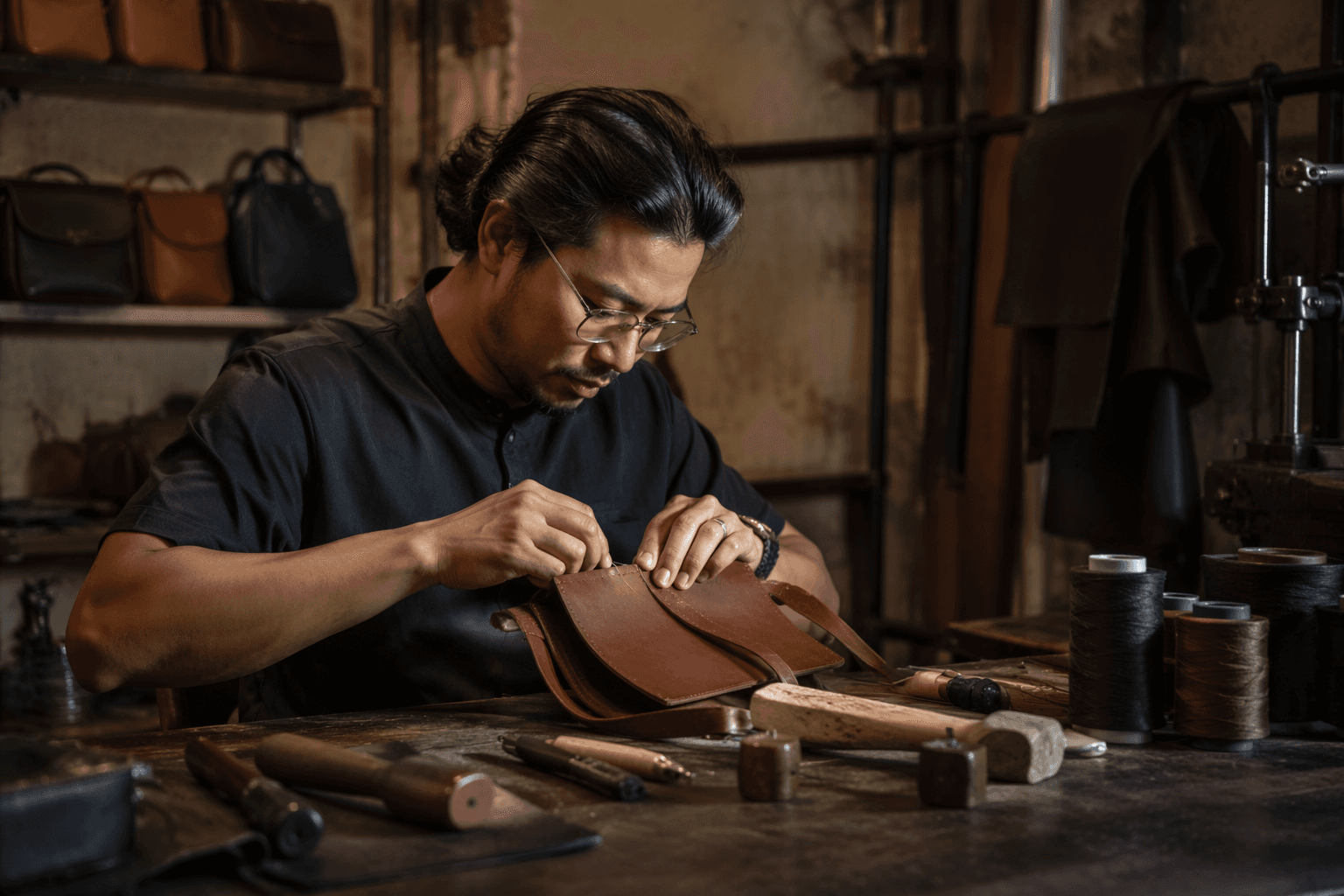
Made-to-order also changes how a leather business can grow. Instead of chasing volume, Ryan’s model centers on customization, fit, and direct client relationships, with expansion still framed as a future goal. That kind of pace may look modest beside fast-fashion systems, but it is exactly what gives handmade leather its edge: the product is built around use, not trend churn.
Hana Fedora’s scale, sourcing, and eye for place
Hana Fedora shows how a small leather practice can grow without losing its handmade identity. She has moved from working alone to leading a team of craftspeople in just a few years, which tells its own story about demand for well-made leather goods. Her sourcing is equally specific: she uses premium tanneries in Italy and Spain, and some materials also come through reputable Chinese tanneries that work to European standards.
Her design ideas come from the world around her, especially heritage buildings and morning markets. That matters because it keeps the work grounded in lived Malaysian texture instead of borrowed nostalgia. A good leather piece does not need to reproduce a historical object literally; it can capture the rhythm of an old façade, the structure of an arcade, or the energy of an early market run and still look current.
How tradition stays contemporary instead of costume-like
The design lesson across these makers is restraint. Heritage influence reads best when it shapes structure, proportion, and material rather than turning into a decorative costume. Chim’s nature and architecture references, Ryan’s made-to-order approach, and Hana’s premium material sourcing all point toward the same principle: let the craft do the talking before the motif does.
For leathercrafters looking to bring cultural influence into their own work respectfully, the practical choices are usually the quiet ones:
- Pattern choice: borrow geometry, spacing, and silhouette from heritage buildings or familiar daily scenes, instead of pasting literal symbols across the whole panel.
- Color: keep the palette close to the material and the place that inspired it, so the leather still feels like leather and not a prop.
- Hardware: use clean buckles, clasps, and rings that support the form rather than fighting the cultural reference.
- Finishing: edge paint, burnishing, and stitching should stay disciplined and precise, because polished finishing is what keeps a heritage cue looking intentional rather than theatrical.
That approach also helps the piece age well. When a bag is built around form, material, and finish, it can carry a cultural echo without becoming a novelty item.
A wider Malaysian craft movement
Leather is part of a larger Malaysian craft conversation, not a one-off. Across other traditional sectors, makers are blending heritage techniques with contemporary design and looking for wider markets, while some collaborations are helping rural artisans keep practicing their craft. The same pattern appears in leather-adjacent stories too, including the work of Raja Akif Raja Muhammad Ariff, whose architectural training informs his handmade leather goods.
Seen together, these makers are outlining a practical way forward for craft in Malaysia: honor the source material, modernize the object, and build for real use. That is how a handmade bag stops feeling like a nostalgia piece and starts feeling like something you reach for every day.
This article was produced by Prism’s automated news system from verified source data, official records, and press releases, then run through automated quality and moderation checks before publishing. The system is built and supervised by the people who set the standards it runs under. Read our full AI policy.
Did this article answer your question?