Tandy Basic Tooling class shows leathercraft starts with a system
Tandy’s Basic Tooling class treats leathercraft as a repeatable workflow, not a stamp pile. The basic 7 teaches cut, shade, and build depth before you buy a drawer full of extras.
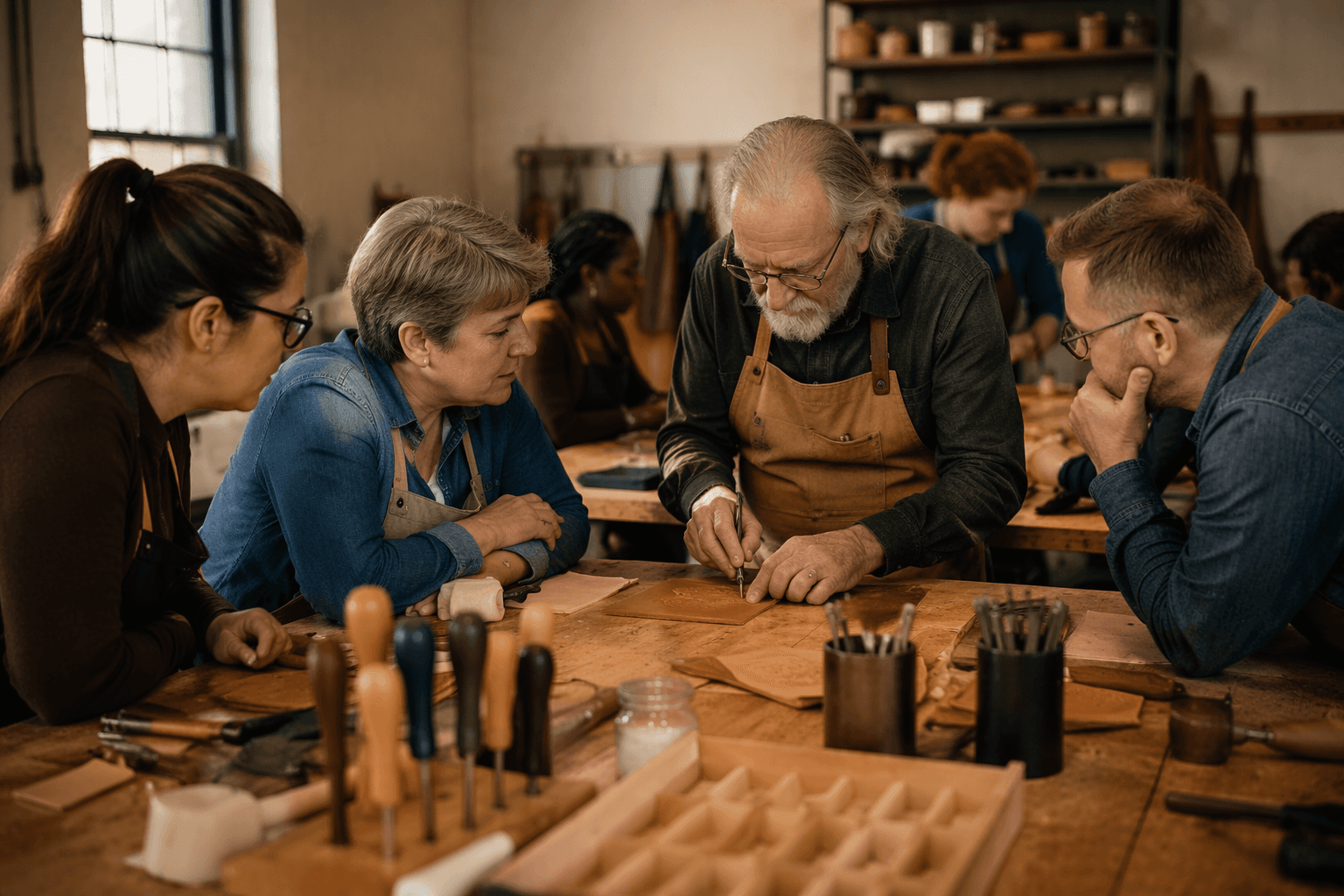
Pattern transfer, a swivel knife, and six stamping tools set the order of operations in Tandy’s Basic Tooling class. That small core kit is how tooled leather gets its shape, depth, and flow.
The basic 7 is the language of the bench
The Craftool Basic 7 Tool Set turns that idea into one kit. It includes a swivel knife, seeder stamp, pear shader stamp, veiner stamp, background stamp, camouflage stamp, beveler stamp, and a storage rack with room for the collection to grow. The set consists of the six basic tools used in most floral patterns, plus the swivel knife.
The swivel knife establishes the cut line, the pear shader creates natural shading, the beveler adds dimension, the veiner suggests leaf veins, the seeder creates clustered dots, the background stamp pushes surrounding leather back, and the camouflage stamp adds motion and texture. Used in order, those tools keep the image from looking flat, muddy, or overworked.
Why the sequence saves time and money
A beginner can burn money fast by buying stamps before learning what each one is supposed to do. The basic 7 slows that impulse down and replaces it with a repeatable workflow: cut first, then model the shape, then fill the negative space, then finish the field so the design reads clearly. Each tool teaches a separate part of the visual language instead of leaving you to guess.
Once you understand why a pear shader softens a petal or why a beveler lifts an edge, those same instincts show up in belts, wallets, panels, journal covers, and other tooled pieces.
The handbook sets the pace
Tandy uses The Leather Craft Handbook by Tony and Kay Laier as the guide for the class, and the book’s structure mirrors the way the craft is normally learned. The 30-page beginner guide covers pattern transfer, stamping, carving, coloring, staining, dyeing, lacing, stitching, hardware setting, and belt making. It also walks through workspace and safety, leather preparation, transferring patterns, basic stamping, basic carving, coloring, finishes, edge treatments, lacing, stitching, and belt-making in a clear sequence.
The sequence starts with setup and ends with finishing and construction, placing tooling inside a larger shop routine rather than a one-off art exercise. It keeps beginners from jumping straight to ornament before they know how to prep leather or finish an edge.
Florals teach the fundamentals first
Floral patterns are often the first designs beginners learn because they teach swivel-knife control, beveling, and shading. Flowers and scrolls force the maker to manage curves, spacing, and transitions all at once.
In Tandy’s Basic Western Floral Carving tutorial, all leather carving begins with the swivel knife and the six basic leather stamping tools. The “basic 7” is the standard instructional sequence for making carved leather look carved, rather than simply pressed.
Classic Western floral tooling, including Sheridan-style scrolls, extends that foundation. Those patterns build depth and flow that apply to later designs, which is why so many makers meet them early and return to them later.
A craft with deep roots and a wide reach
Al Stohlman helped formalize figure carving and Western floral tooling, and his name still carries real authority in shop talk. Tandy’s continued sale of Al Stohlman books and tools keeps that lineage visible on modern benches.
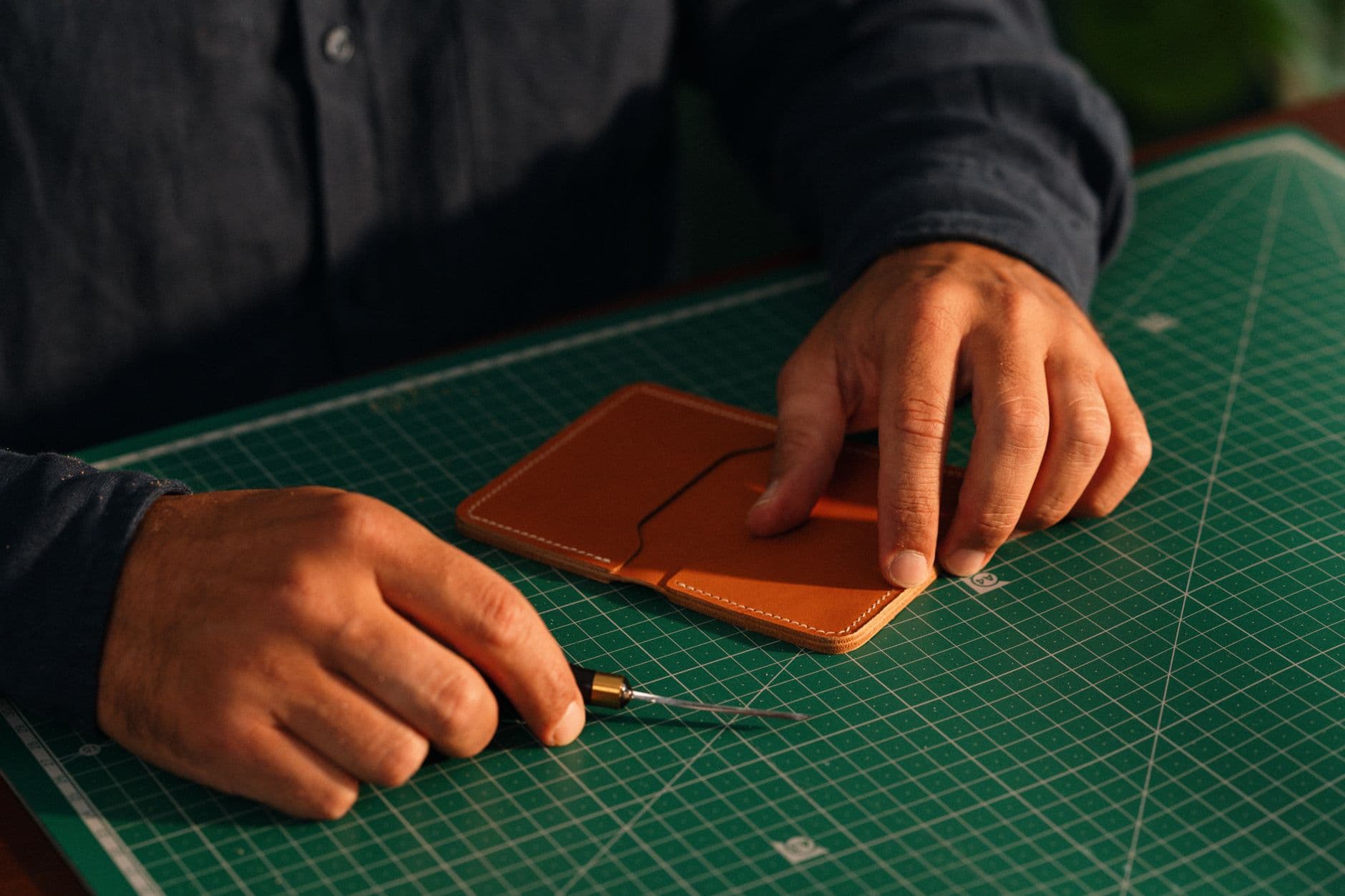
Sheridan, Wyoming’s tourism material says Western-style patterns began appearing on purses, wallets, and belts in Japan in the late 1940s and early 1950s, which sparked a surge of interest in floral carving on leather items.
There are many ways to carve a pattern, and individual makers develop their own sequence, but the base remains recognizable: knife cuts first, then the shading and modeling tools that give the work its relief.
Where the beginner path leads next
Tandy’s classes run from level I through level 4, which fits the logic of the Basic Tooling class. Learners build one layer at a time until the hand understands the order of operations. That approach also lines up with Tandy’s broader beginner offerings, which include belts, wallets, purses, holsters, cases, jewelry, and home accessories.
This article was produced by Prism’s automated news system from verified source data, official records, and press releases, then run through automated quality and moderation checks before publishing. The system is built and supervised by the people who set the standards it runs under. Read our full AI policy.
Did this article answer your question?