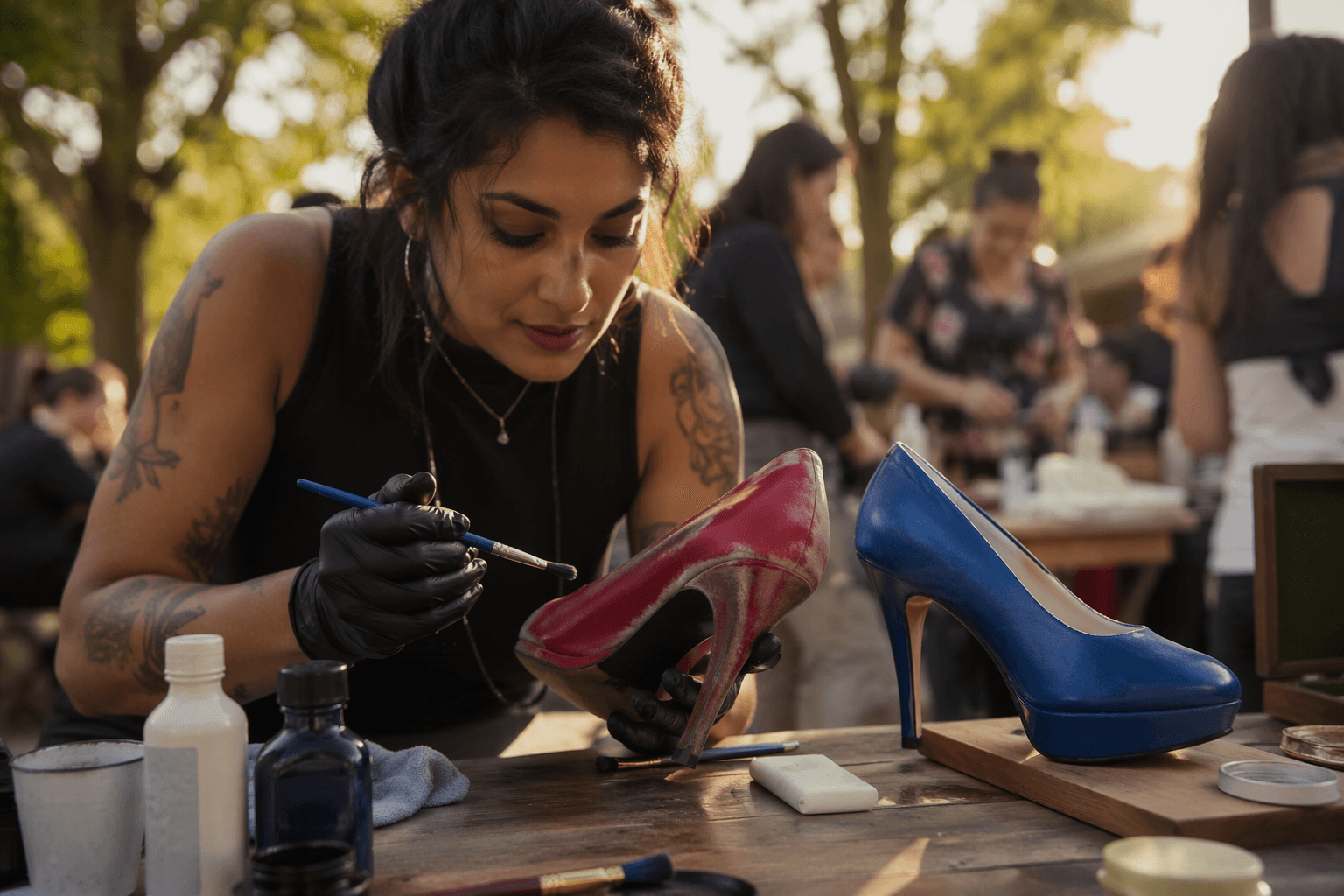
Tandy Leather’s education hub teaches leathercraft basics and techniques
Tandy’s education hub gives beginners a usable starting map, pairing tool basics and leather vocabulary with classes, videos, and hands-on shop support.
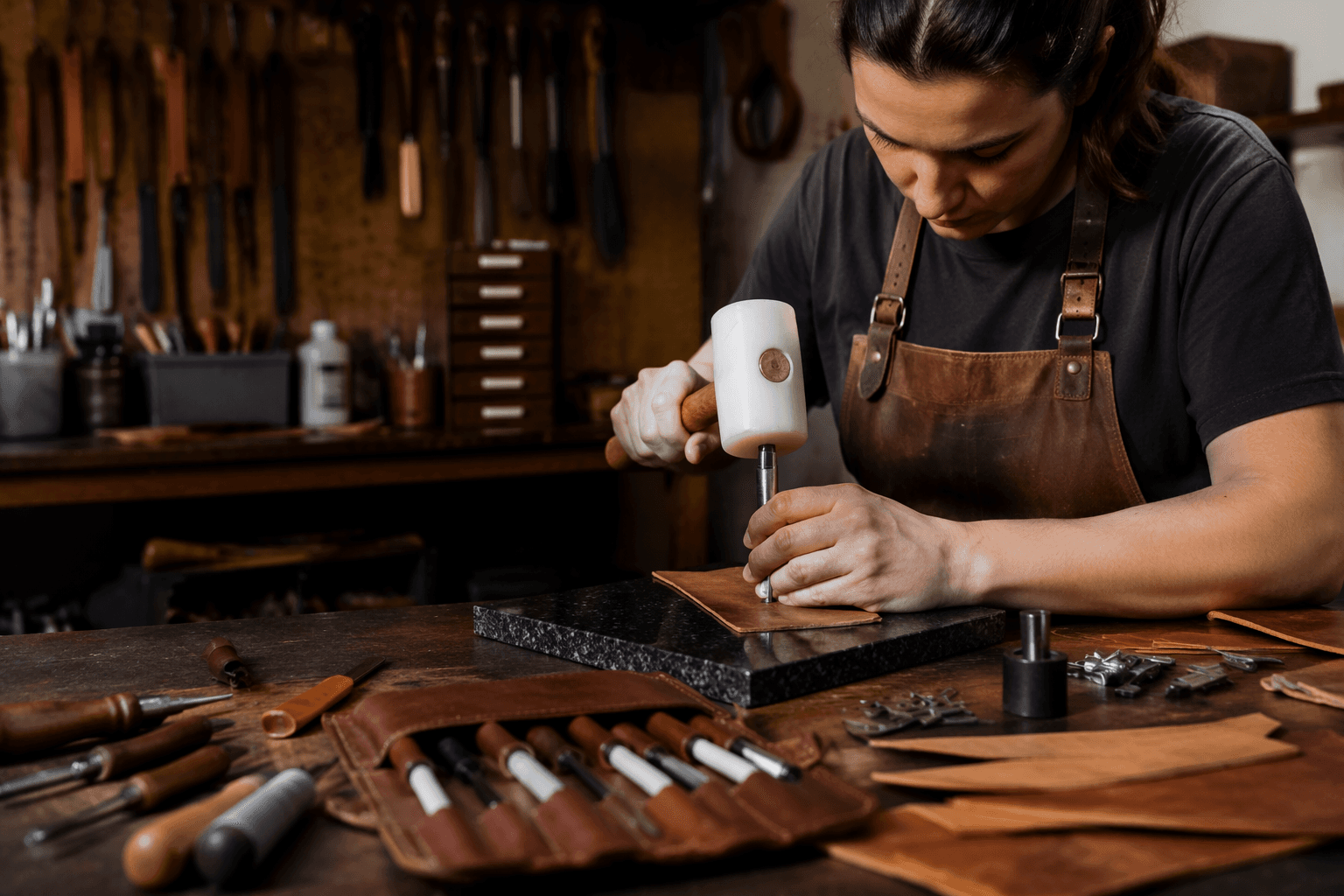
Leather buying guidance, hand-stitching basics, burnishing, casing, coloring, finishes, snaps, lacing, and adhesives all sit in one place on Tandy Leather’s education pages, backed by classes and video lessons. Instead of scattering beginner advice across product pages, the company pulls those lessons together into a path you can actually follow.
A learning hub built around real starter questions
The strongest part of Tandy’s education center is how ordinary its questions are. It starts with the basics a new leathercrafter needs right away, including how to buy leather, how to stitch by hand, how to burnish edges, and when to case tooling leather before you strike it. That makes the hub feel less like a catalog add-on and more like a structured reference for the first projects most people actually try.
It also breaks out the language of the material itself. The pages move through grain and tanning methods, then into surface treatments and hide construction, so the buyer who does not yet know the difference between full grain, top grain, chrome tan, and pull-up has a place to start. That vocabulary matters at the bench, but it matters even more before the purchase, when a beginner is trying to match the hide to a wallet, belt, sheath, or small rig and avoid wasting money on the wrong leather.
The techniques that make the biggest difference early
Tandy’s instruction is practical in the way good shop talk is practical. Burnishing is presented as the move that gives veg-tan projects smoother, cleaner edges, which is exactly the kind of detail that changes a beginner’s result without requiring expensive equipment. The hand-stitching guidance is just as useful: the thread length is typically about three times the stitched distance, and the saddle stitch uses two independent stitches that lock together for extra strength.
That kind of detail helps a new maker choose the right method instead of treating every seam as the same job. The hub distinguishes between backstitching, whipstitching, temporary basting, and using snaps, which is the sort of basic but easy-to-mix-up knowledge that can save a project from being overbuilt, underbuilt, or simply assembled the wrong way.
From self-study to a guided bench session
The classes page extends the same logic into face-to-face learning. Those classes are designed to help students build the foundation needed to tackle any leatherworking project, from first-time kits to level 4 work. It offers skills classes, kit classes, group events, one-on-one lessons, and custom experiences that can be brought to schools, camps, scouts, or birthday parties.
That mix is especially useful for someone trying to learn without getting overwhelmed. A kit class gives a beginner a bounded project. A skills class drills the core moves. A one-on-one session lets a maker ask about a specific project already on the bench.
A practical first-month path through the hub looks like this:
1. Start with the leather vocabulary pages so hide names and finishes make sense before the first purchase.
2. Watch the beginner videos on stamping, casing leather for tooling, choosing thread and needle size, punching holes, starting and ending hand-sewing lines, and hand burnishing edges.
3. Pick one small kit or project that uses a few core techniques instead of many.
4. Book a class or one-on-one session if the project requires tooling, stitching, or finishing help.
A store network still doing teaching work
Tandy’s education content is tied to a long retail history, not a purely digital sales strategy. The company was founded in 1919 in Fort Worth, Texas, and its 2024 10-K describes the retail stores as offering convenience, a high-touch customer service experience, and a hub for the local leathercrafting community. That combination explains why classes still sit near the center of the brand.
The scale of that store-and-teach model shifted over time. A 2008 annual report recorded that Tandy had opened its first store outside North America and ended that year with 73 stores. A later annual report recorded that since 2002 it had acquired or opened 85 retail locations and closed three, for a net of 82 stores.
The digital push now mirrors the classroom
The beginner on-ramp does not stop with the education pages. Tandy’s Get Started materials steer newcomers toward projects, how-to videos, in-store classes, and one-on-one sessions, and they point people toward finding a nearby store or booking time with staff. The company’s YouTube playlist extends that approach with dozens of instructional videos, including beginner topics like stamping, casing leather, hand burnishing edges, and choosing thread and needle size.
Tandy Canada uses nearly identical language on its classes page, pointing to a shared learning format across markets.
The business behind that system remains sizable, even in a softer year. Tandy reported full-year sales of $74.4 million in 2024, down from $76.2 million in 2023, and it had $13.3 million in cash and cash equivalents at December 31, 2024.
This article was produced by Prism’s automated news system from verified source data, official records, and press releases, then run through automated quality and moderation checks before publishing. The system is built and supervised by the people who set the standards it runs under. Read our full AI policy.
Did this article answer your question?