Weaver Leather Supply shows how to make double-wrapped mystery braid boot straps
A 23-minute Weaver lesson turns boot straps into a compact study in cut accuracy, spacing, and edge control. The same braid logic scales to belts, bracelets, and bag accents.

Weaver Leather Supply’s 23:17 lesson with Chuck Dorsett pairs straightforward strap work with a classic mystery braid, and the finished straps can suit western boots, biker rigs, everyday fashion, costume pieces, and period looks.
A small project with real shop value
Boot straps live in a tough part of the wardrobe. They move, flex, get adjusted, and take repeated wear, which makes them a smart test piece for clean cutting and consistent assembly. This build is useful because it demands more than decoration: the straps have to sit right on the boot, hold their shape, and look deliberate from the first pass of the knife to the final edge finish.
It gives makers practice with strap planning, leather thickness, spacing, hardware placement, and edge control without forcing them into a full-size bag, saddle, or other large-format project. The same discipline shows up in belts, bag straps, harness details, tack, and other small leather goods.
Why the mystery braid changes the lesson
The mystery braid element is the part that makes the build feel more advanced than its basic structure. The project is beginner-friendly in the sense that the core construction is approachable, but the woven look adds visual complexity that teaches patience and accuracy. The braid gives you a chance to practice clean transitions and even spacing while still working on a manageable accessory.
The project lands well for advancing beginners and intermediate makers. If you already know how to cut a straight strap and keep hardware placement under control, the double-wrapped braid pushes you into the next layer of leathercraft without overwhelming the bench.
Materials management is part of the lesson
The YouTube metadata for the video lists 16 products, making the build as much about managing parts as hand skills. A project with that many components asks you to stay organized, keep track of small materials, and think ahead before the first layer is assembled.
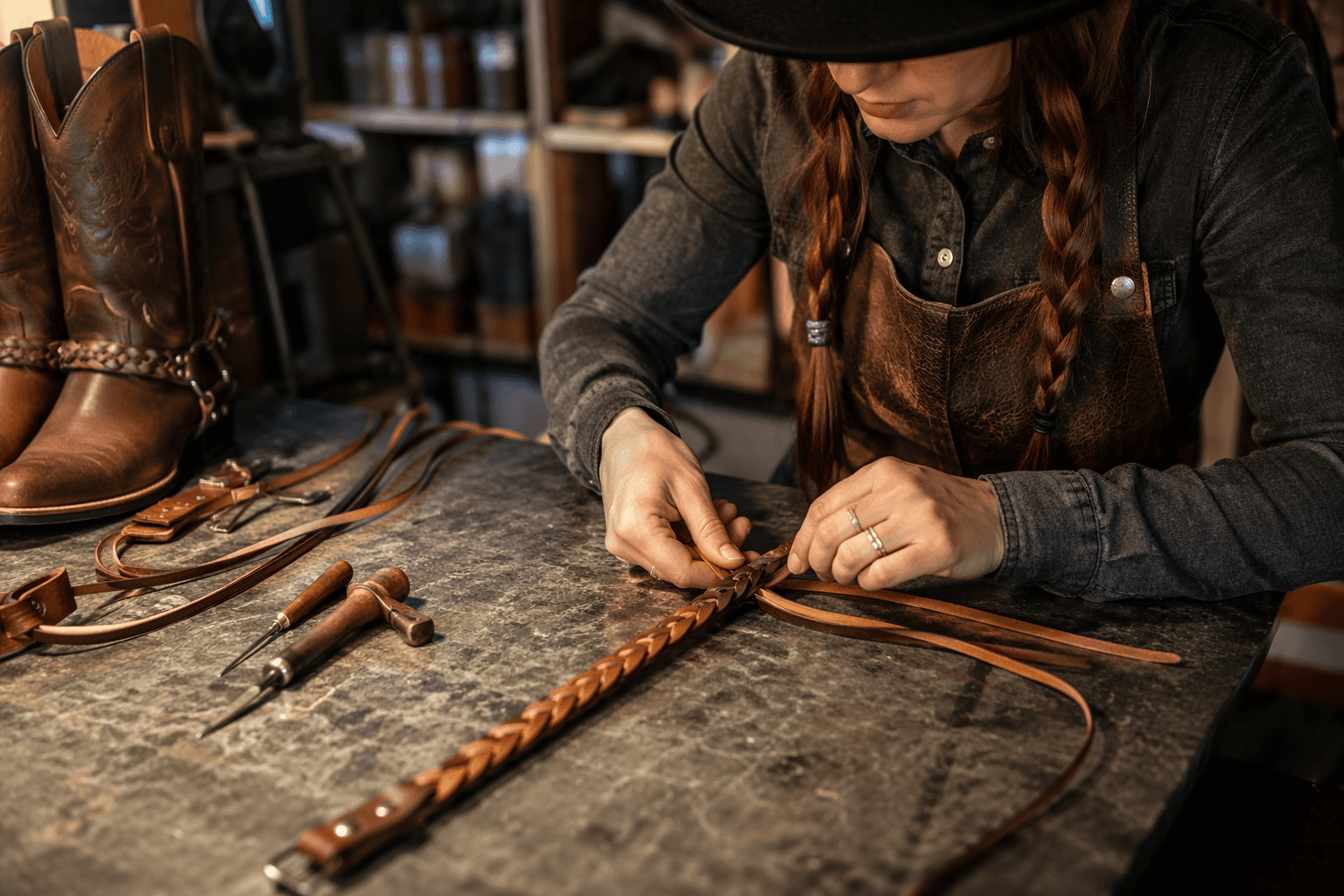
A strap can look good on the bench and still sit wrong on the boot if the thickness, cut lines, or hardware spacing are off. Here, those details are the point, giving makers a practical framework for choosing materials that work together instead of fighting each other.
Weaver also offers a downloadable mystery braid boot strap pattern, which makes the project even more accessible. A pattern matters here because it helps you focus on execution: cutting accurately, lining things up, and finishing edges cleanly instead of guessing your way through the layout.
Who this project fits best
The project is beginner-friendly, but the real sweet spot is the maker who wants to level up from basic strap work. It is a good fit if you are past the earliest practice pieces and ready to handle a project that combines function with a more decorative finish.
The build also translates into other pieces. Once you understand how the strap sits, how the braid reads visually, and how the hardware needs to be placed, the same logic can move into belts, bracelets, knife straps, cuff accents, and bag trim.
Part of a larger Weaver teaching library
The boot strap demo sits inside a larger Weaver Leather Supply catalog. The company’s YouTube channel lists 358K subscribers and 968 videos, and the leathercraft playlist includes older mystery braid and boot strap tutorials. Chuck Dorsett appears as a recurring on-camera instructor throughout that ecosystem.
Weaver’s broader boot strap collection covers pieces for western boots, motorcycle gear, costume work, and period pieces. The same construction method can lean western, edgy, or fashion-forward depending on leather choice, edge treatment, and hardware.
This article was produced by Prism’s automated news system from verified source data, official records, and press releases, then run through automated quality and moderation checks before publishing. The system is built and supervised by the people who set the standards it runs under. Read our full AI policy.
Did this article answer your question?