Why full grain leather matters in durable handmade accessories
Full grain leather costs more up front, but it gives beginner kits stronger wear, cleaner finishing, and accessories that age into character instead of failure.

The cheapest kit can look tempting until the first stitch goes in, the first edge gets burnished, and the first finished wallet starts taking daily abuse. That is where full grain leather earns its reputation: it keeps the hide’s natural grain intact, so the material underneath your hands is still the most durable, least altered version of leather.
For beginners, that matters more than the sales copy usually admits. A better hide does not just look richer on day one; it changes how the project holds up after the scuffs, bends, and pocket wear that turn a handmade accessory into a daily carry piece.
What full grain actually means
In leathercraft, full grain is not a vague premium label. Leather Working Group defines it as leather that has kept its entire grain, with none of the surface removed by corrective mechanical treatment. The Leather Research Laboratory, quoting the Leather Industries of America, describes it as the grain split of a hide from which nothing has been removed except the hair and associated epidermis.
That intact surface is the whole point. The grain pattern, scars, and tiny imperfections are still there, which is why full grain leather develops visible character over time instead of being flattened into an artificial smoothness. Makers prize that honesty because the piece starts with the hide’s natural structure and keeps it through use.
Why the material choice changes the finished project
Full grain leather matters most when the item is going to be handled constantly. Wallets, bags, and keychains live hard lives, with repeated flexing, friction, and abrasion built into the job. A stronger hide gives those projects a better shot at surviving daily use without looking tired too quickly.
The payoff is not just toughness, though. Full grain also changes the way a handmade accessory ages. Instead of wearing down into a weak surface layer, it gains patina, the kind of lived-in finish that makes a piece look better because it has been used well. That is the quiet difference between a craft project and a carry item you will actually want to keep.
How it compares with top grain and genuine leather
The next step down is top grain leather, which is sanded and corrected for a smoother look. That can make a hide feel more uniform, but it also means the natural surface has been altered. If the goal is a more polished appearance, top grain can do that; if the goal is the strongest connection between the hide and the finished piece, full grain still has the edge.
Genuine leather sits lower in the hierarchy and is presented as a more affordable choice with less longevity. That lower price can be useful when you are testing a pattern or learning a technique, but it is not the same material promise as full grain. If the project is meant to last, the savings up front may not survive the first season of use.
What to look for in a beginner DIY kit
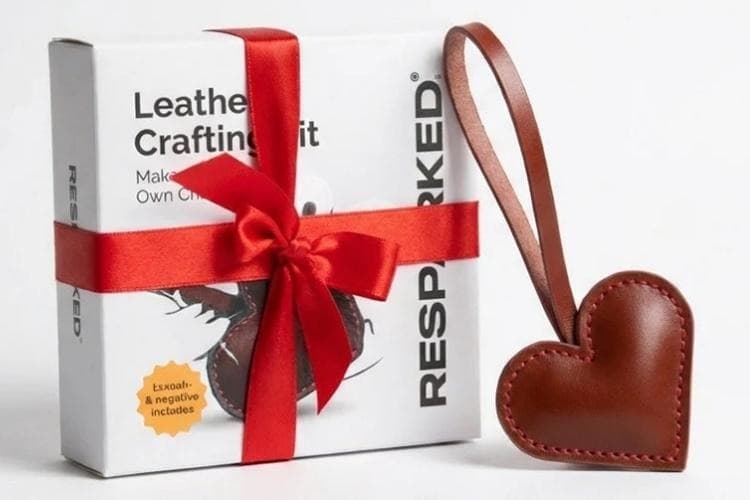
A solid full grain kit should do more than hand you leather and wish you luck. The practical bundle includes high-grade leather sheets or straps, strong waxed thread, precision cutting tools, leather punches, edge bevelers, burnishing tools, leather conditioner, and optional hardware such as rivets, snaps, and buckles.
Thickness matters too. For wallets and smaller accessories, the useful range is generally 2 to 4 millimeters. That range gives enough body for durability without making folds, corners, and stitched seams unmanageable for a first project. Too thin, and the item can feel flimsy; too thick, and the beginner spends more time forcing the material than learning the craft.
Where full grain helps beginners make fewer expensive mistakes
The beginner advantage of full grain is not that it hides mistakes. It is that it behaves like a real working material rather than a cosmetic surface. When you are learning stitch lines, edge finishing, and hole placement, a stronger hide is more forgiving of a project that has not been perfected yet.
- Stitching holds better when the material is meant for wear, not just appearance.
- Edge finishing looks more convincing when the leather has enough substance to take beveling and burnishing cleanly.
- Daily wear is less punishing when the hide itself is built to stay together instead of scuffing through a corrected surface.
That matters at every stage of the bench work:
For a first wallet or small bag, the right leather can make the difference between a piece that teaches you the process and a piece that falls apart before the lessons sink in.
Why consumer protection belongs in a leathercraft conversation
Leather buying is not just a craft decision, it is a labeling decision. The Federal Trade Commission’s Leather Guides address misrepresentations about the composition and characteristics of leather and imitation leather products, and they require disclosure when non-leather material appears to be leather. Those rules apply to products such as purses, luggage, wallets, and footwear.
That matters in a DIY kit market where the words on the package can do a lot of selling. If a kit is described in a way that blurs leather content or makes the material sound more substantial than it is, the guides are the guardrail. For a beginner deciding whether to pay more for full grain, that clarity is part of the value.
Why the full grain choice fits the wider leathercraft mindset
Leathercraft has always been about patience, precision, and respect for material. Britannica describes leather as a material used in clothing, footwear, handbags, furniture, tools, and sports equipment, and defines tanning as the chemical treatment of raw animal hide or skin to convert it into leather. That broad use tells you something important: leather succeeds when the material is matched to the job.
Leather Working Group adds a modern industry lens to that old craft logic. It describes itself as a multi-stakeholder organization made up of brands, leather manufacturers, industry suppliers, and affiliate organizations, and it launched the current version of its Leather Manufacturer Audit Standard, P7, in 2021. In other words, the conversation around leather quality is not just about the bench in front of you; it is part of a larger push for standards, accountability, and better material choices.
The beginner takeaway is simple. If you want a project that teaches the craft and holds up in the real world, full grain leather is worth the higher upfront cost. It gives you a hide that can take stitches, edges, and daily wear with more confidence, and it rewards the maker with an accessory that does not just survive use, it records it.
This article was produced by Prism’s automated news system from verified source data, official records, and press releases, then run through automated quality and moderation checks before publishing. The system is built and supervised by the people who set the standards it runs under. Read our full AI policy.
Did this article answer your question?