Best home tools guide compares five tubular lock impressioning options
Tubular impressioning earns its place when you need a working key, not just an opening. The guide shows how the right tool depends on pin count, durability, reset speed, and lock family.
Tubular locks still force a different conversation than most of the gear that fills a modern lock kit. Best Home Tools’ June 7 guide treats them as a working trade category, not a novelty, and that is the right frame for anyone who actually services vending equipment, utility hardware, or older specialty cylinders. The value of impressioning here is simple: it turns a live lock into a usable key without disassembly, which is exactly why it still belongs in the field toolbox.
Why tubular still matters
Tubular pin tumbler locks go by a few names in the trade, including circle pin tumbler locks, radial locks, and Ace locks. Chicago Lock Company popularized the Ace name back in 1933, and the geometry has stayed relevant because the hardware stuck around in real-world service work. Most of these locks use six to eight pins, although some run as few as four or as many as ten, so a tool that only works in one narrow family can leave a tech stranded.
That is the core argument behind this guide. It does not pretend tubular work is the first skill a newcomer should learn, but it does insist that the category still shows up in places that matter. A vending machine lock, a utility cabinet, or an older specialty cylinder can make tubular competence feel less like an obscure hobby and more like basic trade literacy.
Where impressioning sits in the tubular practice ladder
Tubular picks and decoders are the fastest way into the conversation when the immediate goal is access. A-1 Security Manufacturing says it produces specialty picks for tubular-type vending machine locks that allow decoding of the lock, which shows how often these tools are built around readout and interpretation rather than long-term ownership of the hardware. That is one rung on the ladder: open the lock, understand it, move on.
Impressioning sits in a different place. It becomes the smarter choice when the job is not just to open the cylinder, but to leave with a working key. That makes it especially useful for shop work, repeated service calls, and situations where the hardware will stay in circulation after the visit. Destructive bypass lives at the opposite end of the scale. Framon’s Tubular Lock Saw is built to drill out bottom pins so a blank tubular key can be used to open the lock, which is a very different mindset from making a durable key and preserving the cylinder for continued use.
The five options the guide actually compares
The Best Home Tools guide organizes the buying decision around five tool types, and the split tells you a lot about how tubular work happens in the field:
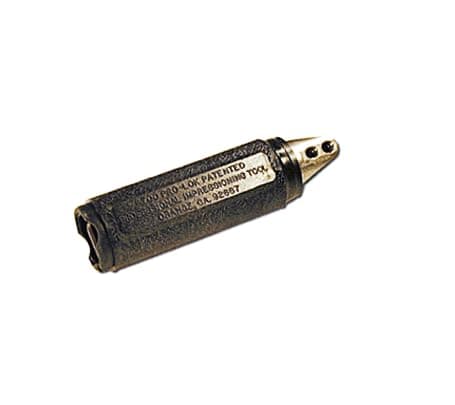
- A standard professional impressioning tool for creating working keys directly from the lock. This is the mainstay if your job is to originate a key without pulling the cylinder apart.
- A hollow stainless steel cap-removal tool for maintenance and rekeying work. This is the kind of accessory that matters when the job involves access to the lock body rather than simply opening the door.
- Two tubular key-lock replacement products for vending-machine and other 3/4-inch applications. These fit the real service world, where compatibility can hinge on a very specific cylinder size and use case.
- A dedicated impressioning file for refining marks and finishing the key. This is the quiet workhorse in the set, the tool that helps turn rough progress into a cleaner result.
The practical point is not that one of these wins every time. It is that each one solves a different problem, and tubular work punishes the buyer who confuses “can open something” with “can service the thing in front of me.”
What separates a useful tool from a shelf ornament
For tubular impressioning, pin count coverage is not an abstract spec. A tool that handles common six- to eight-pin cylinders is far more useful than one tuned only to a narrow subset, because the field will always surprise you with an odd four-pin job or a ten-pin outlier. That is where the guide’s emphasis on compatibility pays off: you need to know the lock family before you order, not after the package arrives.
Durability matters for the same reason. Impressioning gear gets handled, reset, adjusted, and reused, and tubular jobs often happen in less-than-gentle environments around vending equipment or utility hardware. Reset speed matters too, because a fast reset keeps the job moving when you are chasing marks on a live lock instead of turning the session into a bench project. If a tool is precise but slow to return to ready state, it loses value quickly in actual service work.
Lock compatibility is the final gate. Tailpiece length, pin configuration, and family fit all affect whether a tool is a match or a miss, and the guide repeatedly warns that the buyer still has to verify the hardware. That caution is not filler. It is the difference between owning a specialized tool and owning a specialized headache.
The commercial side of a niche that never fully disappeared
Framon’s current catalog makes it clear that tubular work remains a living market, not a museum piece. The company’s TLS1 Tubular Lock Saw is made in the USA, works with any 3/8-inch or 1/2-inch drive drill, and lists at $44.95. Framon also markets the TKM-100 as an industry-leading tubular key cutting machine, and its flyer says the machine includes plates and accessories for Ace, Chicago/Dynalock/Unican, National, and Segal formats.
That breadth matters because it shows how broad the tubular ecosystem still is. Locksmith Ledger’s active coverage categories for tubular locks and vending-machine locks reinforce the same point: this hardware still appears in current industry conversation, current product development, and current service work. Tubular skill does not sit at the center of every toolbox, but it still earns its space whenever the job calls for a key you can make, a lock you can decode, or a cylinder you need to understand before you touch anything more aggressive.
The best tubular tools are the ones that match the work in front of you, not the fantasy job in your head. That is what makes this guide useful: it treats impressioning as a real step in the ladder, not a relic, and it reminds you that the old Ace-style cylinder still knows how to justify its place in the kit.
This article was produced by Prism’s automated news system from verified source data, official records, and press releases, then run through automated quality and moderation checks before publishing. The system is built and supervised by the people who set the standards it runs under. Read our full AI policy.
Know something we missed? Have a correction or additional information?
Submit a Tip