Best Home Tools guide spotlights compact lockpicking sets for everyday carry
Compact pick sets only earn pocket space if they still handle real training locks. The guide puts portability, control, and lawful carry ahead of novelty.
The appeal of a compact lockpicking set is not that it disappears into a pocket. The real question is whether it still feels like a tool when you need it, with enough control, enough profile variety, and enough durability to justify carrying it at all. Best Home Tools frames that tradeoff clearly, treating low-profile kits as practical gear for professionals, minimal-carry hobbyists, and technicians working in tight spaces.
Portability without the gimmick
The guide’s most useful move is to treat compact carry as a workflow choice, not a novelty. A small kit can make sense as a backup set, a travel practice kit, or a field kit that lives in a bag or small organizer without turning into dead weight. It also fits the realities of everyday carry, where space is limited and anything bulky gets left behind.
That is why the guide looks beyond size alone and weighs material quality, tip variety, and how the tools fit into real carry habits. A set that is easy to stash but awkward in hand will not do much for you once you are actually at the lock. The category only works when portability and usability stay in balance.
- Size matters, but so does how the set stores in a pocket or organizer.
- Material quality matters, because a compact pick still needs to feel dependable.
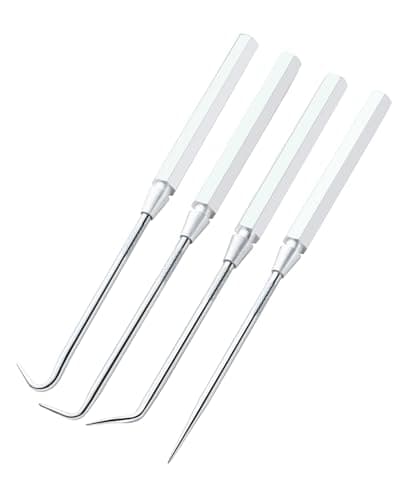
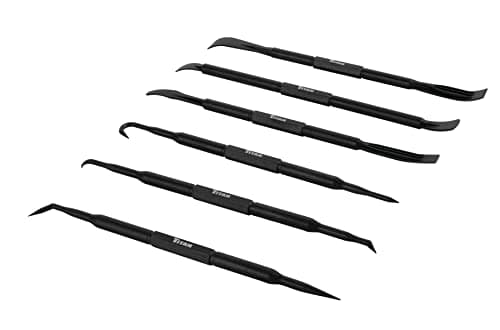
- Tip variety matters, because a tiny kit that cannot cover standard hook and rake work loses flexibility fast.
- Everyday carry habits matter, because the best gear is the gear you will actually bring.
What compact sets are good for
A low-profile pick kit makes the most sense when you already know the basics and want something you can live with day to day. For a hobby picker, that may mean a minimal set that sits quietly in a pocket or case until training time. For a locksmith or security technician, it may mean a small backup kit for situations where a full-size case is inconvenient.
The limits matter just as much. Compact sets can be too constrained for long sessions or specialized profiles, and they are not a substitute for a broader kit when the job calls for more options. The best way to think about them is as efficient tools for specific use cases, not as a universal answer.
That is also where the guide asks the right practical question: does an ultra-compact set actually perform on common training locks? If the answer is no, the reduced footprint stops being an advantage and starts being a compromise. The whole point is to see whether a kit can stay small without becoming fragile, narrow, or frustrating.
The community rules around carrying and using picks
Lockpicking lives inside a larger locksport and physical-security education culture, and that culture has rules for a reason. The Open Organisation Of Lockpickers, known as TOOOL, describes itself as a 501(c)(3) nonprofit devoted to advancing public knowledge about locks and lock picking through teaching, research, and competition. Its bylaws define sportpicking as public competitions focused on non-destructive opening or bypass of physical security devices.

That ethical frame is central to how serious pickers talk about gear. TOOOL’s rules say members should never pick a lock they do not own or have explicit permission to manipulate, and they should be mindful of the laws in their jurisdiction. Compact carry may be convenient, but responsible ownership still comes first.
That caution matters because laws vary widely across the United States. In Virginia, for example, possession of burglarious tools with intent to commit burglary, robbery, or larceny is a Class 5 felony under Virginia Code § 18.2-94, and possession by someone other than a licensed dealer can be prima facie evidence of criminal intent. In other words, the legality of carrying picks often turns on context and intent, not just the object itself.
Why the old lock architecture still shapes modern kits
The basic tools in compact sets are still built around an old design problem. Yale’s company history says Linus Yale opened his first shop around 1840 and later developed the cylinder pin-tumbler lock, and the company says that pin-tumbler design remains the core of its locks in many markets today. That long arc helps explain why the familiar hook, rake, and tension-tool profiles are still the backbone of modern sets.
When the lock architecture is that durable, the tool logic stabilizes too. You do not need a brand-new silhouette for every generation of lock when the core mechanism remains rooted in the same pin-tumbler principles. For a compact kit, that means the question is less about reinvention and more about how efficiently a few proven profiles are packaged and carried.
Practice gear still wins on the training bench
There is a clear line between a carry kit and a training setup, and SouthOrd leans into that distinction. Its compact School-in-a-Box style starter kit is presented as a way to practice picking locks of varying difficulty, and it can be re-pinned for continued training. SouthOrd also uses transparent cutaway locks to help users visualize the internal mechanism, which makes the learning side more concrete than a slim pocket kit ever could.
That difference is useful because it shows what compact gear is and is not for. The smallest carry set may be the better choice when you want something low-profile, discreetly stored, and easy to keep on hand. But if the goal is steady skill growth, a fuller practice system still has an edge, especially when you want to see how the pins, driver pins, and core behave under repeated work.
The best compact set, then, is not the flashiest one. It is the one that stays small enough to carry, strong enough to trust, and responsible enough to fit the ethic that has always separated legitimate locksport from bad judgment.
This article was produced by Prism’s automated news system from verified source data, official records, and press releases, then run through automated quality and moderation checks before publishing. The system is built and supervised by the people who set the standards it runs under. Read our full AI policy.
Know something we missed? Have a correction or additional information?
Submit a Tip