Covert Instruments explains why 301 stainless steel suits lock picks best
301 stainless changes how a pick springs, bends back, and survives hard use. Covert Instruments argues that balance is what lockpickers feel, not marketing.
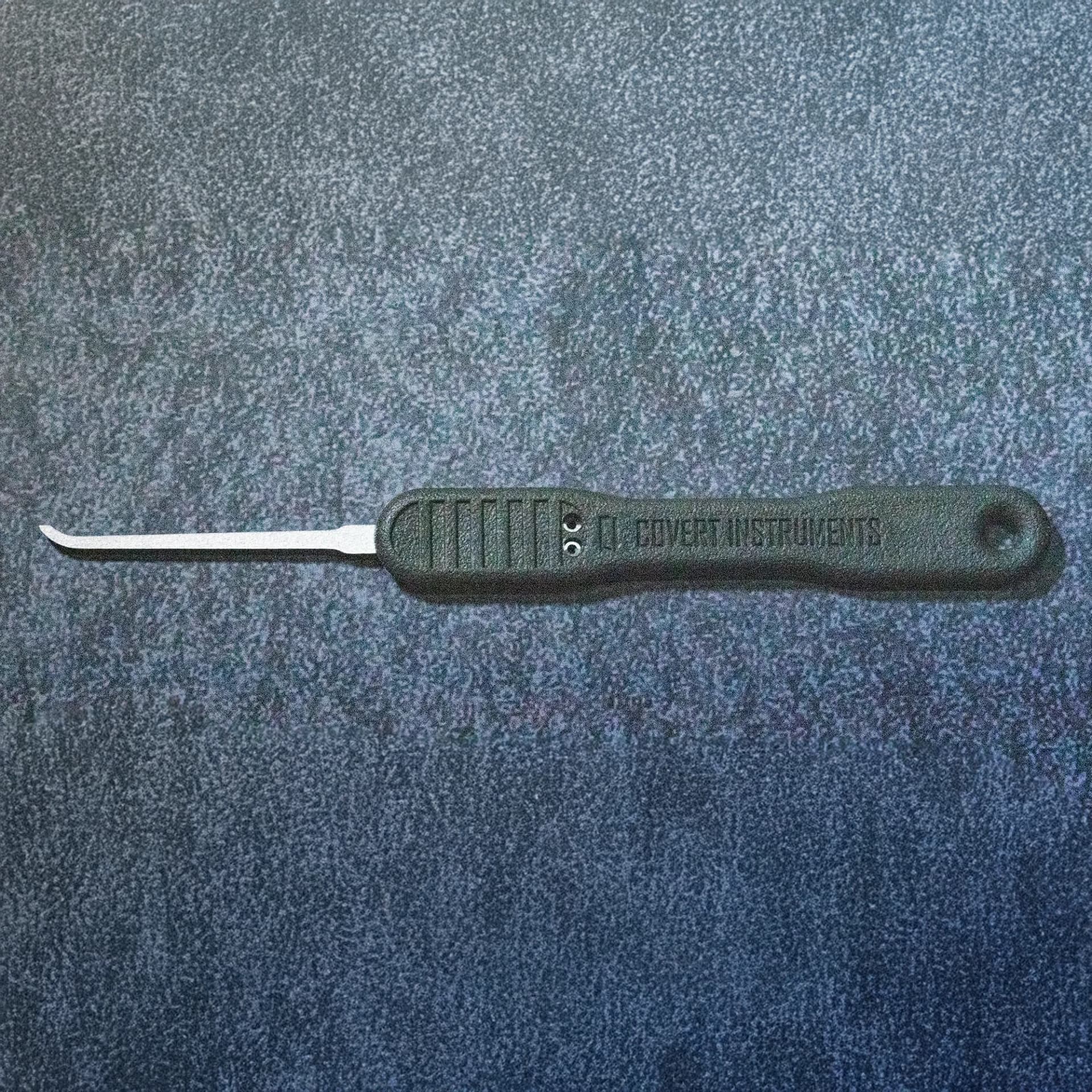
The APEX Nessie 0.020 is cut from 301 High Yield Stainless Steel. Covert Instruments’ case for 301 high yield stainless steel is really a case for feel: springiness, bend recovery, and the kind of resilience that keeps a thin tool honest in a keyway. In lockpicking, those traits decide whether the pick returns to shape, carries feedback cleanly, or turns into a bent inconvenience after a hard session.
Why the alloy matters in hand
A lock pick is not just a shaped sliver of metal. It has to flex repeatedly, transmit subtle changes in pin binding back to the hand, and survive the torque that comes from tension, pressure from pin stacks, security pins, and awkward warding. Covert Instruments uses 301 high yield stainless to balance those demands.
The difference shows up in use, not in a spec sheet headline. If the stock is too soft, the pick can deform and wear down before the geometry stays true. If it is too brittle, the tool can snap or lose the live, spring-like response that tells you what the lock is doing. The appeal of 301 high yield stainless is that it aims for the middle, where the pick can flex, recover, and keep talking back through the handle.
What lockpickers actually ask a pick to do
In BosnianBill’s material breakdown for LockLab, the ideal pick stock is stiff, strong, resilient, tough, corrosion resistant, inexpensive, and available. No one wants a tool that feels dead in the hand, but no one wants a blade-thin pick that caves in after a few sessions either.
That is why hobbyists notice steel choice even when two picks look almost identical. One tool can feel crisp and springy, while another feels mushy or over-stiff, and the difference is usually hiding in the alloy, the thickness, and the way the maker has treated the stock. Premium picks tend to cost more for that reason: the price is not only branding, but repeatable manufacturing that preserves the profile, the spring, and the feedback loop that pickers rely on.
A useful way to think about the feel is in four pieces:
- Springiness: the pick bends under load, then returns instead of staying warped
- Bend recovery: after a hard lift or a tense pry, the tool comes back to true
- Feedback: subtle binding changes still travel from the lock to the fingers
- Break resistance: the tool survives long sessions and awkward angles without failing
A beginner may notice them as “this one feels nicer,” but the practical version is more concrete: the pick tracks the pins better, holds its shape longer, and stays usable after repeated flexing.
How 301 compares with the usual pick steels
ElvenCraft’s metallurgy guide lists 301 high yield stainless steel and 420 hardened stainless steel among the strongest stainless alloys commonly used for picks. It gives both about Rockwell C 51, which helps explain why the debate around lockpick steel gets so technical so fast. In a hobby built around touch, the numbers matter because they map onto how the tool behaves under pressure.
The guide also lists 301 and 302 full hard stainless steel as softer, cheaper alloys intended for stamping. That is the important contrast. Stamping stock can work for forming parts, but a pick lives a harsher life: it has to keep a thin working edge, flex without taking a set, and survive repeated stress in a way a general-purpose sheet metal part never has to.
Compared with softer, cheaper stamping alloys, 301 high yield stainless is being chosen for a specific job, one that rewards resilience and consistent return to shape. Compared with harder stainless options like 420 hardened stainless, it sits in the same family of serious pick materials, but the real test is not which alloy sounds toughest on paper. It is which one still feels controlled when the pick is buried in a difficult keyway and the feedback turns microscopic.
How Covert Instruments is applying it
Covert Instruments lists the APEX Nessie 0.020 with a molded glass-filled nylon handle, and lists other APEX variants as cut from 0.020 or 0.025 301 High Yield Stainless Steel.
The APEX family also stretches across different shapes, including the Nessie, a Quad Rake at 0.025, and a Scooped Medium Hook at 0.020. The gauge changes, the shape changes, and the handle treatment changes, but the base material stays the same.
Covert Instruments also sells DIY Lock Picks. Once you start cutting, bending, or assembling your own tools, material choice stops being abstract very quickly. The stock has to take the form you want without turning into a permanent curve, and that is exactly where a high-yield stainless sheet starts to matter more than a generic piece of metal.
Who will actually notice the difference
Not every picker will feel the jump in the same way. If you are only working easy pin stacks or practicing on forgiving cylinders, a decent pick can seem close enough to another decent pick. The difference becomes obvious when sessions get longer, warding gets tighter, or you start demanding more from the tool’s feedback and recovery.
The steel choice explains why two picks that look nearly interchangeable can feel miles apart once they are in a lock. For the beginner, it helps separate price from quality. For the experienced hand, it explains why a good pick disappears in use, stays springy, and keeps its shape after the lock has done its best to bully it.
This article was produced by Prism’s automated news system from verified source data, official records, and press releases, then run through automated quality and moderation checks before publishing. The system is built and supervised by the people who set the standards it runs under. Read our full AI policy.
Did this article answer your question?