INOX ISK-B300 bridges mechanical locks and remote access control
This box turns a mechanical opening into a networked access point, but the tradeoff is simpler retrofit work for a new layer of cloud and power dependency.
A retrofit bridge, not a ground-up rewrite
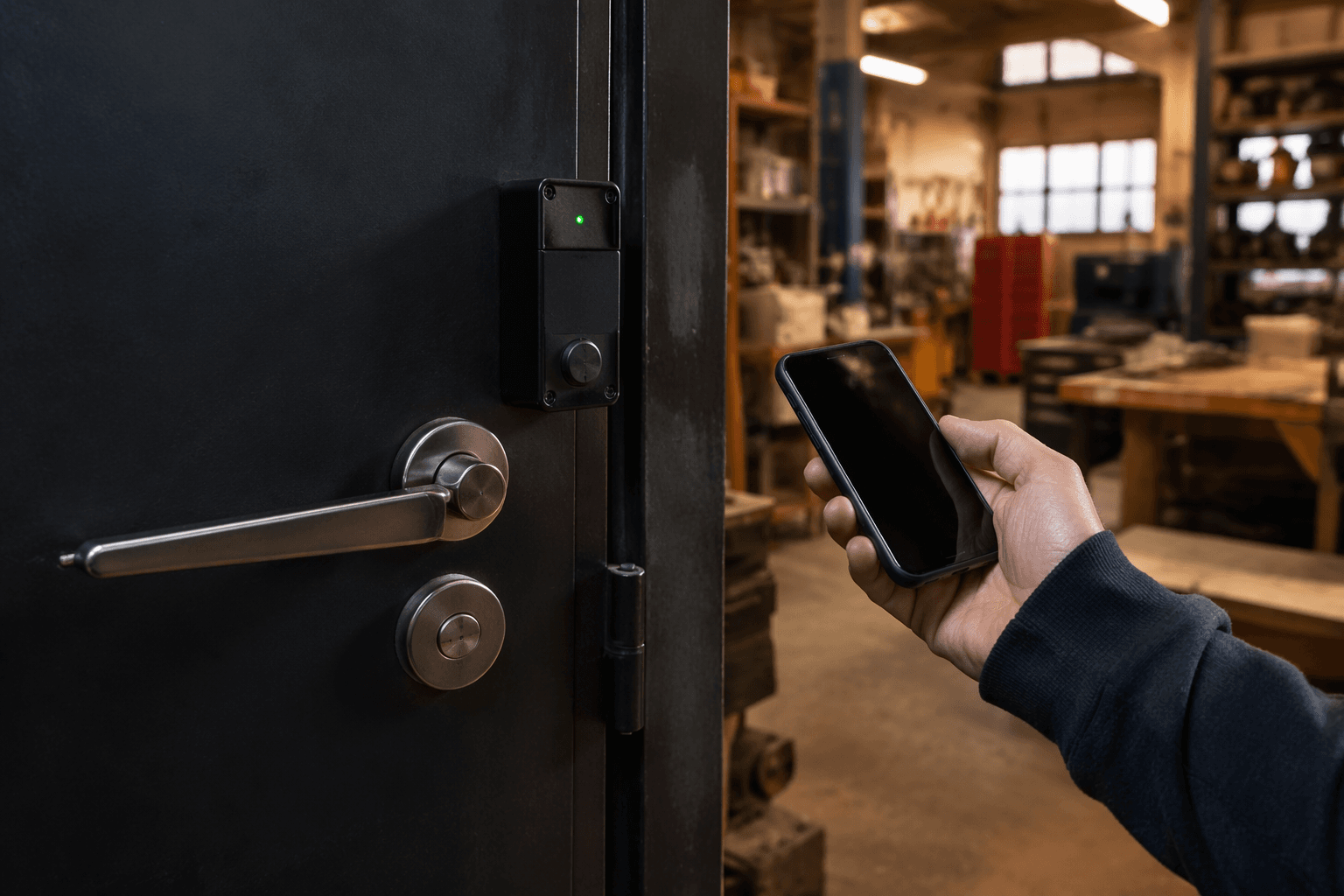
The INOX ISK-B300 lands in a useful middle ground: it is built to turn a traditional mechanical opening into a smart access-control point without forcing a full panel-heavy redesign. That matters in the field because a lot of real doors are still getting by on dead-simple hardware, while owners want scheduling, remote unlock, and audit trails without tearing the opening apart.
Locksmith Ledger’s coverage frames the kit as an “access control in a box” approach, and that description gets to the heart of the appeal. Instead of starting with a control panel, separate reader, controller, power supply, and a nest of wiring decisions, the ISK-B300 packages the major pieces into a retrofit-friendly system that is meant to feel closer to a locksmith job than a low-voltage design project.
What comes in the kit, and why that matters
The box is not just a reader with a fancy app label. According to the coverage and INOX’s own materials, the kit includes a reader-controller, an ANSI Grade 1 electric strike, plug-in power, a BLE/Wi‑Fi gateway, door-position sensors, and RFID credentials. That mix gives you the basics needed to convert an opening into a connected access point while keeping the install tied to familiar door hardware.
INOX describes the ISK-B300 as a keypad reader controller built into a single cloud-based IoT system, with reader, controller, and relay integrated together. The company also says the unit supports lock and unlock through smartphone, RFID, or passcodes, both onsite and remotely. For an installer, that combination lowers the barrier to entry because the product is trying to collapse several separate decisions into one packaged system.
The practical upside is obvious: fewer pieces to source, fewer compatibility surprises, and less time spent designing a one-off architecture for a single door or a small cluster of openings. The caution is just as obvious to anyone who has seen a neat system become a future headache: when the intelligence is bundled into one ecosystem, you are also choosing its software, its gateway, and its management model.
The software layer is where the real shift happens
The companion app is where the ISK-B300 moves from “electrified opening” to “managed opening.” INOX says the app provides real-time door-position and deadbolt monitoring, automated scheduling, audit trails, user and access management, and lock-all controls. Locksmith Ledger’s coverage adds remote lock and unlock, scheduling, user management, audit logging, and door-status monitoring to the picture, which gives the kit the kind of day-to-day visibility property managers have been asking for.
That matters because access control is no longer just about who has a key. Security Sales & Integration has been pointing to the broader market shift toward mobile-based credentials and cloud-based access control, with connected devices combining traditional locks, advanced authentication, real-time alerts, and remote management. The ISK-B300 sits squarely in that lane, even if it is packaged in a way that still feels approachable to a locksmith shop.
The app also changes the service conversation. Once an opening is in the cloud, the value is not only in the install but in the ability to add users, adjust schedules, and review events without rolling a truck every time someone loses access. That is a real operational gain for commercial buildings, multifamily properties, gated entrances, offices, and healthcare facilities, all of which are named as target environments for the system.
Installation is simplified, but not simplified away
One of the most interesting parts of the ISK-B300 story is how aggressively it leans into easier installation. Locksmith Ledger’s unboxing and install coverage says the plug-in power approach and Molex connectors mean no low-voltage wiring is necessary, which is a big deal on retrofit jobs where cable paths, wall fishing, and electrician scheduling can slow everything down.
INOX’s brochure reinforces that pitch with a BLE/Wi‑Fi plug-in gateway and plug-in gateway power supply, while also saying the cloud-based system requires no panels or servers. That is the selling point that opens doors for smaller jobs and faster deployments: less infrastructure, fewer points of failure to plan for, and a shorter road from box to working opening.
Still, this is where a smart installer stays alert. Simplifying the wiring does not eliminate the need to understand the door, the strike, the power path, the network, and the authority having jurisdiction. A clean retrofit still needs a clean plan, especially when the product is asking the opening to behave like part of a managed system instead of a standalone lockset.
Code, egress, and the parts you cannot gloss over
The user manual is clear that the access controller and reader are intended to be installed in accordance with the local authority having jurisdiction and NFPA 70. That is not decoration, and it is not a throwaway safety note. It is the reminder that even a cloud-friendly access kit still lives inside the realities of electrical code, door hardware code, and life-safety expectations.
The same manual warns that fail-secure installations should be reviewed with the local authority regarding panic hardware for emergency egress. That point deserves respect in any discussion about remote-controlled doors, because the moment you move from a mechanical opening to an energized opening, you also move into the territory where egress, retention, and emergency release have to be thought through before the first credential is enrolled.
For readers who work on openings every day, the important takeaway is that “easy to install” and “easy to approve” are not the same thing. A product can reduce the friction of getting a door online and still demand serious attention to how that door behaves when power is lost, when the door is forced, or when the life-safety side of the opening comes into play.
Scale, access modes, and where the system feels mature
INOX’s manual says the standalone access controller supports 1,000 users, broken into 988 common users, 2 panic users, and 10 visitor users. It also supports card, PIN, card-plus-PIN, and multi-card/PIN access modes, with optional Bluetooth and an IP66 waterproof metal case. That gives the platform enough flexibility to handle more than a toy deployment, while still staying within the kind of footprint that suits retrofit work.
The credential mix is also telling. Smartphone access, RFID, and passcodes cover the practical range of use cases most sites want, from staff and residents to temporary visitors and controlled exceptions. When the app can show property, door, user, and e-key management, along with lock status and battery indicators, the system starts to look less like a single gadget and more like a usable management layer.
That is the strongest argument for the ISK-B300: it lowers the adoption barrier for owners who want connected access without commissioning a large-scale platform from scratch. At the same time, it makes the lockpicker’s old-world instincts more relevant than ever, because any opening that depends on a controller, gateway, app, and cloud workflow deserves the same skepticism you would bring to any new dependency chain.
The bigger picture for connected openings
This is where the product earns its place in the larger access-control conversation. Locksmith Ledger’s companion video reinforces the idea that the install is meant to streamline upgrades without complex panel infrastructure, and that the locksmith can add the opening to the INOX Smart app before transferring it to the owner. That is a telling model, because it positions the locksmith not just as a hardware installer, but as the person who bridges the mechanical door and the digital handoff.
That bridge is exactly where the industry is headed. The appeal of systems like the ISK-B300 is not that they replace every traditional opening, but that they make modern control feel possible on the doors people already have. The skepticism is equally important: once the opening depends on cloud logic, plug-in power, and a branded app, the convenience is real, but so is the new stack of dependencies that comes with it.
This article was produced by Prism’s automated news system from verified source data, official records, and press releases, then run through automated quality and moderation checks before publishing. The system is built and supervised by the people who set the standards it runs under. Read our full AI policy.
Know something we missed? Have a correction or additional information?
Submit a Tip