Lishi tools turn lockpicking into a faster, more precise job
Lishi tools can sharpen real decoding skills, but only on the right cylinders. Pick a platform you actually see, or the kit becomes expensive shelf art.
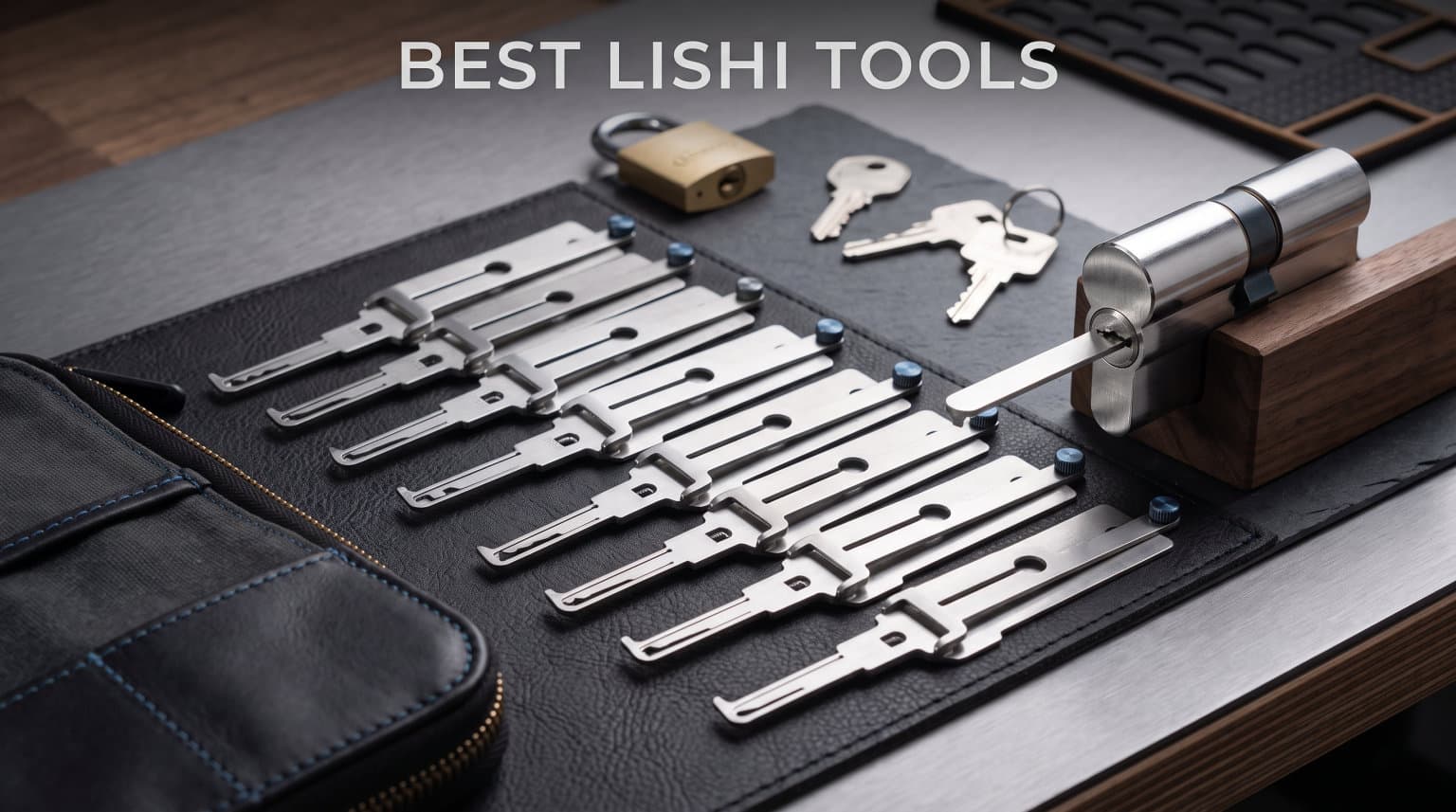
A Lishi 2-in-1 tool lets you pick and decode a cylinder in the same pass, reading depth while the lock opens instead of forcing you to disassemble the core or guess at the code. Working locksmiths treat it as a speed tool, and hobbyists need a reality check before buying a pro-looking kit built for a very narrow job.
What a 2-in-1 tool really does
The tool combines picking and decoding in one hand. It traps the wafers so the wafer depth can be read to determine the cuts for a replacement key, turning a locked cylinder into something you can interpret as you work. Locksmith Ledger covered a 72-page Genuine Lishi 2-in-1 User Guide in September 2012, then new Genuine Lishi tools in January 2013.
Older feel-based decoding methods relied on touch alone, and the Lishi 2-in-1 picks eliminated many of those problems. For a hobbyist, the feedback is cleaner: tension, binding, depth, and the relationship between movement and readout become visible in a way that standard trial-and-error picking often does not.
Where the hobby value starts and stops
Lishi tools are especially valuable in automotive work and in common residential keyways, because they are built to decode a specific platform quickly and with less damage. One supplier puts a typical lost-key case at under 20 minutes for decoding a car lock and cutting a replacement key on-site, which is exactly the kind of payoff that makes sense on a roadside call but not necessarily on a practice bench full of generic cylinders.
Build quality, real-world performance, user feedback and value are the buying criteria highlighted by Of Zen and Computing, alongside gear for residential Schlage work, automotive keyways and shop support. That mix tells you where the tool belongs: in a working kit for people who see those platforms often, or in a training setup for people who want to learn how modern access hardware actually behaves. If your everyday locks are not cars, not Schlage-style residential cylinders, and not the exact keyways a given decoder was built for, the purchase can turn into a drawer queen fast.
For hobbyists, the best way to think about Lishi is by platform, not by brand hype. A well-matched tool expands practice value when it teaches you something transferable about lock behavior, especially on wafer-based automotive locks and other common cylinders. A mismatched tool, or one aimed at a car line you never touch, does little on the locks you actually practice on.
The platforms that show why the format caught on
The early catalog already showed how specific this family is. Locksmith Ledger’s January 2013 coverage included the B107 Direct Reader and the B110 2-in-1 Pick/Decoder, and the B107 read the sidebar version of the GM37W lock on the Cadillac CTS from 2008 onward. Another early Genuine Lishi guide covered GM37 and GM37W tools along with the HU66 V2 for VAG locks from 2012 onward.
Original Lishi lists approximately 100 2-in-1 tools available now, which is a huge jump from the early GM and HU66-era offerings.
Counterfeits are part of the decision
The counterfeit problem is not a side issue, it is central to buying Lishi gear. Genuine Lishi products carry unique serial numbers that can be registered for authenticity checks, and Original Lishi has received many complaints about fake tools being sold on major online platforms. Original Lishi warns that counterfeit copies can break on critical jobs and produce poor readings.
That warning lines up with the plain definition used by the United States Patent and Trademark Office and the International Trademark Association: counterfeit goods are unauthorized imitations made to trick buyers with familiar names and logos. In this category, that means legality and ethics sit beside performance. If a tool is marketed as a professional decoder, the buyer has to care about whether it is genuine, and the user has to care about whether it is being used on locks owned by or authorized to the operator.
Training, accessories and what belongs in the kit
Genuine Lishi still sells training manuals and support, and a subscription-based educational site treats training as critical to making the tool profitable and successful. Carry bags, key cutters, pinning tweezers and key gauges also show up as part of the practical setup.
A 2-in-1 tool is strongest when it sits inside a broader locksmith workflow that includes identification, decoding, cutting and verification, not when it is bought as a lone trophy piece. The best-value purchase is the one that fits the locks you actually encounter, whether that is a residential Schlage cylinder, a GM37W-style automotive reader, or a VAG HU66 V2 application.
This article was produced by Prism’s automated news system from verified source data, official records, and press releases, then run through automated quality and moderation checks before publishing. The system is built and supervised by the people who set the standards it runs under. Read our full AI policy.
Did this article answer your question?