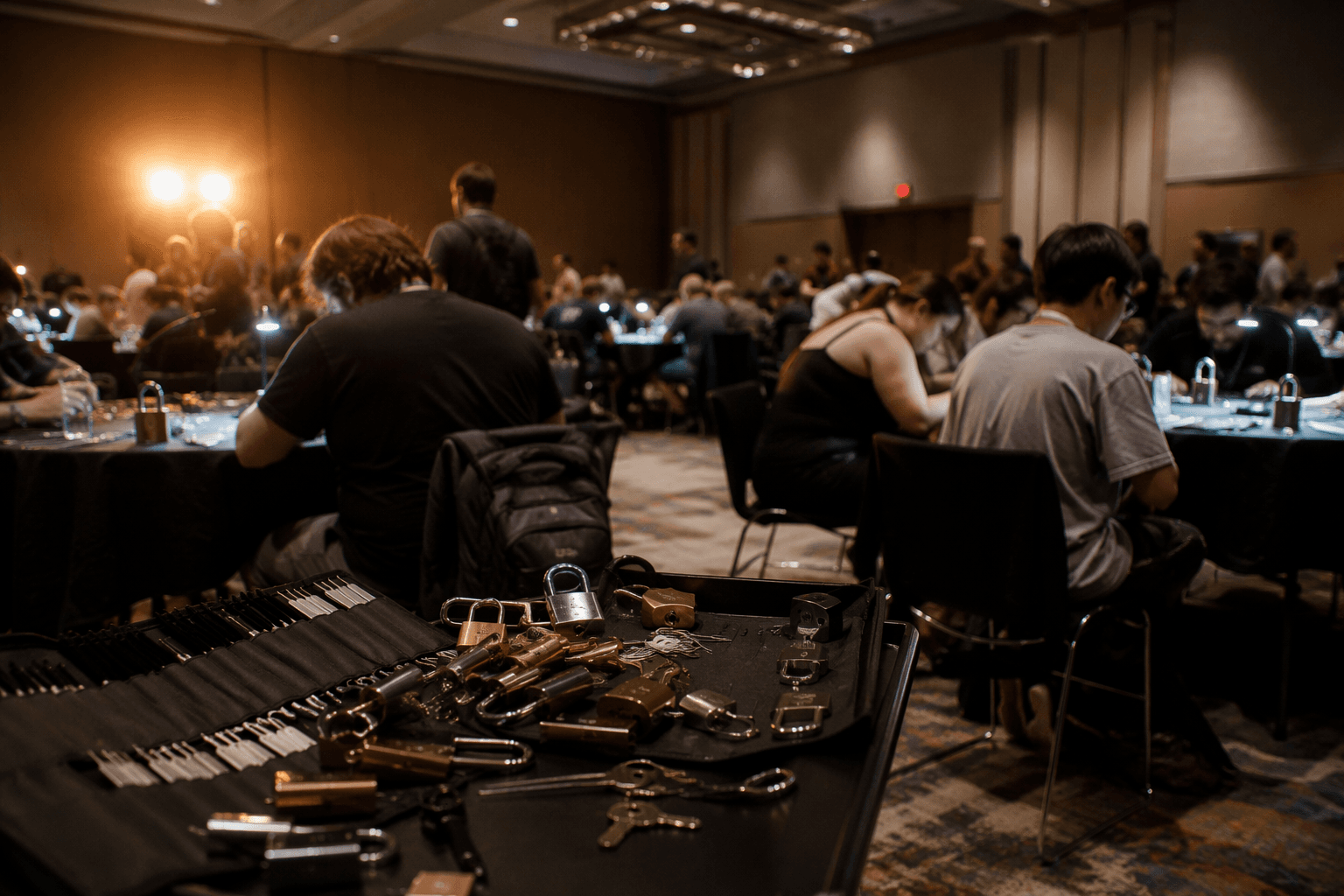
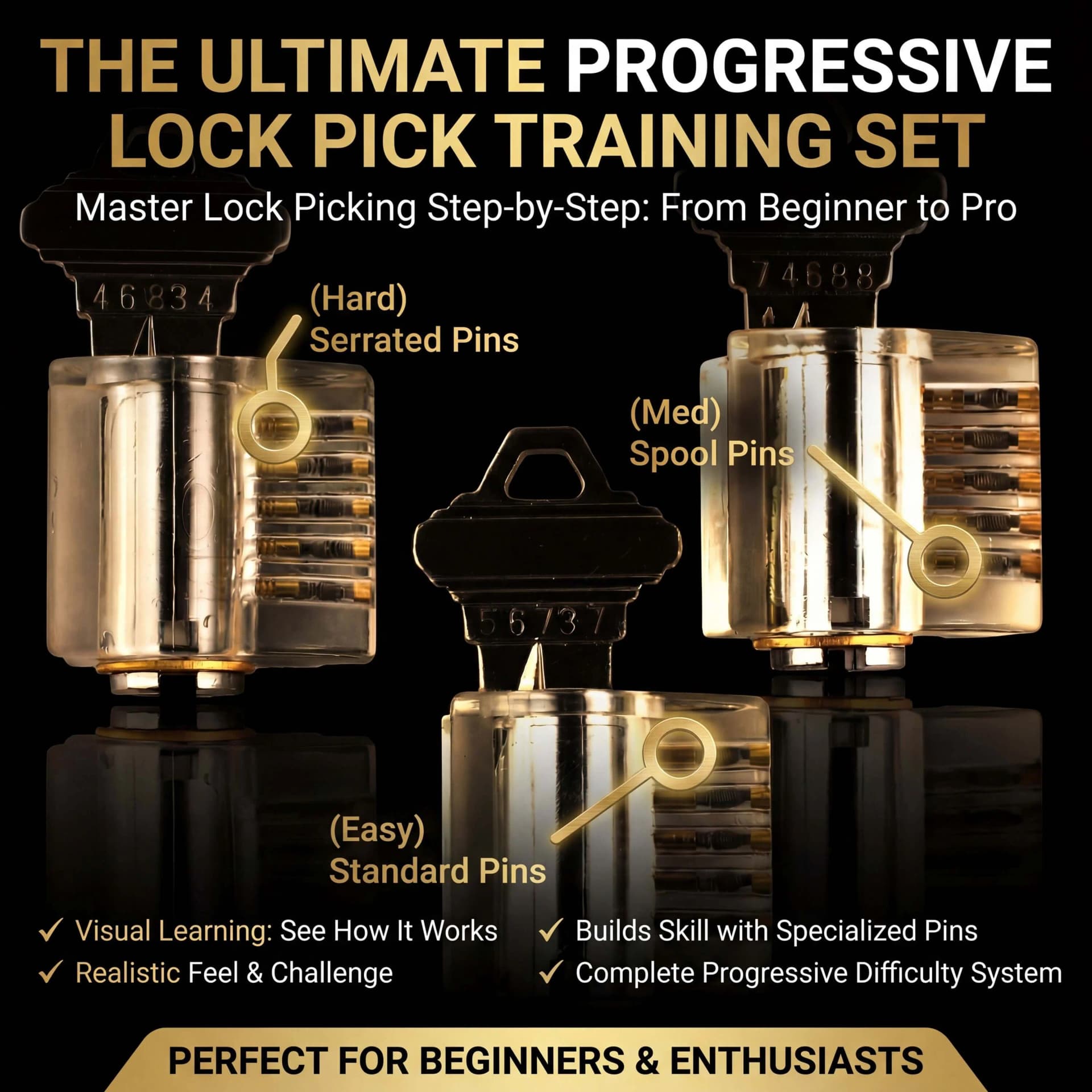
Lockpicking and bypass techniques reveal the craft of locksmithing
The deck treats lockpicking as locksmithing craft, separating pin-tumbler picking, bypass entry, and skeleton-key history. Its real value is learning what each method reveals about lock design.

Lockpicking makes the most sense when it is treated as a way to read a lock, not as a parlor trick. This presentation does exactly that, putting skeleton keys, pin-tumbler picks, and bypass techniques in the same frame so the reader can see how different opening methods reflect different lock designs. The result is less about mystique and more about mechanics, history, and the practical logic of locksmithing.
What the deck is actually teaching
The strongest educational value comes from its refusal to isolate lockpicking from the larger craft. It explains the mechanics behind skeleton keys and pin-tumbler picks, and it places those methods inside a broader discussion of locksmithing, where opening a lock can be part of diagnosis, maintenance, restoration, or secure access work. That framing matters because it shifts attention from the fantasy of “defeating” a lock to the more useful question of how the lock is built and why it resists entry.
For a newcomer in locksport, that is the point where study becomes useful. A resource like this helps build the mental model before anyone touches tools: what part of the lock responds to a key, what part provides resistance, and what parts can fail, wear down, or be bypassed. In a hobby built around understanding locking systems, that mental model is the difference between random experimentation and real progress.
Why Linus Yale Jr. still sits at the center of the story
The modern pin-tumbler cylinder is the backbone of a huge share of everyday locks, and the history here is unusually clear. ASME says Linus Yale Jr. was born on April 4, 1821, in Salisbury, New York, and Yale heritage materials say that in 1865 he designed a lock with a cylinder and four pin tumblers. Lemelson-MIT describes him as the inventor of a popular and effective lock using the pin-tumbler cylinder design, which is why his name keeps coming up whenever the conversation turns to modern lock architecture.
That history gives the deck real weight. It connects old and new approaches rather than treating the subject as a grab bag of tricks, and it reminds readers that many locks on doors and padlocks still follow the same core logic Yale helped popularize. Once you understand that lineage, pin-tumbler picking stops looking like a standalone stunt and starts looking like a conversation with a very specific mechanism.
Picking is not the same as bypass
The title’s mention of bypass techniques is a useful clue, because not every successful opening depends on directly manipulating pins. Matt Blaze’s notes on picking pin-tumbler locks, dated 7 November 2003 and revised 21 November 2016, sit alongside bypass-focused educational material as a reminder that lock access methods break into separate categories. Conventional picking, bypass entry, and older historical methods each target a different weakness, and a good study resource should make that split obvious.
That distinction matters in practice and in terminology. Skeleton keys belong to the older warded-lock world, where the idea of opening a lock could hinge on circumventing the internal obstacles rather than working the pins one by one. Bypass techniques, by contrast, are a modern reminder that a lock can fail to protect its contents without the picker ever engaging the core in the expected way. For a learner, that is not a loophole to exploit so much as a lesson in how lock construction creates multiple paths to entry.
A useful introductory resource will usually make three things plain:
- What the method is trying to defeat, whether that is a pin stack, a warded obstacle, or another blocking feature
- How much of the method depends on finesse versus simple mechanical access
- What the method reveals about the lock’s construction, tolerances, and failure points
That is where educational value ends and real skill begins. Reading about bypass is not the same as understanding when it applies, and understanding pin-tumbler theory is not the same as controlling it with consistency. The best material makes that boundary visible instead of pretending the terms are interchangeable.
Why locksmithing gives the whole subject legitimacy
Locksport is described as the sport or recreation of defeating locking systems, and that label helps explain why the hobby community talks so much about technique, mechanism, and ethics at the same time. CNET covered the scene in 2021 and described a thriving online community of hobbyist lockpickers, even as the practice is often lumped together with criminal behavior. That tension is built into the culture: the same hands-on curiosity that drives a hobby can also resemble the work of a trade.
The trade itself is not imaginary. The U.S. Bureau of Labor Statistics classifies locksmiths and safe repairers under SOC 49-9094, while Data USA reports an average yearly wage of $52,734 for locksmiths and safe repairers in 2024. Vertical IQ says the locksmith industry includes about 3,900 companies, employs about 16,300 workers, and generates about $2.7 billion annually. California’s Bureau of Security and Investigative Services defines a locksmith as a business that installs, repairs, opens, or modifies locks, or originates keys for locks, which makes clear that this is a regulated service in at least some states.
Those numbers matter because they show why lockpicking education is often discussed inside the larger frame of locksmithing rather than outside it. A community that studies lock mechanisms for recreation is also studying tools and methods that exist in a real occupational field, with real licensing, real wages, and real customers who need non-destructive access and repairs. That is why a presentation like this lands best when it treats locks as systems, not trophies.
How to read a resource like this
The most useful part of a deck like this is not any single trick, but the way it organizes the subject. If it explains pin-tumbler mechanics, separates bypass from conventional picking, and places skeleton keys in their historical lane, it is teaching the architecture of lock defeat rather than selling drama. If it also brings in the professional side of locksmithing, it gives the hobbyist a practical standard for judging what is actually worth learning.
That is the real thread running through the whole subject: a lock is easier to understand when you stop treating opening methods as magic and start seeing them as responses to design. The presentation’s value lies in that shift, from spectacle to mechanism, and from rumor to the craft that locksmithing has always required.
This article was produced by Prism’s automated news system from verified source data, official records, and press releases, then run through automated quality and moderation checks before publishing. The system is built and supervised by the people who set the standards it runs under. Read our full AI policy.
Did this article answer your question?