LockPickWorld explains common lock types and how they work
The first locks you meet are usually pin cylinders, but the key is learning the family before buying tools. This guide shows where each common design fits.
Start with the mechanism, not the shell
The fastest way to get lost as a new picker is to treat every lock like it works the same way. LockPickWorld’s guide makes the most useful beginner correction right up front: the housing is not the mechanism. A padlock, for example, is often just the outer body, while the internal design can vary widely, and that difference is what decides which tools and techniques make sense.
That distinction matters because the lock family tells you what you are really facing. Once you can sort a lock into a pin cylinder, lever, wafer, warded, or disc detainer layout, you can stop guessing and start choosing tools that fit the architecture in front of you.
Why pin cylinders are the first stop
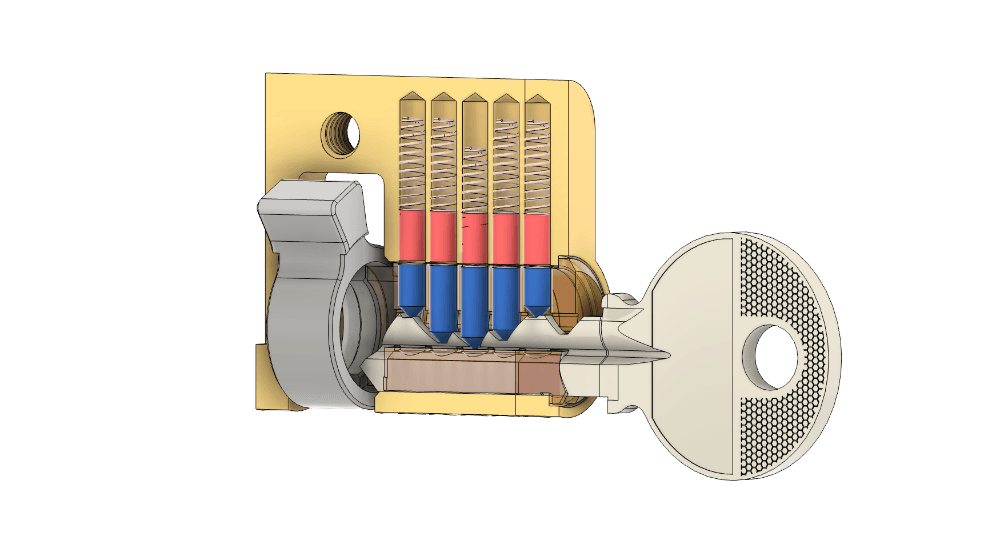
Pin cylinder locks are the everyday standard, and that is exactly why they belong at the top of any beginner’s mental map. LockPickWorld traces the modern cylinder lock back to Linus Yale Jr. and the 1851 patent that helped popularize the design, which is a good reminder that the core of the system is both old and still everywhere. If you are learning on common household hardware, this is usually the mechanism you will see first.
The guide’s explanation of the plug, driver pins, and key pins is the part that turns theory into something usable. The whole idea hinges on the shear line, where the pins must separate cleanly for the plug to rotate. Once that clicks, you are no longer just memorizing terms, you are understanding why controlled tension and careful pin setting are so central to beginner lockpicking.
What that means for first purchases
A new picker does not need a scattered pile of tools. The smarter move is to buy for the lock family you will actually practice on, and for most people that means pin-cylinder practice. A basic pick and tension tool make more sense here than jumping straight to specialized gear for uncommon mechanisms, because the whole point is to build feel for the shear line and pin feedback.
That also helps keep expectations realistic. If you buy tools before you understand the mechanism, it is easy to end up with gear built for the wrong architecture. The guide’s practical value is that it helps you match purchase decisions to the lock family instead of treating lockpicking as one universal skill.
Lever locks: different internals, different lessons
Lever locks sit in a separate category, and that separation matters because the internal action is not the same as a pin cylinder. Where a cylinder depends on pins aligning at a shear line, lever designs rely on a different internal arrangement, so the approach has to change with it. For a beginner, the main lesson is not to force cylinder habits onto a mechanism that does not behave that way.
This is where the guide’s taxonomy earns its keep. When you can identify a lever lock quickly, you know not to waste time treating it like a standard household cylinder. That kind of recognition saves both effort and frustration, especially when you are sorting through practice locks or trying to understand why a tool that works beautifully on one lock is useless on another.
Wafer locks: common, compact, and often misunderstood
Wafer locks are another everyday family, and they are easy to confuse with pin-based designs if you are only looking at the outside. The guide groups them separately for a reason: the internal parts and the way they respond to tools are not the same as a pin cylinder. For newer pickers, that means the first task is identification, not improvisation.
Once you recognize a wafer lock, you can adjust your expectations about the technique you need. The guide’s broader point is that tool choice follows mechanism choice, and wafer locks are a good example of why that rule matters. A picker who knows the family is less likely to burn time on the wrong method and more likely to build useful skill on the right one.
Warded locks: the simplest family, but still worth knowing
Warded locks belong in the beginner’s vocabulary even if they are less sophisticated than the other families listed in the guide. They are part of the everyday lock landscape, and learning to identify them helps you understand why some locks feel far less intricate than modern cylinders. That awareness is useful because it prevents you from overcomplicating a very simple design.
For a new picker, warded locks are best treated as identification practice and context, not as a shortcut to skipping the fundamentals. The guide’s taxonomy keeps them in their place: they are one more architecture you should be able to name, recognize, and distinguish from the mechanisms that demand finer control.
Disc detainers: the first reminder that not every lock plays by cylinder rules
Disc detainer locks are the clearest example in the guide of why architecture changes everything. They sit far from the pin-cylinder world that dominates everyday life, and they require a different mindset from the start. If you try to approach them with the assumptions you learned from pin stacks and shear lines, you will quickly see why the family distinction matters.
That is exactly why they belong in a beginner’s map even if they are not the first lock most people will practice on. Knowing that disc detainers exist, and knowing they are not just another version of a cylinder, helps you make smarter decisions about what to buy and what to leave for later. The guide’s usefulness is not only in naming the family, but in showing where the learning curve changes shape.
The practical takeaway for new pickers
LockPickWorld’s strongest message is simple: learn the mechanism first, then choose the tool. If you can tell a pin cylinder from a lever, wafer, warded, or disc detainer lock, you stop guessing and start practicing with intent. That is especially important for beginners building a first kit, because the right practice lock and the right tension tool matter far more than collecting gear that looks advanced on a shelf.
There is also a legal and ethical line that belongs in any serious beginner guide. Practice only on locks you own or on locks you are explicitly allowed to work on, and keep the focus on skill-building, not unauthorized entry. The point of understanding these families is to become more precise, more patient, and more informed, not to treat every lock as a target.
For anyone opening their first lockpicking set, that is the real payoff: the common families stop feeling like a blur of names, and start becoming a map. Once you know what is inside the shell, the rest of the learning path gets a lot clearer.
This article was produced by Prism’s automated news system from verified source data, official records, and press releases, then run through automated quality and moderation checks before publishing. The system is built and supervised by the people who set the standards it runs under. Read our full AI policy.
Know something we missed? Have a correction or additional information?
Submit a Tip