Matter 1.6 and new security standards target smart locks at Unify 2026
Matter 1.6 brings NFC commissioning and shared fabrics to smart locks, while Product Security 1.1 widens certification beyond the device itself.
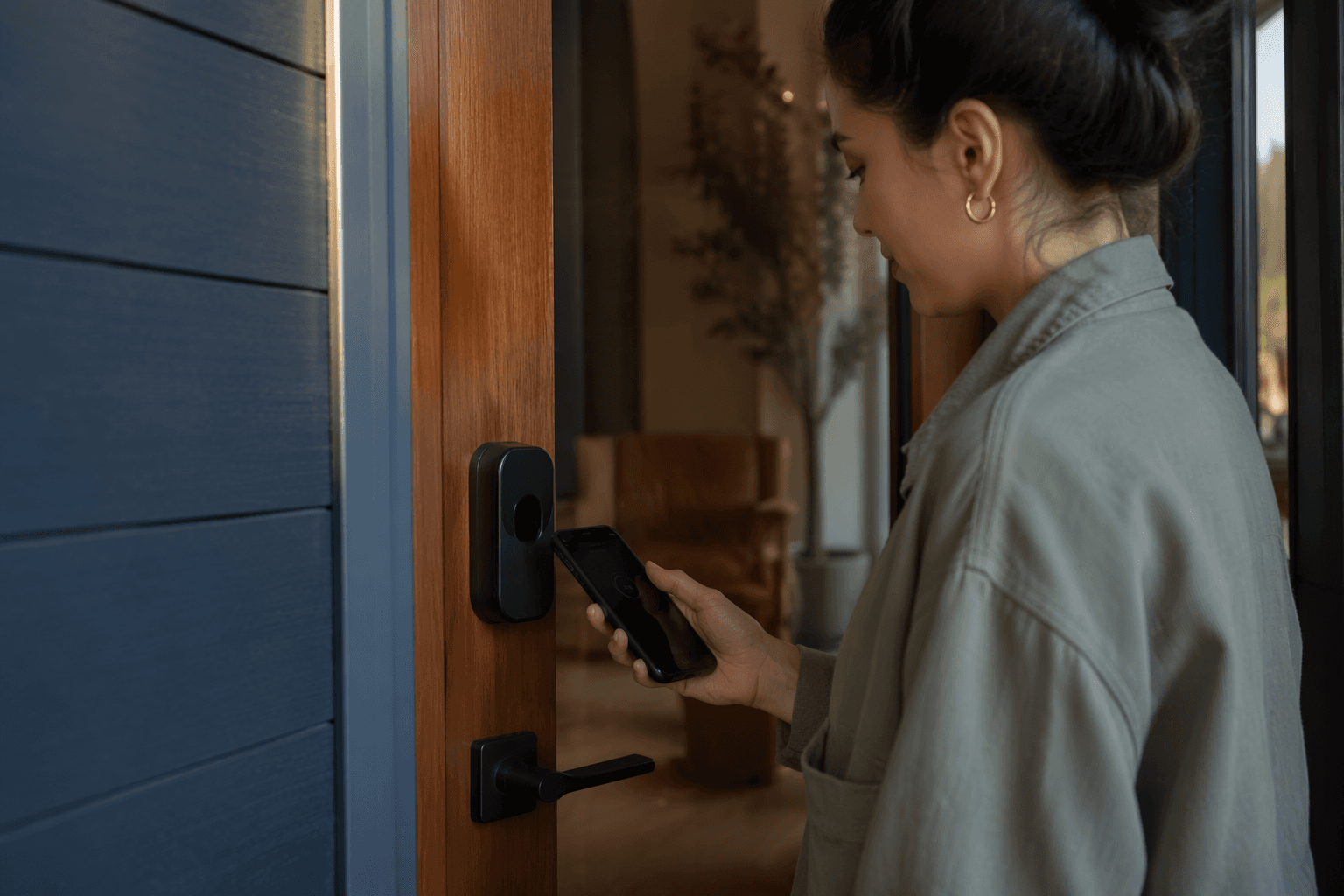
Smart locks were the quiet center of gravity at Unify 2026, where the Connectivity Standards Alliance used its Austin stage to push Matter 1.6 and Product Security 1.1 as more than spec-sheet upgrades. For access hardware, the message was blunt: interoperability and security are moving from marketing copy into the install process, the firmware cycle, and the long tail of support.
The Alliance opened its premier public event for accelerating open IoT standards with a fireside chat between Kevin Ashton, who coined “Internet of Things,” and Alliance President and CEO Tobin Richardson. ADT and Telink also joined the Alliance Board on June 17, a signal that the companies shaping connected living are still investing in the standards table. The program brought in analysts from Parks Associates, Moor Insights & Strategy, The Verge, Consumer Reports, IDC, and Tech Insights, underscoring that Unify was aimed at both the engineering bench and the business side of the smart-home market.
Matter 1.6 is not a new device-category expansion. It is a focused feature release, and that distinction matters to lock makers and integrators trying to move units without creating another compatibility tax for buyers. The headline addition is NFC-based commissioning using bidirectional NFC communication, even before a device is fully powered on. For smart locks, in-wall controls, and other installed gear, that could make provisioning less awkward at the door, during retrofits, or when a technician needs to hand off credentials fast. Matter 1.6 also adds Joint Fabric, which lets multiple authorized controllers share a Matter network from a central datastore, a practical answer to households and buildings that do not live inside a single app or assistant ecosystem.
The standards body framed that work as an extension of what it already started with NFC onboarding payload support in Matter 1.4.1. In hardware terms, that means the ecosystem is trying to smooth first contact between the physical lock and the software stack before anyone worries about voice assistants, dashboards, or cloud tie-ins. The promise is less lock-in and fewer dead ends when a buyer wants one lock to behave across multiple platforms.
Product Security 1.1 takes the same logic and applies it to trust. Instead of certifying a single device in isolation, it expands to complete IoT systems, including devices, apps, remote processes, and gateways. It adds two assurance levels: Level 1, which uses supplier self-assessment reviewed by an Authorized Test Laboratory, and Level 2, which requires independent assessment and functional testing by an ATL. The program also aligns with cybersecurity requirements tied to the European Union Radio Equipment Directive harmonized standards and Singapore’s Cyber Security Labeling Scheme, while aiming to reduce duplicated evidence and simplify compliance across markets.
For smart-lock buyers, the practical question is whether those standards shorten the list of reasons to worry about compatibility, firmware support, and security posture. Unify 2026 suggested the industry is finally treating those concerns as the product, not the add-on.
This article was produced by Prism’s automated news system from verified source data, official records, and press releases, then run through automated quality and moderation checks before publishing. The system is built and supervised by the people who set the standards it runs under. Read our full AI policy.
Did this article answer your question?