Pinning trays help lockpickers organize parts and rekey cylinders safely
A pinning tray turns rekeying into a cleaner, safer habit by keeping springs, pins, and plug parts visible before a lock ever goes back together.
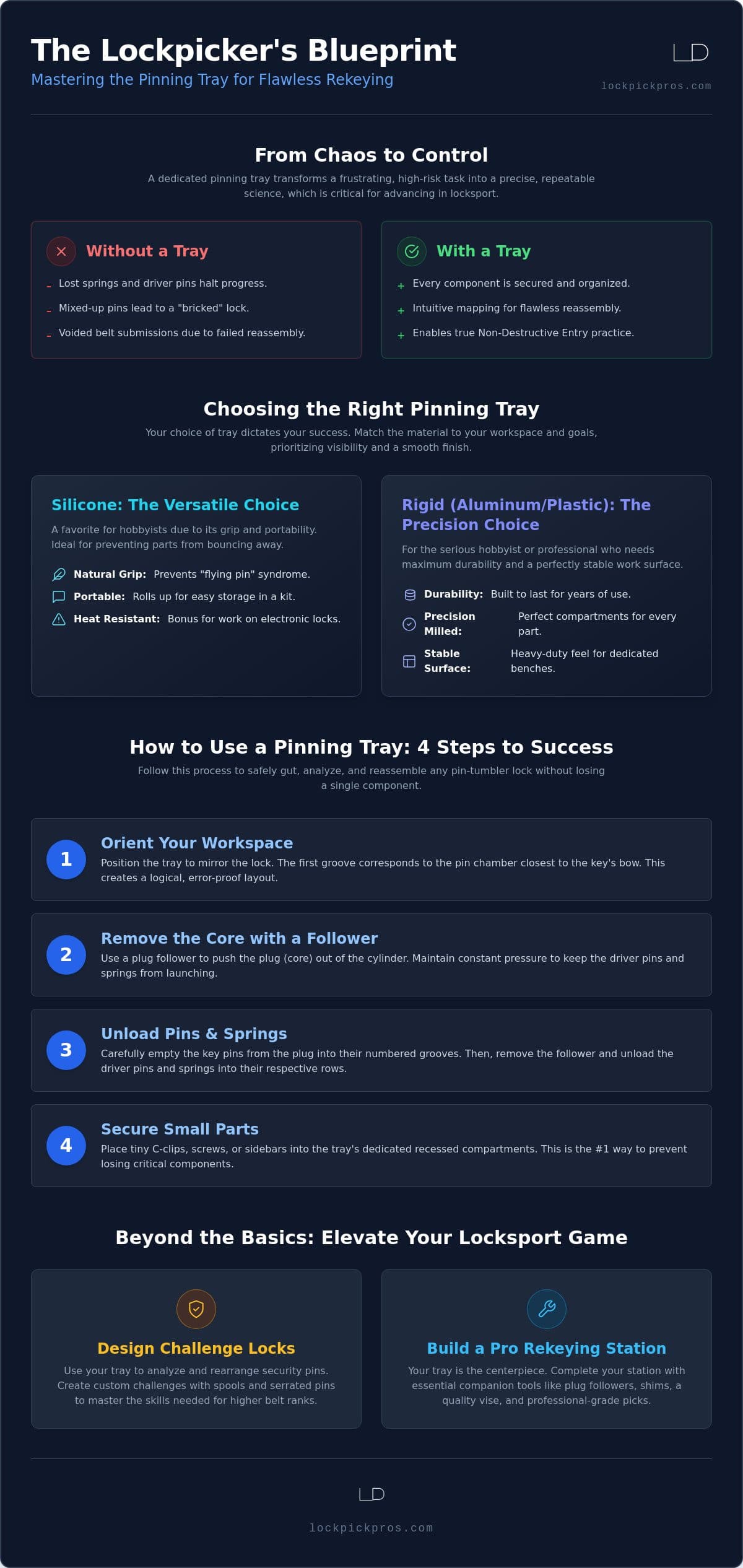
A pinning tray keeps tiny springs, driver pins, key pins, and plug parts separated and visible while a cylinder is apart. Once you move past casual picking and start repinning or servicing cylinders, the difference between a smooth reassembly and a headache usually comes down to organization, pin control, and a repeatable workflow.
Why the tray matters before the lock goes back together
A pin tumbler cylinder is a stack of components that have to be handled in order during rekeying, because every chamber has its own pair of pins and a spring above them. If you mix similar-looking pins, especially when they are close in shape but different in length, the result can be a lock that binds, refuses to turn, or acts inconsistently from chamber to chamber.
That is where the tray earns its place on the bench. It gives each part a home while you work, so you can keep a chamber’s parts together, compare pin lengths, and see at a glance whether a driver stack has wandered off.
What a pinning tray is really doing
The simplest way to think about a pinning tray is as a staging area for a rekey job. You pull the cylinder apart, remove the old key pins and drivers, then sort everything so the new key can be matched chamber by chamber. The tray keeps springs from disappearing under the bench, and it keeps driver pins from getting mixed into the wrong stack when the plug starts going back together.
Lockpick Pros groups the pinning tray with rekeying and lock-organization tools rather than as a specialty accessory for its own sake. The tray keeps the repair and reconfiguration process controlled enough to put the lock back into service correctly.
How it changes the rekeying workflow
Rekeying follows a straightforward sequence: disassemble the lock, replace the existing pins with a new set matched to a different key, then reassemble the lock. That sounds simple until you are actually dealing with tiny parts that look nearly identical under bench light. A tray helps you slow that sequence down enough to stay accurate, one chamber at a time.
A careful workflow usually looks like this:
1. Open the cylinder and remove the plug or core components in order.
2. Place each chamber’s springs, drivers, and key pins in a separate area of the tray.
3. Compare lengths before replacing anything, especially when several pins look similar.
4. Keep matched parts together until the new keying is complete.
5. Reassemble slowly, checking that no spring or pin has shifted out of place.
That method reduces lost parts and also cuts down on the kind of sloppy habits that lead to miskeyed cylinders.
Working surfaces, holders, and the broader bench setup
The pinning tray is part of a larger bench ecosystem. Multipick’s LAB Pinning Mat is designed as a work mat for locksmiths and lockpickers, with separate working areas so several cylinders or practice locks can be organized at once. That matters when you are comparing multiple cores, rehearsing a rekey, or keeping a practice lock apart from a live cylinder.
CLK Supplies takes the same idea in a slightly different direction with cylinder holders and pinning aids. Its cylinder holder for pin checking, designed by Brockhage, provides secure and reliable handling while you check pins on cylinders.
In practice, a good bench setup means you are not chasing pieces around the desk or trying to balance a loose core while you inspect it. The more secure the parts are, the less likely you are to bend something, drop a spring, or lose track of where a stack belongs.
What this teaches about the hobby itself
Locksport is the recreational, social, and competitive practice of defeating locking systems, but the hobby does not end when a lock opens. Reassembly and component management are part of the same craft, because understanding how a cylinder works internally is what lets you service it, rekey it, and reset it for the next round of practice.
Organization tools matter once you start moving beyond pure picking. A tray teaches you to respect tolerances, keep chambers straight, and identify security-pin layouts by handling the hardware carefully.
Finding your footing in the community
A 2023 beginner video from Lady Locks Lockpicking, titled “EVERY SINGLE THING You Need To Know To Get Started In Locksport & Lock Picking + LPU Belts,” was aimed at people who wanted help getting started, finding groups, and locating live meetups.
The Locksport Network directory is a resource list for locksport and lockpicking tools and communities.
This article was produced by Prism’s automated news system from verified source data, official records, and press releases, then run through automated quality and moderation checks before publishing. The system is built and supervised by the people who set the standards it runs under. Read our full AI policy.
Did this article answer your question?