Wakefield course bridges lockpicking hobby with automotive locksmith skills
Wakefield’s seven-hour auto lock-picking class shows how Lishi work, vehicle-specific techniques, and non-destructive entry turn locksport into locksmith training.

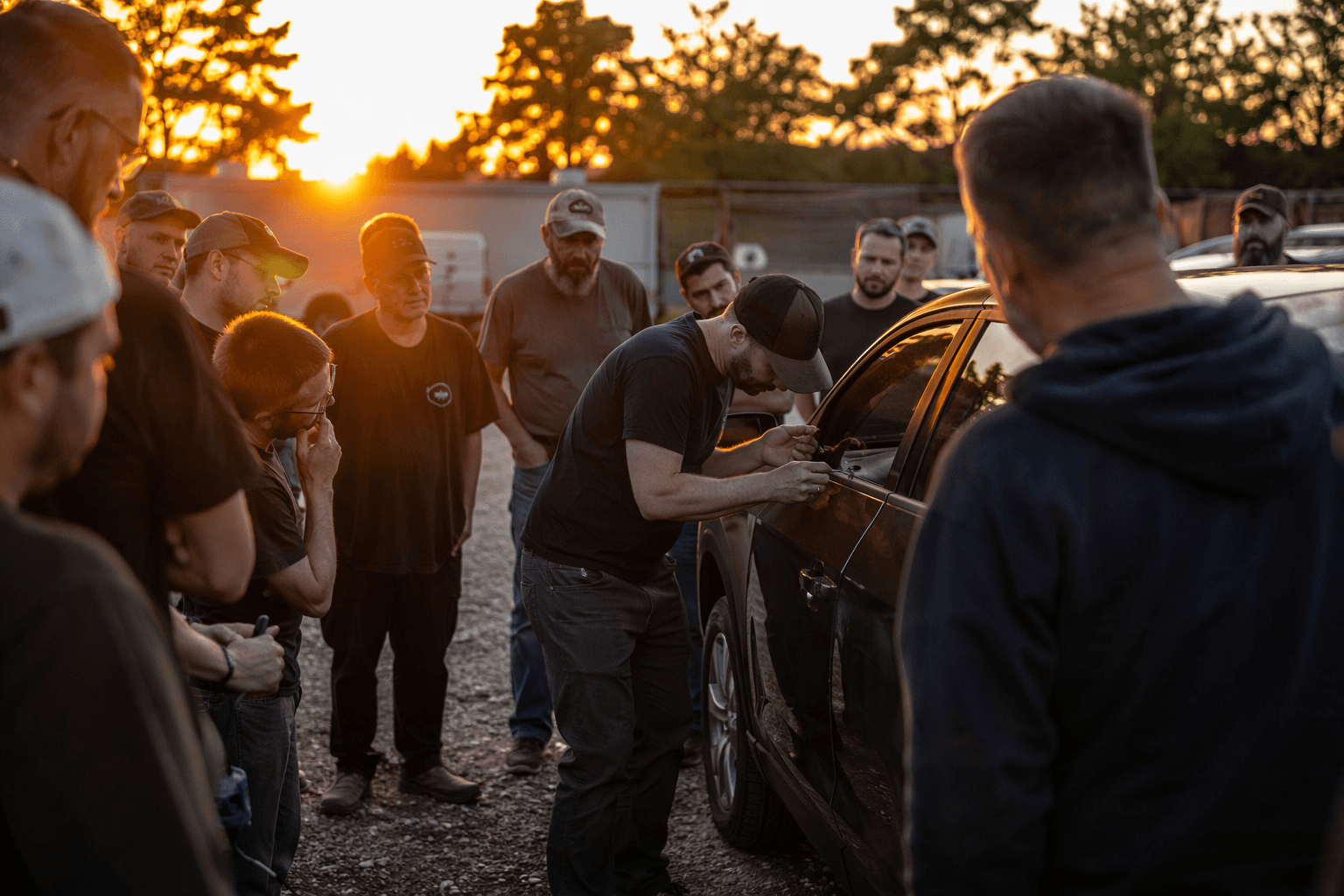
A one-day automotive lock-picking class in Wakefield makes a clean argument for treating locksport as more than a bench hobby. Listed for Thursday, June 11, 2026, at Access Fobs Limited, Unit 3E The Gateway, Fryers Way, Silkwood Park, Wakefield WF5 9TJ, the seven-hour in-person session is built around damage-free vehicle entry and the kind of lock work that depends on speed, accuracy, and restraint. For anyone who has ever wondered where practice-cylinder skill ends and locksmith craft begins, this is the overlap in plain sight.
Why this Wakefield class matters
The point of the course is not just to pick a lock, but to understand the whole access problem around a vehicle. The listing pushes beyond general lockpicking language and into real locksmith territory, where non-destructive entry is the preferred method because it avoids damaging the lock, door frame, or surrounding structure.
That shift matters because the class is clearly aimed at people who already understand the appeal of manipulation but want the next layer: tool discipline, model-specific technique, and the judgment to choose the quickest effective entry method. In other words, the course treats lockpicking as a professional skill set with consequences, not a parlor trick with a car-shaped target.
What the seven-hour session actually covers
The Wakefield class starts with genuine Mr. Li and Lishi 2-in-1 picks, then moves into the work that turns opening a door into automotive locksmithing. Students are shown non-destructive entry techniques, then go on to stripping down, servicing, and rekeying edge-cut, Tibbe, and laser locks.
The listing is especially specific about the hands-on tasks. Students will decode wafers, site-read keys, identify lock faults, and decide which entry method gets the result fastest without creating damage. The lock profiles named in the session, HU66, HU101, HU100, HU92, HU83, NE72, and SIP22, make the curriculum look firmly trade-oriented rather than introductory.
That specificity is the real tell. A beginner demo can explain what a pick is; a vehicle-access class has to teach how the lock behaves, how the key data reads, and how to move from opening to servicing without losing the thread of the system in your hands. The promise here is practice on real locks, not slide-deck theory, which is exactly what separates a casual taster from a working session.
Why Lishi tools sit at the center
The choice of tools tells you a lot about the intended audience. Original Lishi describes its 2-in-1 tools as devices that combine picking and decoding the cut depths of vehicle locks, and says there are approximately 100 2-in-1 tools available. That design is why the Wakefield course leans so hard on decoding wafers and generating usable key information, rather than treating entry as an end in itself.
Trade lore around the brand helps explain its status in automotive locksmithing. The line is commonly traced back to Mr. Li’s backyard factory in China’s He Bei Province, with the 2-in-1 format replacing earlier laser picks in the mid-2010s. Another trade account says the Original Lishi factory relocated in late 2017 and now employs more than 30 people working in two shifts, which gives you a sense of how far a niche tool line has grown.
That history matters because the tools changed the workflow. Once picking and decoding lived together in the same hand, a locksmith could move more quickly from access to key generation, and that is exactly the rhythm the Wakefield class is teaching.
Where the course fits in the UK training ladder
Access Fobs is not presenting this class in a vacuum. The company describes itself as a UK-based supplier of replacement car keys, fobs, tools, equipment, and programming services for auto locksmiths, so the training sits naturally beside the products and services it already sells. The same venue calendar also lists another June 2026 event there, the 1 Day Lock50 Masterclass Professional Auto Locksmith Training on Thursday, June 25, 2026, which suggests the Wakefield site is being used as a repeat training hub.
That local example also mirrors a wider UK pathway. The Master Locksmiths Association says it is the UK’s largest trade association for locksmiths and has been established for over 65 years. The Guild of Master Locksmiths UK offers foundation training that includes lock picking and gaining entry, while Hickleys Training Academy’s auto locksmith vehicle-opening course focuses on practical lock picking with Mr. Li Lazer and Tibbe picks. MPL Locksmith Training, Walker Locksmiths, Lockmasters Security Institute, and A Auto Locksmiths Association all sit in the same ecosystem, showing that auto-access training is not an odd side road but an established route into the trade.
Lockmasters Security Institute’s PureAuto Lishi Training and Key Generation course pushes in the same direction, with coverage that includes sight-reading keys, using scopes to read wafers, impression, progressioning, and cutting keys by code. Put alongside the Wakefield listing, the pattern is clear: the hobby’s hand skills are increasingly being translated into structured trade training.
Why the market wants this skill set now
The timing is not accidental. In February 2026, Thatcham Research reported that more than 70% of repair and salvage professionals said the UK vehicle repair and salvage sector faces a skills shortage, and that repair costs are now 50% more than five years ago. In that kind of environment, efficiency is not just nice to have, it is part of the business case.
Automotive access work sits right inside that pressure point. Damage-free entry protects the vehicle, saves time, and keeps the rest of the repair or programming workflow moving, which is why a course built around non-destructive techniques and vehicle-specific profiles has a real commercial edge. For anyone coming from locksport, that is the useful bridge: the same patience that solves a practice lock can, with the right training, become a professional method for getting into a car cleanly and doing the job right.
The Wakefield class captures that crossover neatly. It starts with the familiar satisfaction of reading a lock and ends with something stricter, more exacting, and far more useful in the field, where the smartest opening is the one that leaves nothing broken behind.
This article was produced by Prism’s automated news system from verified source data, official records, and press releases, then run through automated quality and moderation checks before publishing. The system is built and supervised by the people who set the standards it runs under. Read our full AI policy.
Did this article answer your question?