Budget Commander alternatives to Cyclonic Rift for every blue deck
Cyclonic Rift still sets the blue standard, but budget Commander decks can copy its job by choosing the right reset for their table and wallet.
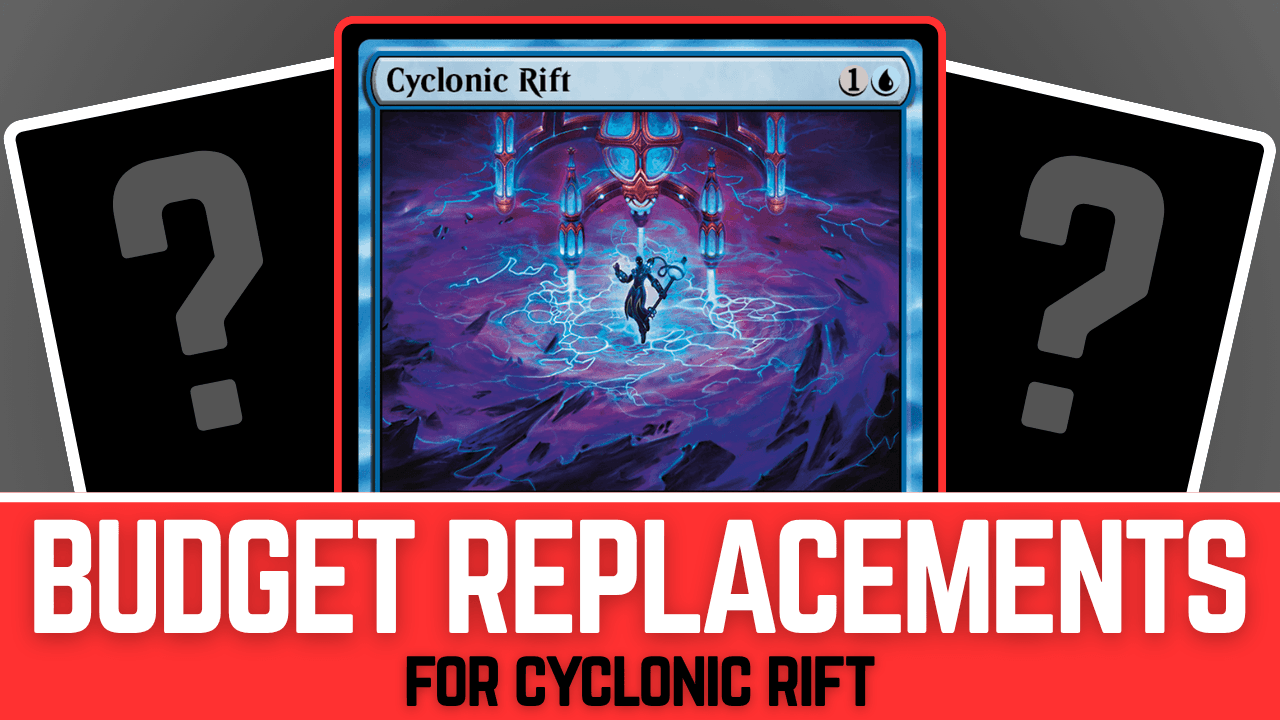
Why Cyclonic Rift is still the benchmark
Cyclonic Rift remains the card every blue Commander deck gets measured against because it does two jobs at once. At 1U, it is a clean instant-speed answer to one problem permanent, and at overload 6U it becomes a board reset that can sweep away every opposing nonland permanent in sight. First printed in *Return to Ravnica* in 2012, then reprinted in *Commander 2014*, *Modern Masters 2017*, *Ravnica Remastered*, *Commander Masters*, Secret Lair, and the *Strixhaven* Mystical Archive, it still shows up in 929,698 EDHREC decklists.
That popularity explains the budget headache. Tyler Bucks frames the card exactly the way most Commander players experience it, as a format-defining safety valve that is hard to justify buying once, much less across multiple blue decks. The card stays legal in Commander, but legality is not the same thing as accessibility, and repeated reprints have not pushed it into the category of an easy impulse buy for every pod.
What Commander actually asks of a reset spell
Commander is built around bigger, longer games than most constructed formats. Wizards describes it as a multiplayer format designed for 3-5 players, the rules begin everyone at 40 life, and decks are built as 99 cards plus one commander. In that setting, a spell like Cyclonic Rift does more than answer a threat, it can buy an entire turn cycle, break a stalled board, or clear the way for a finisher.
That is why budget substitutes should not be judged only by how closely they imitate Rift. The real question is what your deck needs from a blue answer package: a true emergency reset, a tempo swing, a one-sided upgrade, or simply a dependable piece of mass disruption that fits your mana curve. EDHREC’s budget coverage is aimed at that exact pain point, and the spread of tags around the topic, board wipes, bounce, counters, game-changer alternatives, interaction, mass disruption, spellslinger, sweeper, and tokens, shows how many different blue decks are trying to solve the same problem in different ways.
When you need a true emergency reset
If your deck wants a panic button, prioritize a card that can stop combat math, break parity, and reset a threatening board state before it becomes lethal. The best version of that role is usually an instant, because Commander tables punish players who tap out too early and leave themselves exposed during a full turn cycle. In practice, this is the category for decks that do not always win by being ahead, but do need one clean escape hatch when the table turns sideways.

This is also the role where table context matters most. A pod full of creature decks, token swarms, or decks that rely on a permanent-heavy setup will value a reset much more than a slower control table, while a spell-heavy list may need less board clear and more protection for its own plan. If you are building around this job, the ideal substitute does not need to feel identical to Cyclonic Rift, it just needs to preserve your life total and give you room to start over.
Tempo plays that open the lane
Some blue decks do not want a hard reset, they want a turn of breathing room. A tempo play clears blockers, knocks back a dangerous permanent, or disrupts an opposing setup long enough for you to land your own threat. That matters most in decks that win through combat damage, evasive threats, or a compact finisher that needs the path cleared for one attack step.
This is the safest place to save money if you are not trying to dominate the table in one shot. Cheap tempo interaction lets you hold up mana, keep developing your board, and spend less of your budget on a single premium spell. In Commander terms, that usually means you get more value from consistency than from raw spectacle, especially when you are trying to keep a first blue deck accessible.
One-sided upgrades for decks built to exploit them
The strongest budget alternatives are often the ones that are not trying to be Cyclonic Rift at all. If your deck is built around spellslinger engines, token production, or a board state that can survive asymmetric interaction, then a one-sided upgrade can be worth more than a pure bounce spell. That is where the article’s broader scope, including spellslinger and tokens, becomes important: the best substitute is the one that leaves your side intact while setting everyone else back.
This approach is especially useful when you want to preserve your own board presence instead of rebuilding from zero. A blue deck that has already developed value on the table can often turn a small advantage into a decisive one if its interaction does not undo its own work. The budget win here is simple, you are paying for efficiency instead of a premium name.

Ultra-budget substitutes that still do the job
Sometimes the answer is not elegance, it is affordability. If the goal is to stay alive, maintain interaction, and keep your deck from folding to a single alpha strike, then a cheap mass-disruption spell can be the right call even if it does not carry Cyclonic Rift’s ceiling. The important part is castability, because a budget card that sits in hand while you miss your window is not saving you money, it is costing you games.
That is the real philosophy behind budget Commander swaps. You are not trying to replace every function at once, you are choosing the version of the effect that matches your deck’s speed, your pod’s expectations, and your wallet. In a format where games begin at 40 life and often stretch across a long multiplayer table, that kind of practical flexibility matters more than chasing a perfect clone.
Why this card keeps drawing attention
Wizards has also signaled how central Cyclonic Rift is to casual Commander conversations. In its April 22, 2025 Commander Brackets beta update, the official team used Rift in a “safety bubble” example alongside Rhystic Study and Smothering Tithe for players who do not want to face those cards. That is a strong clue that Rift is not just powerful, it is widely recognized as a card that can warp how a casual game feels.
So the budget answer is not to pretend the card is ordinary. It is to decide whether your blue deck needs a reset button, a tempo swing, a one-sided answer, or the cheapest acceptable substitute, then spend accordingly. Once you make that call, Cyclonic Rift stops being the only standard and becomes what it really is, the expensive benchmark every smart blue deck is trying to work around.
Know something we missed? Have a correction or additional information?
Submit a Tip