EDHREC turns Bruce Banner into a Hulk Commander win condition
Bruce Banner isn't just a Marvel novelty here: EDHREC data points to a Hulk build that wins through extra combats, counters, and combo pressure.
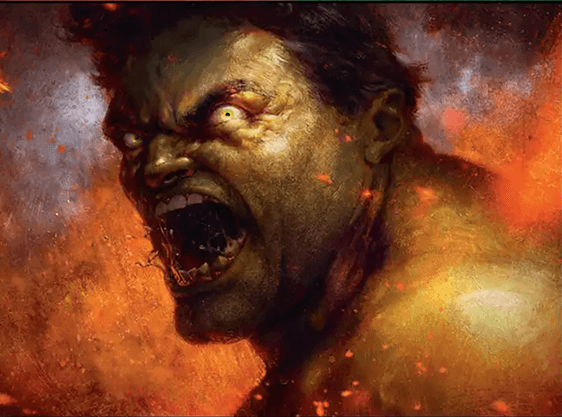
Bruce Banner turns into a real win condition when the deck stops treating him like a flavor piece and starts treating every point of damage as fuel. EDHREC’s numbers already tell the story: 1,462 Commander decks on the main page, 1,431 on the general Bruce Banner deck page, 38 combo-focused decks, and 67 cEDH lists. That spread makes one thing clear, this commander is being explored as a midrange threat, an aggro pile, and a combo shell at the same time, not just as a novelty Marvel legend.
The timing only sharpens that appeal. Magic: The Gathering | Marvel Super Heroes is slated for June 2026, and four Marvel Super Heroes Commander decks are set to release on June 26, 2026. Bruce Banner // The Incredible Hulk sits right in the center of that push, which means the card is arriving with both crossover buzz and actual deckbuilding gravity. The important part for Commander players is that the flavor is not ornamental, because the rules text pushes the build toward combat pressure, repeated attack steps, and the kind of redundancy that lets a big green creature actually end games.
What the Hulk shell is really trying to do
Bruce Banner’s front face gives the deck its engine. He can draw X cards and transform for {2}{R}{R}{G}{G} at sorcery speed, which means the build has a built-in way to refill and then flip into action without waiting on outside help. That matters in Commander, where a creature that both draws cards and becomes a threat can keep pace with removal and rebuild after a sweeper.
Once The Incredible Hulk is online, the card stops being a punchline and starts being a pressure cooker. It has reach and trample, so it can block up into the air while still forcing damage through on offense. Its Enrage trigger adds a +1/+1 counter whenever it is dealt damage, and if it is attacking, it untaps and creates an additional combat phase after the current one. That combination is the entire deck in miniature: take damage, grow, attack, repeat, then keep the board under pressure until a line opens for lethal.
What makes that package especially dangerous is the way the pieces reinforce each other. The counter plan gives Hulk a scaling body, the extra combat text rewards every successful swing, and the front face keeps cards flowing so the deck does not stall out after committing to the board. In practice, that means Bruce Banner is not just a commander you cast and hope survives, but a centerpiece that converts one successful attack into the next one.

Why EDHREC’s tag spread matters
The page tags do a lot of the strategic work for you. EDHREC’s Bruce Banner commander page highlights Extra Combats, +1/+1 Counters, and Combo, while the cEDH page shows a spread of Combo, Extra Combats, Midrange, and Aggro. That mix says the same thing in a few different languages: the deck can win by turning sideways, but it also needs enough structure to keep turning sideways when the table starts interacting.
The combo numbers reinforce that point. EDHREC’s combo deck page for Bruce Banner shows 38 decks, and the broader commander context still shows 67 cEDH decks. That does not mean every Hulk list should chase the hardest combo line in the room, but it does mean the card has enough raw text to justify looking for explosive finishes when combat stalls. If the table can answer the big green body once, the deck still has room to pivot into a faster closing pattern.
For deckbuilding, that leads to a simple read on what the shell wants:
- ways to make Hulk take damage on your terms
- ways to keep him attacking across multiple combat steps
- ways to protect a growing commander long enough for the extra damage to matter
- enough card flow to keep the pressure coming after the first big swing
That is why this commander reads less like a linear beatdown card and more like a pressure engine. The Hulk plan wants redundancy, because one attack step is not the goal. The goal is to make the table deal with one attack step, then another, then another, while Hulk gets larger each time he survives contact.
Mid-power pods versus pure crossover appeal
In mid-power pods, that structure gives Bruce Banner real legs. A deck built around extra combats and +1/+1 counters can punish shields-down turns, keep creature decks honest, and force control decks to answer a threat that keeps coming back bigger. The front-face card draw helps the list avoid the classic monster-creature problem, where the commander hits the field and then runs out of gas before the game ends.
At the same time, the commander’s appeal goes beyond raw efficiency. This is a Marvel crossover card that still plays like a Commander deck first, and that balance is what makes it interesting. If you want the IP hit alone, Hulk delivers the fantasy of turning rage into damage. If you want the table performance, the card’s extra-combat text, counter scaling, and combo-adjacent ceiling give you a real blueprint for closing games instead of just making a large attacker.
The best part of the build is that the flavor and the function point in the same direction. Bruce Banner draws cards, transforms, and unleashes a creature that grows when hurt and keeps attacking if it survives. That is not just a comic-book nod, it is a game plan with a finish line, and EDHREC’s deck counts show that players already understand the difference.
Know something we missed? Have a correction or additional information?
Submit a Tip