Nath of the Gilt-Leaf still turns discard into lethal Elf swarms
Nath looks quaint until one discard becomes an Elf, then a lethal board. The clean lock only needs Nath plus Sadistic Hypnotist to start emptying hands.
Why Nath still matters
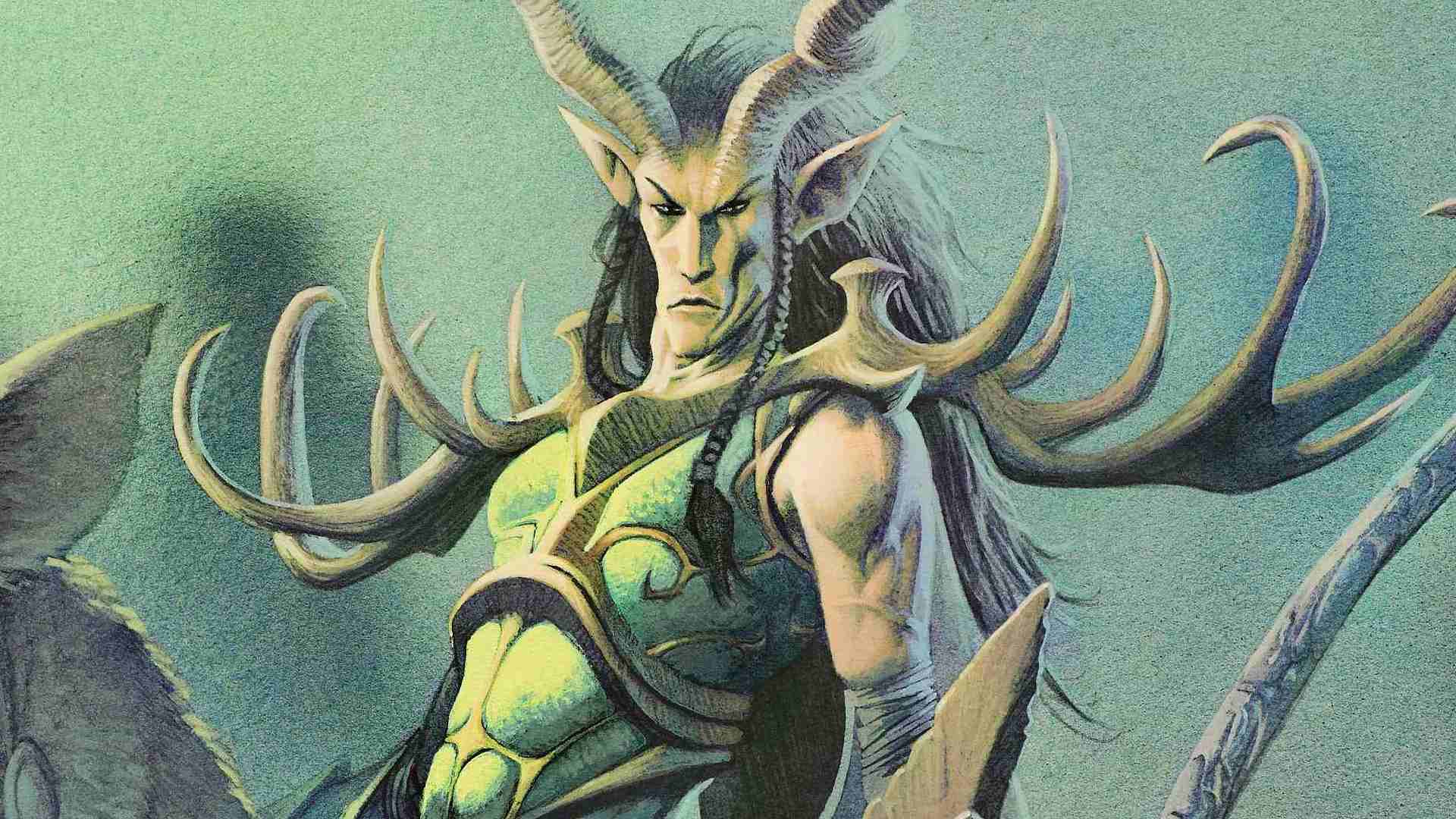
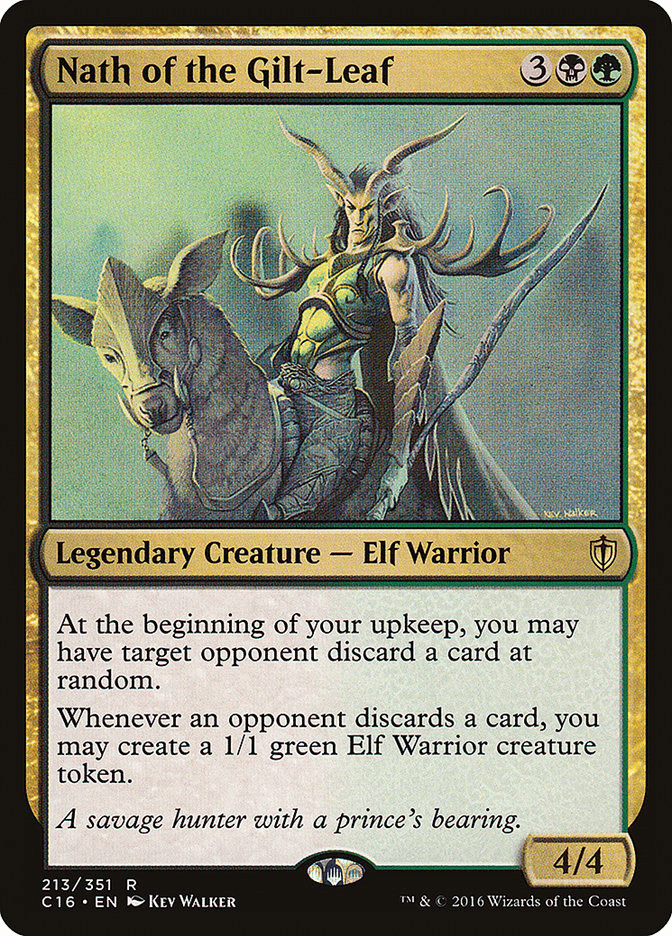
Nath of the Gilt-Leaf is one of those commanders people dismiss until they sit across from him and realize the game has turned into a card deficit. For five mana, Nath is a 4/4 legendary Elf Warrior that turns every upkeep into pressure and every discard into board presence, which is exactly why he still earns real wins instead of just nostalgic nods.
He first showed up in Lorwyn on October 12, 2007, and the core text has never stopped doing work: at the beginning of your upkeep, you may make target opponent discard a card at random, and whenever an opponent discards a card, you make a 1/1 green Elf Warrior token. That means Nath is never just a rattlesnake. He is a value engine, a token engine, and a resource-denial plan wearing the same face.
The part that still feels unfair
Nath’s best trait is that he turns other players’ normal decisions into your material. A single discard spell, a tax piece, or even his own upkeep trigger can leave you with extra bodies, and those bodies snowball fast in an Elf shell. Once the board starts to fill with 1/1s, the deck stops asking permission and starts presenting math problems.
That is why Nath still belongs in tables where people like to keep cards in hand. He punishes midrange decks that sandbag interaction, control decks that sculpt for a big turn, and combo decks that rely on holding the exact two or three pieces they need. He is much less interested in fair, low-resource aggro tables that dump their hand early, because those decks often give you fewer discard targets and less time to convert the trigger into a swarm.

The data backs up that he is not some forgotten one-off. EDHREC shows 1,395 Commander decks on Nath’s main page, with 241 tagged specifically under Discard. That split tells you the truth about the card: people are still building him as both an Elf commander and a discard commander, and the best lists happily blur the line between the two.
The cleanest lock is only two cards, but it needs a body to start
The spikier side of Nath is the one that pushes him from value commander into outright lock piece. The cleanest infinite-style discard line pairs Nath of the Gilt-Leaf with Sadistic Hypnotist, a creature with “Sacrifice a creature: Target player discards two cards. Activate only as a sorcery.”
The loop is simple once it is online:
1. Put Nath of the Gilt-Leaf and Sadistic Hypnotist on the battlefield.
2. Have any spare creature or token to start the first sacrifice.
3. Sacrifice that creature to Sadistic Hypnotist, targeting a player.
4. They discard two cards, and Nath creates two Elf Warrior tokens.
5. Sacrifice one of those tokens to Sadistic Hypnotist and repeat.
Because each activation replaces the body you spent with more Elf Warriors, the table can get buried in discard while your board keeps refueling itself. In practice, the line is brutally effective because it does not need a huge mana setup or a complicated package of dead cards. It just needs Nath, Hypnotist, and one expendable creature to get the engine moving.
The important limitation is also what makes it playable: Sadistic Hypnotist activates only as a sorcery. That means the line is telegraphed during your own main phase, which gives opponents a window to remove the outlet before the loop starts. If the Nath player untaps with a token, the Hypnotist, and a clear main phase, the table needs to act immediately.
What to pair with Nath if you want the deck to function even after removal
Nath is at his best when the deck does not lean on him as a fragile centerpiece. The strongest builds treat him like a multiplier for a shell that already wants Elves, tokens, and sacrifice outlets. That is why classic go-wide closers like Craterhoof Behemoth still make perfect sense here, and why mana engines such as Elvish Archdruid are so valuable. Once the board gets wide, Archdruid turns tiny tokens into explosive mana and Craterhoof turns the same board into a kill.
The other important support cards are the ones that keep the deck alive when Nath gets answered. Lathril, Blade of the Elves and Elvish Promenade both keep the token count climbing even if Nath has been removed or taxed into the command zone again. That matters because a good Nath deck should still pressure life totals without relying on the commander to survive every removal spell in the pod.
If you already have those Elf and token pieces lying around, Nath is easy to slot into an existing list. He works in straight Elfball, in discard-heavy attrition shells, and in hybrid builds that want a real combo finish without abandoning combat. That flexibility is the reason the card keeps showing up in active deck data instead of getting stranded as a curiosity from Lorwyn.
The table that feels Nath most
Nath punishes the kind of table that thinks cards in hand equal safety. Blue control lists that like to hold countermagic, midrange piles that hoard value spells, and combo decks that wait until they have a perfect hand all hate seeing him across the table. Add Sphere of Resistance and Thorn of Amethyst, and suddenly every player is paying more mana while trying to hold fewer answers, which is exactly the awkward place Nath wants them in.
Those tax pieces do more than slow the game. They make every discard trigger sting harder because they reduce the chance that opponents can empty their hands efficiently or rebuild after a bad draw step. Once the table starts stumbling, Nath’s upkeep trigger becomes a repeated source of advantage instead of a cute bit of random discard.
What opponents should spot before the snowball is too big
The warning signs are straightforward, and they get more dangerous the longer they sit on the table. If Nath survives a full turn cycle, expect the discard pressure to start mattering. If Sadistic Hypnotist lands and there is already a token or spare creature on board, you are one main phase away from a very ugly exchange. If Sphere of Resistance or Thorn of Amethyst is also in play, the Nath player is not just slowing you down; they are making every answer clunkier while building toward a board that can close the game.
The card still has teeth because it does not need to be flashy. Nath of the Gilt-Leaf turns one random discard into a token, one token into a sacrifice outlet loop, and one loop into a board that kills before the table stabilizes. That is not nostalgia. That is a commander still doing exactly what it was built to do.
Know something we missed? Have a correction or additional information?
Submit a Tip