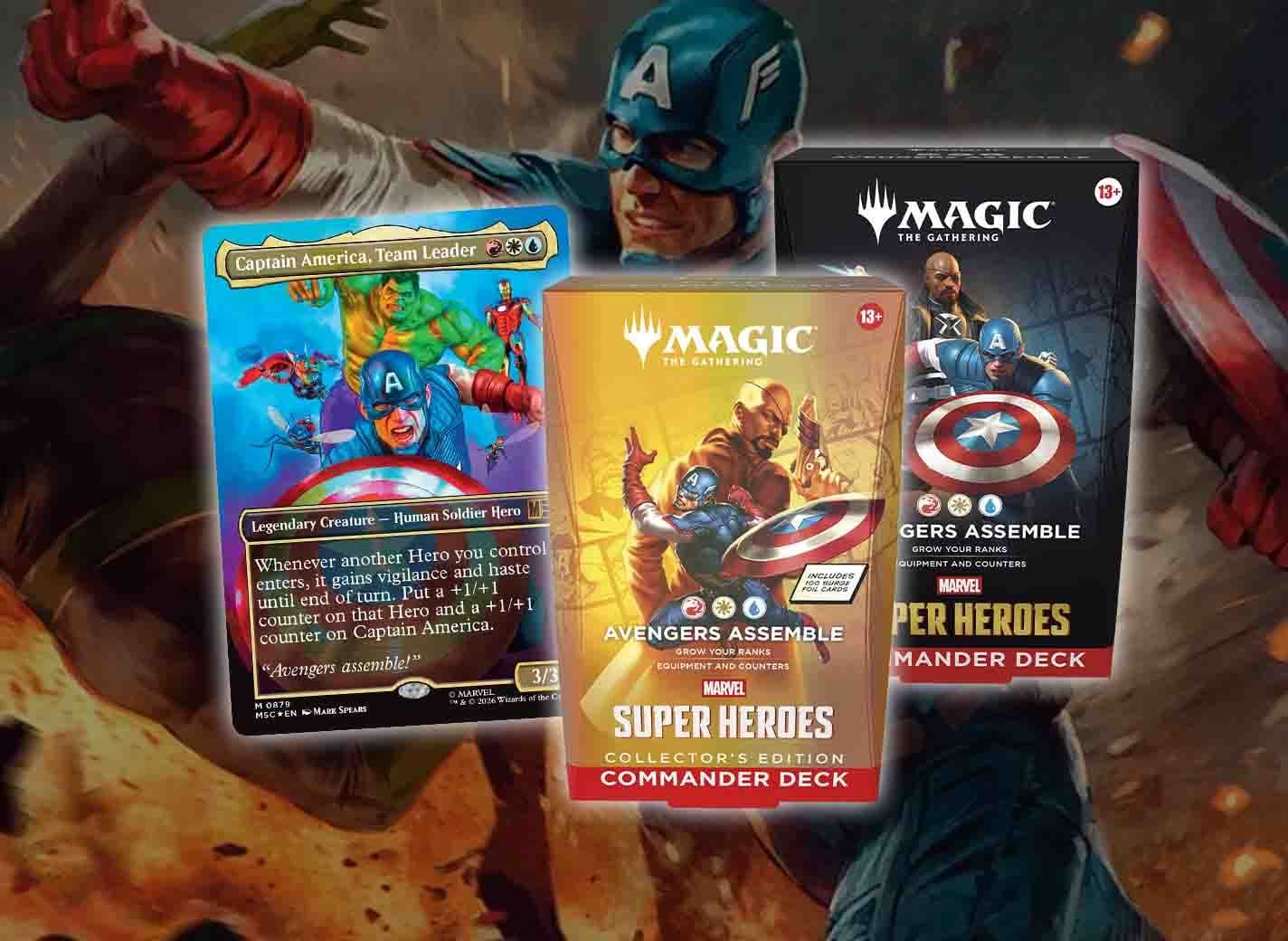
Captain America Commander deck turns shield counters into team protection
Captain America, Super-Soldier is a real Hero typal build-around, using shield counters to protect the whole board instead of just leaning on Marvel flavor.
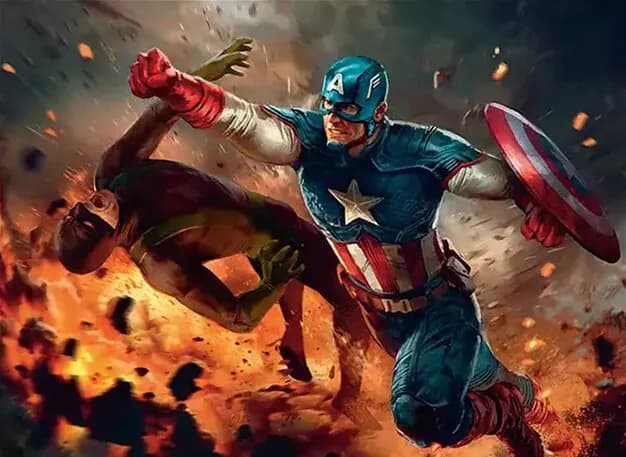
Captain America, Super-Soldier does something Commander players can build around immediately: it turns a single shield counter into protection for the commander and every Hero you control. That one line pushes the card far past novelty and into a mono-white strategy that wants to stay on board, grow a team, and force opponents to answer a resilient combat engine instead of a lone legend.
Why the shield counter matters
The core of the deck is simple and brutal in the best Commander sense. Captain America enters with a shield counter, and as long as it has one, you and other Heroes you control have hexproof. That means removal has to work much harder, and it means your board can actually develop under cover instead of collapsing the moment the table points a spell at your commander.
That protection changes the entire build. Instead of treating Captain America like a flavor piece and stuffing the list with random Marvel legends, the deck wants to preserve the counter, keep the commander alive, and use that safety to let the rest of the squad function. In practice, that makes the commander feel like the anchor of a real archetype, not just a card with good branding.
The EDHREC tags show the shell is already there
EDHREC’s commander page tags Captain America, Super-Soldier with +1/+1 Counters, Blink, Heroes, and Historic, which is exactly the kind of spread that tells you the deck has structure. The +1/+1 counter tag points to a board that can scale in combat. Blink suggests ways to reuse enters-the-battlefield value and keep key permanents relevant. Heroes and Historic keep the list tied to a coherent creature base and to the kinds of permanents white can support without drifting into clutter.
That tag mix matters because it keeps the deck from becoming Marvel-theme soup. If a card does not help maintain the shield counter, improve the Hero board, or advance a resilient combat plan, it starts looking like a cut. This is where the deck becomes practical: it is not just about playing recognizable names, it is about making sure every slot supports the same game plan.
How to build the Hero typal core
The best version of Captain America, Super-Soldier wants density and discipline. You want enough Heroes and supportive permanents that Captain America is never stranded as a one-card gimmick, but you also want the deck to keep its focus on protection and pressure. That means prioritizing cards that either keep the commander safe, extend board resilience, or convert protection into a real clock.
A good construction pattern looks like this:
- Keep the Hero count high enough that the commander’s hexproof text matters across the table, not just for a single creature.
- Lean on Blink effects to preserve value and keep important permanents relevant through removal-heavy games.
- Add +1/+1 counter payoffs so the protected board actually ends games instead of just surviving them.
- Use Historic synergies to make sure your noncreature support pieces still pull weight.
- Trim flashy cards that only add flavor if they do not help the team stay protected or hit harder.
That last point is where a lot of Marvel decks get diluted. Captain America, Super-Soldier rewards a focused list more than a sprawling showcase, because the commander already gives you a built-in advantage if you can keep the shield counter online.
Why this is more than a one-off novelty
The broader EDHREC data says this is not a lonely experiment. Captain America, Super-Soldier appears in 37 Commander decks as a commander, and EDHREC tracks 1,447 Captain America, Super-Soldier deck lists overall. That is enough activity to show real interest in the card’s dedicated identity, not just a passing spike from a new release.
The contrast with Captain America, First Avenger is even more revealing. That card is tracked in 13,671 Commander decks, and it points in a very different direction, toward Equipment, Voltron, and Artifacts. In other words, Captain America supports multiple Commander identities, but Super-Soldier is the one that most clearly asks for a Hero typal shell built around protection and cohesion.
The Marvel release gives the deck room to breathe
Wizards of the Coast has Marvel Super Heroes Commander decks, Collector’s Edition Commander decks, and related products lined up for June 26, 2026. The digital release on MTG Arena is set for June 23, and Scryfall’s Marvel Super Heroes set gallery lists the set at 453 cards. That gives players a concrete runway to test the archetype digitally before paper tables see the full release.
The timing matters because this is the kind of commander that benefits from early tuning. The more the card pool opens up, the easier it becomes to identify which support pieces actually reinforce the shield-counter plan and which ones are just there because they happen to wear a Marvel logo.
Captain America, Super-Soldier works because the shield counter is not a decorative mechanic. It is the engine that keeps the whole Hero squad standing, and once that protection is online, the deck stops looking like a themed pile and starts looking like a Commander strategy with a clear way to win.
This article was produced by Prism’s automated news system from verified source data, official records, and press releases, then run through automated quality and moderation checks before publishing. The system is built and supervised by the people who set the standards it runs under. Read our full AI policy.
Did this article answer your question?