Marvel Super Heroes offers Commander players a surprisingly deep typal toolkit
Marvel Super Heroes looks like crossover candy, but Agent Phil Coulson, Captain America, and Nick Fury turn its Hero and Villain shells into real Commander plans.
Marvel Super Heroes is easy to read as a pile of marquee faces, but the Commander story runs deeper than the splash art. The set gives you enough Hero and Villain structure to build around, and the best legends reward steady board development instead of asking you to hit one cute crossover moment. That is the difference between a novelty product and a set that can actually feed tables for months.
The set's real backbone is typal structure
The cleanest way to judge Marvel Super Heroes is to strip away the costumes and ask what creature types actually matter. EDHREC's set coverage points to Heroes and Villains as the main event, with civilian bodies and a few incidental creature types filling out the edges. That sounds simple, but in Commander simple often means usable: you can understand the plan at a glance, then keep tuning it as your pool grows.
That same simplicity also makes the set friendlier to newer players. Wizards says the release is meant to welcome both new and returning Magic players, and its own framing treats the product as a "sample platter" of Marvel stories and characters. In practice, that means the typal hooks are easy to identify, even before you know every legend in the file. The set even throws in some surprise support for creature families like Merfolk and Squirrels, but those read like side routes, not the central highway.
Hero decks already have real commanders
The Hero side is where the set starts looking like actual Commander infrastructure. Preview material puts Captain America, The Sentry, Bruce Banner // The Incredible Hulk, and Quicksilver on the hero lineup, which gives the archetype a broad enough cast to feel coherent rather than random. Agent Phil Coulson is the clearest build-around from that pool: he scales a Hero board with counters over time, which makes him feel like a vigilant early play that turns into a mid-to-late-game engine.
That matters because Phil Coulson does not ask you to win immediately. He rewards the boring but necessary part of Commander, where you keep bodies on the table and let incremental advantages become a real board. EDHREC currently tracks Agent Phil Coulson in 24 decks as a commander, which is not huge, but it is enough to show that players are already treating him as more than a novelty legend.
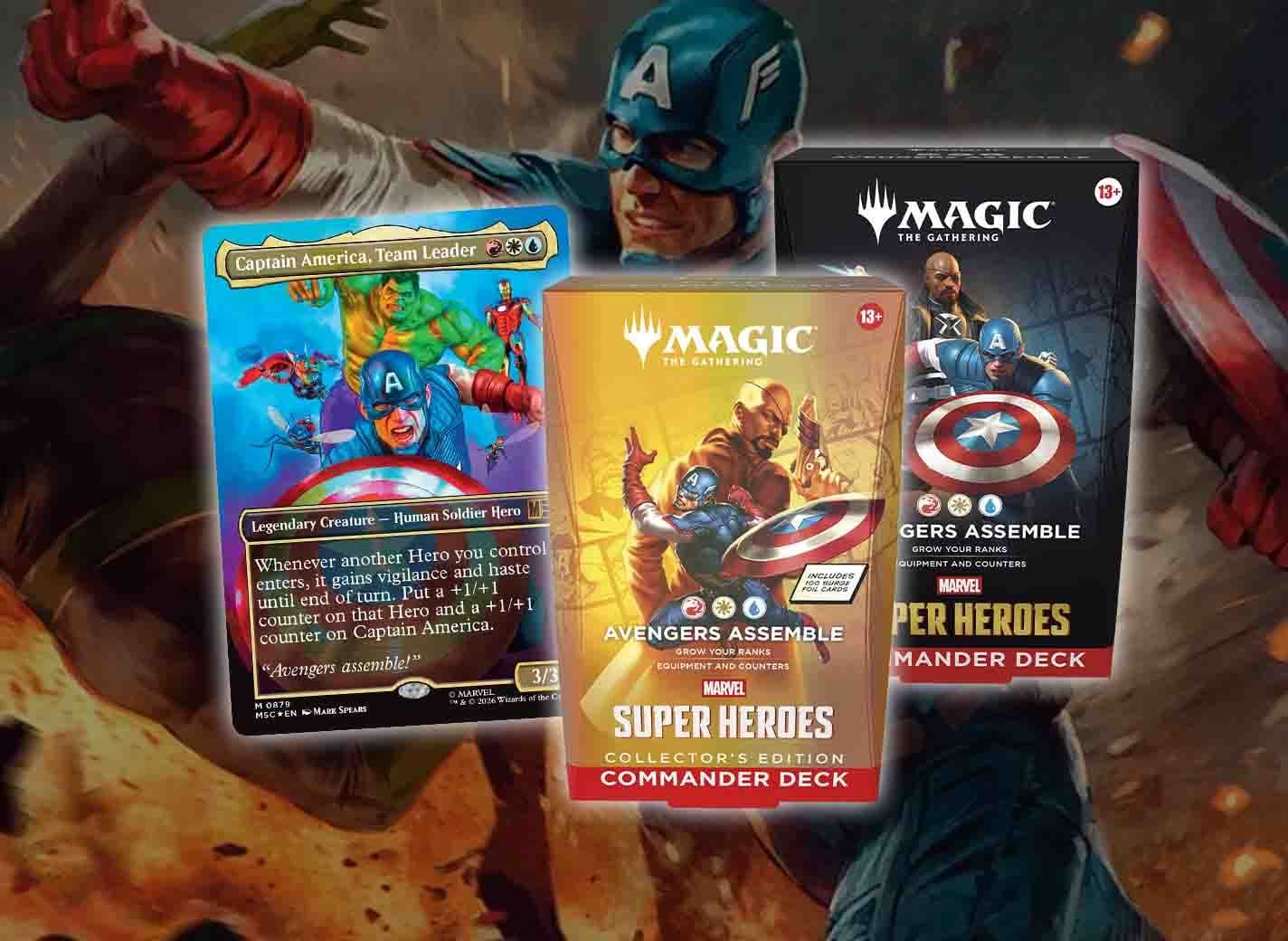
Captain America occupies a different lane and may be the cleaner entry point for a lot of white-based lists. The review's read on him is straightforward: he is a strong Hero commander for white weenie-style builds that want to go wide and protect the board. That is exactly the kind of shell that survives a crowded table, because it asks for redundant creatures and combat discipline rather than a pile of one-off synergies.
Nick Fury is the bridge commander
If Agent Phil Coulson is the value engine and Captain America is the board boss, Nick Fury is the glue. The card can mix Marvel Heroes, Spider-Man cards, and support pieces into a broader synergy shell, which makes him the most ambitious commander in the bunch. EDHREC is already tracking Nick Fury, Agent of S.H.I.E.L.D. in 32 decks for a Hero-focused build, a sign that players are using him as a bridge between the Marvel sub-collections rather than as a stand-alone gimmick.
That bridge role matters even more because Wizards retroactively added connive to Magic: The Gathering | Marvel's Spider-Man to create a mechanical throughline between Marvel releases. Nick Fury sits right in the middle of that kind of design, where one set can borrow from another without feeling stapled together. In Commander terms, that means the deck can actually evolve as more Marvel cards arrive, which is the difference between a one-and-done deck and a shell worth revisiting.
Villains get the nastier, more unified package
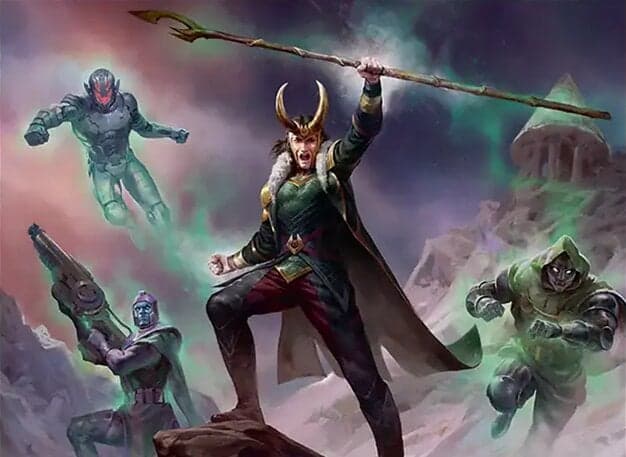
The Villain side is smaller in tone but sharper in execution. Preview material names Baron Helmut Zemo, Doctor Doom, and Super-Skrull as villain-side cards, and Wizards says connive returns in Marvel Super Heroes as a Villain-only mechanic. That is a strong choice because connive does real work in Commander: it filters draws, fuels discard synergies, and gives evil decks the kind of friction that feels like scheming instead of brute force.
The examples Wizards points to make that intent plain. Doctor Doom, Kang, M.O.D.O.K., The Leader, and Baron Zemo all sit in the connive lane, which gives the Villain tribe a recognizable mechanical identity instead of just a costume palette. That is the kind of redundancy tribal decks need, because it lets the archetype keep playing even when you do not draw the exact headline legend.
The product frame supports the decks
The release structure backs up the typal plan. Marvel Super Heroes arrives as part of a multi-year team-up between Wizards of the Coast and Marvel, with prerelease events beginning June 19, 2026, Avengers Academy events at local game stores starting June 12, 2026, and the tabletop release landing on June 26, 2026. Wizards also released four ready-to-play Commander decks: Avengers Assemble, Wakanda Forever, The Fantastic Four, and Doom Prevails.
Those decklists are worth paying attention to because they tell you where the set expects players to start. Avengers Assemble is red-white-blue, Wakanda Forever is green-white, The Fantastic Four is red-green-white-blue, and Doom Prevails is blue-black-red. The non-Fantastic Four decks each contain 29 new-to-Magic cards, while The Fantastic Four includes 26 new-to-Magic cards and, unusually, four face commanders. That is not just product dressing; it is a sign that Wizards built the set to support multiple entry points, from simple Hero builds to bigger multicolor shells.
Marvel Super Heroes ends up doing the thing a lot of crossovers only promise. It gives Commander players enough Hero and Villain redundancy to build real decks, then leaves room for the flashy legends to do their jobs without carrying the whole set on their backs. When the best shell cards are Agent Phil Coulson, Captain America, Nick Fury, and a Villain mechanic like connive, the set is not just selling nostalgia. It is handing Commander players a typal toolkit that can actually keep showing up at the table.
This article was produced by Prism’s automated news system from verified source data, official records, and press releases, then run through automated quality and moderation checks before publishing. The system is built and supervised by the people who set the standards it runs under. Read our full AI policy.
Did this article answer your question?