Chaos Warp Appears in One Million Decks, But Should It Stay?
Chaos Warp sits in 1.22 million Commander decks, but EDHREC's Cooper Gottfried argues it's overstayed its welcome in most of them.
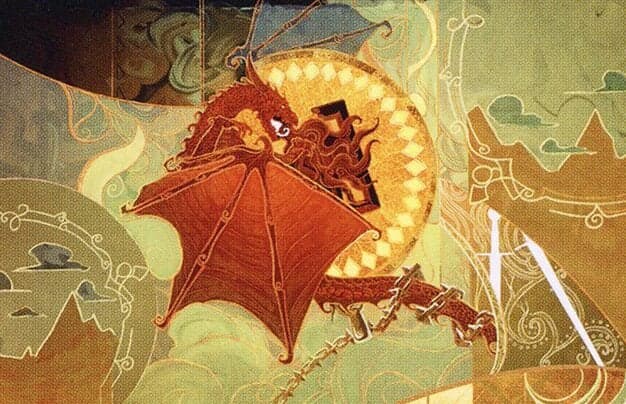
One million is a staggering number. Chaos Warp sits in 1,220,000 Commander decks according to EDHREC's database, representing nearly 30% of every eligible list in their dataset. That kind of ubiquity earns a card a permanent slot in most players' binders and, by extension, their decks. But ubiquity and correctness aren't the same thing. EDHREC writer Cooper Gottfried recently took a hard look at whether that inclusion rate reflects smart deckbuilding or just momentum, and his conclusion cuts against the grain: in many Commander decks, Chaos Warp has overstayed its welcome.
What Makes Chaos Warp So Appealing
The appeal isn't mysterious. Chaos Warp does something almost no other red card can: it answers anything. Creatures, planeswalkers, artifacts, enchantments, lands. One mana, instant speed. The permanent gets shuffled back into the library, which bypasses indestructible entirely and prevents it from being recurred from the graveyard. For a color that historically struggles with anything it can't burn, that flexibility is genuinely difficult to replace.
The randomness is a feature as much as a bug in certain contexts. Shuffling a threat away and potentially landing something worse for your opponent feels like acceptable variance when the alternative is doing nothing at all. In Commander's multiplayer environment, there's also a political dimension: casting Chaos Warp on someone else's problem creates goodwill and unpredictability in a way that a surgical exile spell doesn't.
Where It's Actually Necessary: Mono-Red's Enchantment Problem
Here is where Gottfried's analysis gets genuinely useful rather than just contrarian. Mono-red decks have real tools. Lightning Bolt handles creatures and planeswalkers efficiently. Blasphemous Act clears entire boards. Vandalblast deals with artifacts at scale. Stack interaction exists through Pyroblast and Untimely Malfunction.
Enchantments, though, are a different story. Other than Chaos Warp, there is essentially one other option for mono-red to deal with enchantments: Wild Magic Surge. The problem is that Wild Magic Surge always replaces one permanent with another, making it close to useless against dangerous permanents like Rhystic Study. Removing a Rhystic Study only to flip into a Mystic Remora does very little to improve your game state. That leaves Chaos Warp as the only realistic enchantment answer in mono-red, which is a significant argument for its inclusion in those lists. Gottfried's article confirms this: Chaos Warp is viable even at Bracket 5 (cEDH) in Magda lists, where the enchantment removal gap is exactly the kind of hole that costs games.
The Case Against It in Multicolor Decks
The calculus shifts significantly the moment you add a second color. White gives you Swords to Plowshares, Path to Exile, and mass enchantment removal. Green gives you Nature's Claim and Krosan Grip. Black and blue offer exile-based answers that don't hand an opponent a free permanent. In those decks, paying three mana for unpredictable removal when you already have access to clean, consistent answers is a genuine slot inefficiency.
This is the core of Gottfried's argument: the inclusion rate of 1.22 million decks isn't broken down by color identity. A lot of those decks are running Chaos Warp out of habit, because it's a staple, because it was in a precon, because it works. But "works" and "optimal" aren't synonyms. In a Bant or Golgari deck, three mana and a random permanent flip is often a worse deal than a two-mana enchantment removal spell that goes to exile.
The Randomness Downside in Practice
The odds of shuffling away a threat and immediately replacing it with the same card are low. Gottfried acknowledges this in the article, noting that the nightmare scenario (flipping into the exact card you just removed) is highly improbable. But the risk isn't limited to that extreme case. Any powerful permanent in the top card of an opponent's library becomes a liability. In a game where opponents are playing optimized lists, the density of impactful permanents is high. The variance that feels exciting in casual games becomes a liability in higher-power tables where every trigger matters.

The randomness also interacts poorly with the political layer of Commander. When you're trying to eliminate a specific threat, Chaos Warp's outcome is out of your control. In a game that increasingly rewards precise threat assessment, handing that precision over to chance isn't always worth the mana efficiency.
When It Stays In the 99
Gottfried's take isn't that Chaos Warp is a bad card. It's a "must" in the right contexts:
- Mono-red decks with no other enchantment answers
- Chaos-themed or Polymorph-effect decks where the randomness is a deliberate design choice
- Decks that benefit from creature theft or landfall triggers, where flipping an opponent's permanent isn't necessarily a loss
- Budget lists where access to premium exile removal is cost-prohibitive
In these shells, the card earns its slot. Gottfried's analysis also highlights that pairing Chaos Warp with rummage effects like Tormenting Voice or unreliable tutors like Gamble improves the chances of having it available when you most need it in mono-red midrange builds.
A Word on Meta Awareness
There's a subtler point buried in Gottfried's data-backed analysis that's worth pulling out: when over a million decks run the same removal spell, your opponents know to expect it. In local metas where the same playgroup grinds regularly, predictable removal suites become easier to play around. If every red deck at your table runs Chaos Warp, players build and sequence accordingly. Diversifying your removal suite, even slightly, forces opponents to account for multiple lines of play and reduces the degree to which they can leverage their knowledge of your deck.
The 1.22 million inclusion figure isn't just a testament to the card's power. It's also a signal that the card has become so expected that its presence in any red deck is essentially table knowledge. That's not a reason to cut it everywhere, but it's worth factoring into deckbuilding decisions at tables where metagame awareness actually matters.
The Bottom Line
Chaos Warp earns its place in mono-red, in chaos-themed builds, and in any list that genuinely lacks access to reliable enchantment removal. Outside those contexts, the three-mana instant with random upside is often the fifth-best removal spell in your hand. Cooper Gottfried's EDHREC analysis doesn't argue that the card is bad. It argues that nearly 30% inclusion has made a context-specific tool into a reflex inclusion, and that reflex is worth questioning the next time you're trimming a list to 99 cards. The million-deck number is impressive. Whether it reflects sound deckbuilding or collective inertia is a question every pilot should answer individually.
This article was produced by Prism’s automated news system from verified source data, official records, and press releases, then run through automated quality and moderation checks before publishing. The system is built and supervised by the people who set the standards it runs under. Read our full AI policy.
Did this article answer your question?