Commander needs more monocolored precons, especially in a multicolor era
Mono-color Commander precons solve real onboarding pain: cheaper mana, simpler upgrades, clearer identity. Wizards keeps leaning multicolor, but one-color decks still deserve a slot.
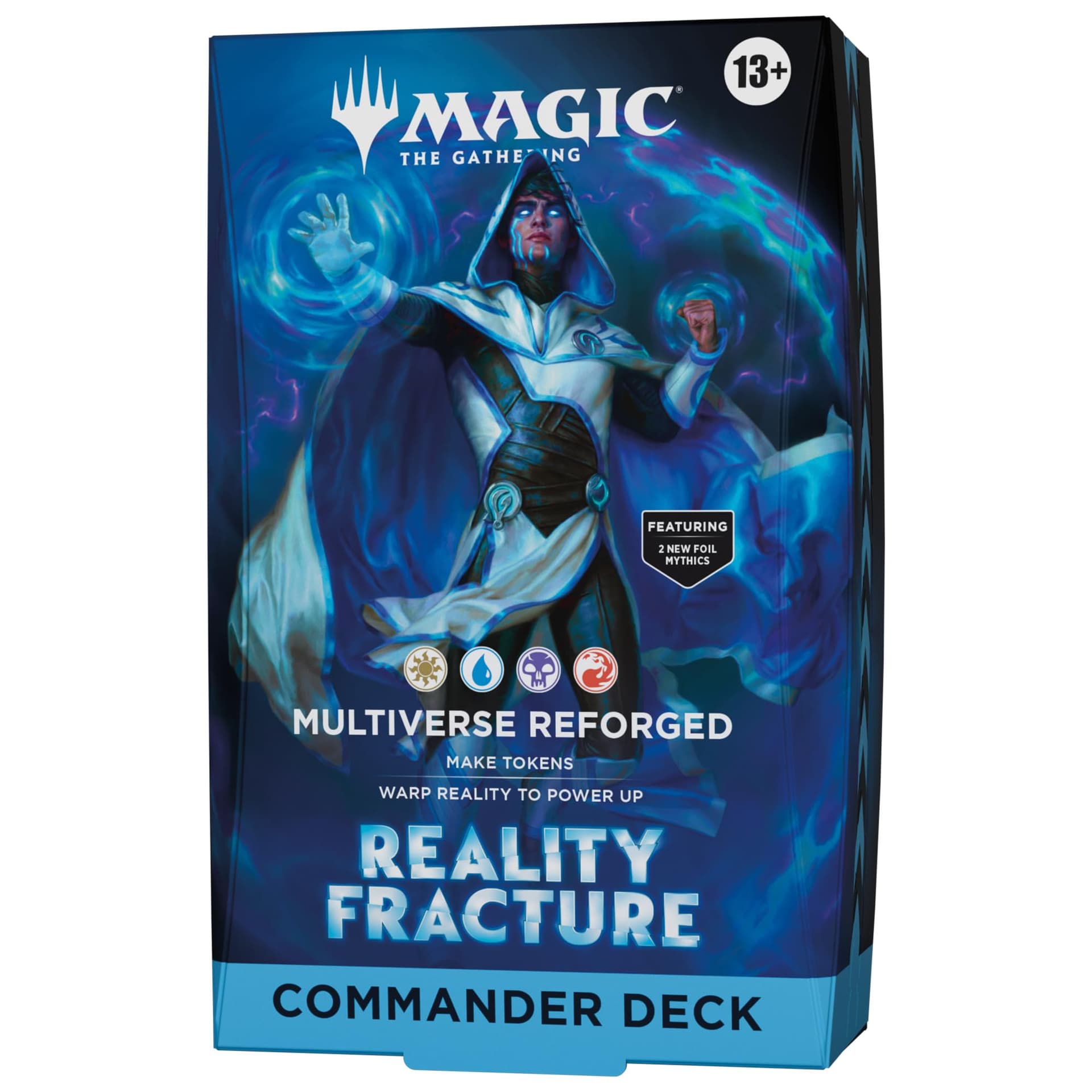
The announcement of five starter precons alongside Reality Fracture is a reminder that Commander still has an onboarding problem hiding in plain sight. With Reality Fracture set for October 2, 2026, and Wizards saying 2026 will include seven Magic sets, the company is once again filling the calendar with splashy products. That makes Owain Roberts's argument feel timely: if Commander is going to keep widening, monocolored precons should be part of the answer, not an afterthought.
Why monocolor still works as Commander onboarding
Commander is a 100-card singleton format built around one legendary creature commander, and that structure can feel like a lot before a player has even shuffled up. Mono-color cuts through the two hardest questions new players face: how do I build a mana base, and what exactly is this deck trying to do? A deck that only needs one color of mana is cheaper to assemble, easier to upgrade, and much less likely to stumble because the lands are awkward.
That simplicity does not make monocolor decks shallow. It gives them identity. When every draw step points in the same direction, the commander can feel like a statement instead of a compromise, and that is a huge help for newer players who are still learning how to read a pod and develop a game plan. In Commander, where synergy matters as much as raw card quality, that clarity is a feature, not a shortcut.
Wizards has done this before, and the hits are easy to spot
The clearest proof that monocolor can sell is already in Wizards' own history. Commander 2014, announced at San Diego Comic-Con in San Diego, California, United States on July 26, 2014 and released on November 7, 2014, featured five monocolored 100-card decks. That lineup showed that the format can support a whole spread of one-color identities, not just the occasional curiosity.
Wizards returned to the idea in Warhammer 40,000 Commander, which released globally on October 7, 2022 and included four decks, among them the mono-black Necron Dynasties deck. Wizards put that deck in the spotlight from the first reveal and described the whole release as an on-ramp to Commander, complete with new cards and reprints. Necron Dynasties stood out because it proved a one-color list could feel premium, flavorful, and powerful at the same time.
Starter Commander Decks, released on December 2, 2022, make the contrast even sharper. They were marketed as five different two-color decks for new Commander players, which means Wizards clearly understood the starter-product assignment. The missing step was obvious: if a product is meant to teach Commander, why not make some of those decks monocolored and let the format breathe a little?
The product gap is most obvious where color identity is weakest
Wizards' 2026 lineup keeps leaning toward bigger, louder, multicolor Commander products, especially around crossover releases. That is good for spectacle, but it also crowds out the decks that would do the most work for new players. Monocolor precons would not replace multicolor releases; they would solve a different problem by giving players a cheaper, cleaner first deck that can still be tuned later.
The biggest opening is in the colors that are often the least forgiving in Commander precons:
- Mono-white could anchor tokens, soldiers, blink, or equipment, all themes that teach combat and board development without asking for a pricey suite of fixing.
- Mono-red could make a real home for spellslinger or impulse-draw play, giving players a fast, expressive deck that is still easy to cast.
- Mono-blue could use artifacts, flying, or tempo as a training ground for decision-heavy play that does not rely on exotic mana.
- Mono-green could lean into lands, ramp, or stompy pressure, the color most naturally built to show off resource growth.
Mono-black is already the proof of concept. Necron Dynasties showed that a one-color list can feel premium, flavorful, and powerful at the same time. The lesson is not that every future precon must be monocolored, only that Wizards is underserving a very real part of the Commander audience when it keeps defaulting to multicolor as the only path to excitement.
A better monocolor product would be easier to buy and easier to upgrade
The practical upside is hard to miss. Mono-color decks avoid expensive dual lands, tri-lands, and other high-end fixing, which lowers the entry price before a player ever touches the spell suite. At the same time, they still leave room for utility lands and premium upgrades if a pilot already owns them, so the deck can grow naturally instead of requiring a total rebuild.
That is the kind of structure newer and budget-conscious players actually need. A well-built monocolored precon gives them a clear commander, a coherent plan, and a mana base that does not punish them for just wanting to play the game. In a multicolor era, that restraint is not a limitation. It is the cleanest design choice Wizards has left on the table.
If Commander is going to keep expanding through more crossover sets and more seven-set years, the simplest decks will matter even more. The next time Wizards wants an on-ramp, the best answer may be the one it already knows how to make: a monocolor deck that lets the commander, not the mana base, do the talking.
This article was produced by Prism’s automated news system from verified source data, official records, and press releases, then run through automated quality and moderation checks before publishing. The system is built and supervised by the people who set the standards it runs under. Read our full AI policy.
Did this article answer your question?