Disability Advocate Alexander Nathan Champions Accessibility in Magic: Commander
A Reddit post about paper Magic barriers sparked a full EDHREC spotlight on Alexander Nathan, the Belgian disability advocate pushing Commander to be genuinely inclusive.
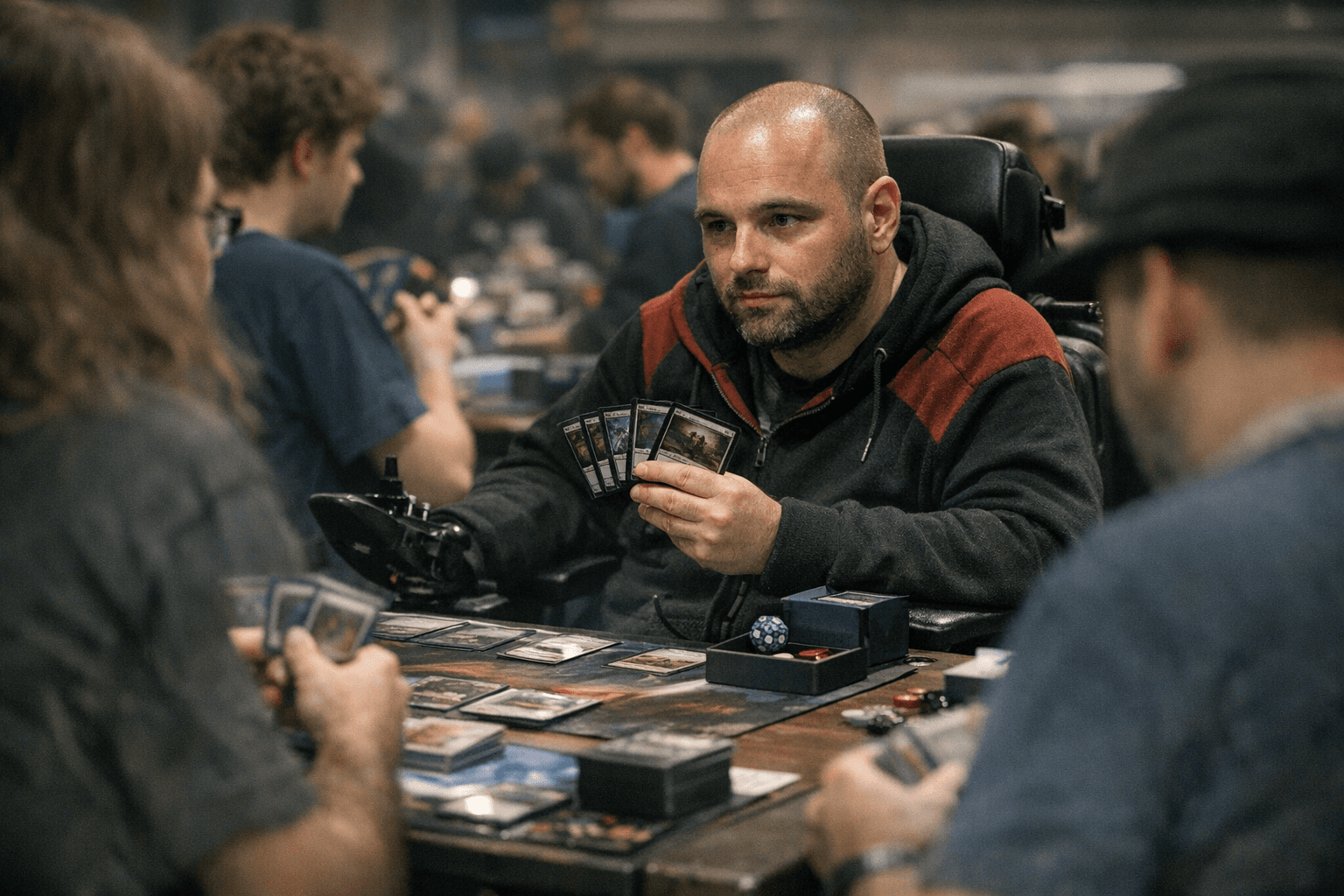
A Reddit post doesn't usually launch a serious conversation about disability advocacy in the Commander community. But when Alexander Nathan wrote about the accessibility barriers he'd encountered in paper Magic, the response was significant enough that EDHREC came calling. The resulting interview, "Nothing Without Us: Accessibility, Advocacy, and Magic," published March 13, 2026 and written by Nick Wolf, puts a spotlight on a part of this hobby that most players rarely have to think about.
Nathan is 37 years old, lives in Belgium, and has been playing Magic since his schooldays in Limburg. He also lives with a congenital myopathy, a condition he describes in plain terms: "I was born with a genetic condition that makes my muscles weaker over time, slowly but inevitably." That combination, a lifelong love of the game alongside a progressive physical condition, is exactly what makes his perspective so pointed. He isn't approaching this as an outside observer. He's a player who has sat at those tables.
From Kitchen Table to Advocacy
Nathan's path from Magic player to disability advocate runs through Permastunned Gaming, the esports clan for disabled people that he founded. Building and running that organization is what pulled him into the broader work of accessibility and inclusion in competitive gaming, and that work has taken him far beyond the Commander table. He has advised the Special Olympics, the Asian Electronic Sports Federation, Logitech G, and Intel. Those aren't peripheral gigs. Special Olympics represents one of the largest disability-focused sporting organizations in the world, and Logitech G and Intel are two of the most influential hardware companies shaping how competitive games are actually played at a physical level.
What's worth sitting with is the range of that advisory work. Hardware manufacturers, international esports federations, and disability-inclusive sporting bodies each represent a different layer of the accessibility problem: the tools people use, the organizations that set competitive rules, and the communities built specifically for disabled participants. Nathan has engaged with all three simultaneously, which positions him as something more than a single-issue advocate. He's operating at the intersection of policy, product design, and community building.
Why Paper Magic Is Its Own Problem
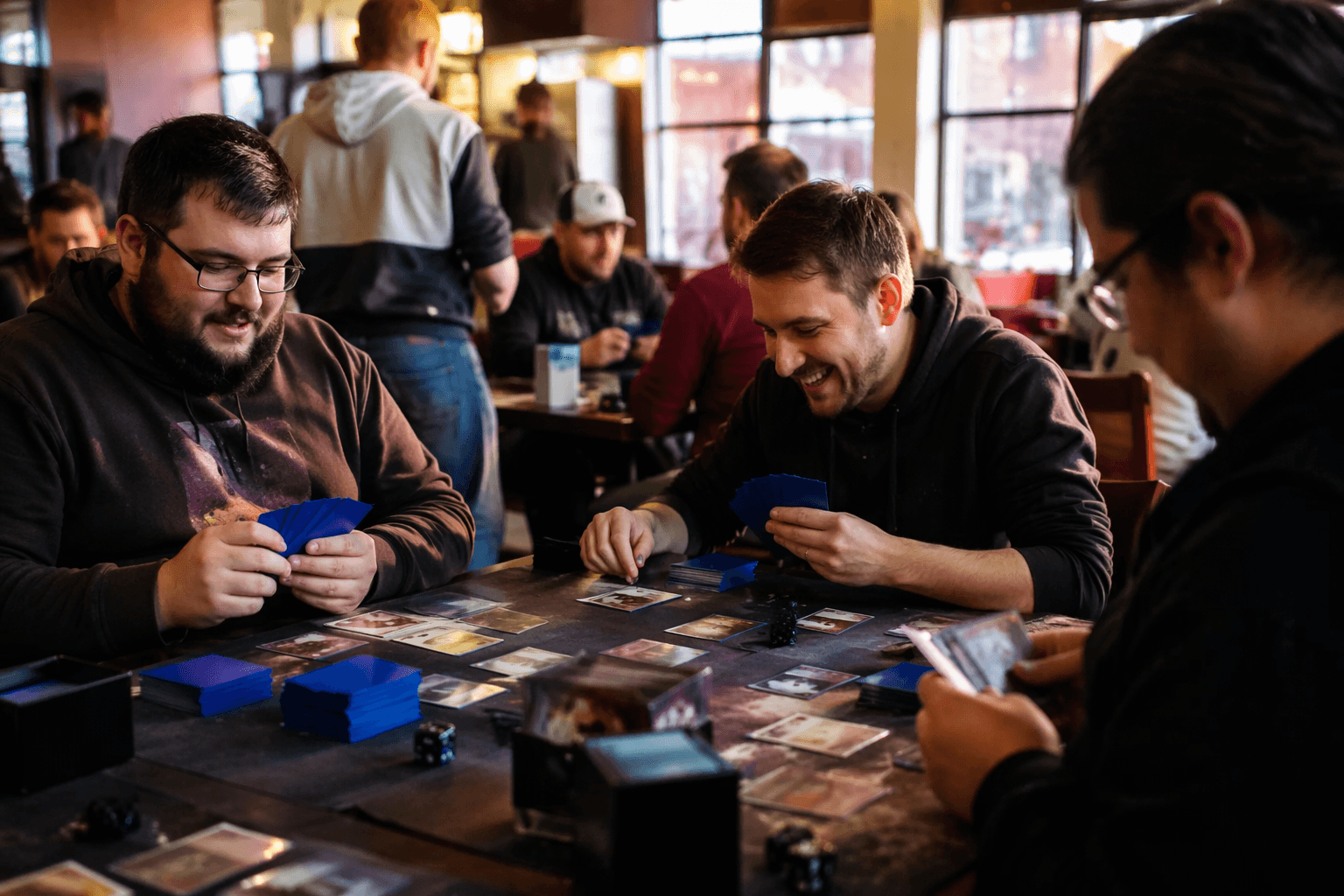
Digital formats have a natural head start on accessibility. You can adjust font size, zoom in on card text, automate shuffling, and remove the physical demands of handling a 99-card Commander deck across a three-hour game. Paper Magic asks a lot more of players' bodies. Shuffling, sleeving, tapping, maintaining a hand of seven cards, reaching across a table in a pod of four, tracking tokens and counters manually; none of that is frictionless even for players without physical limitations.
The Reddit post that sparked this EDHREC interview was specifically about those barriers in paper Magic. The details of that post aren't reproduced in full in the available interview excerpt, but the fact that it generated enough community interest to produce a formal piece on EDHREC says something about how underexplored this topic has been in Commander spaces. EDHREC is not a general gaming publication. It's a Commander-specific resource used by serious players, and choosing to run a disability accessibility interview is a deliberate editorial signal.
What the Commander Community Can Learn
The interview's closing section, titled "A Final Word," turns the lens outward. The prompt directed at readers is specific: "If you are a disabled Magic player, living with a visible or invisible disability, what barriers have you faced? What would make competitive play of any format realistically accessible for you?"
That framing is careful and intentional. "Visible or invisible" acknowledges that disability doesn't always present in obvious ways. A player with chronic pain, a processing disorder, anxiety, or a condition affecting fine motor control might not appear disabled to the people across the table, but still face real obstacles at a competitive event. Commander, with its social contract culture and emphasis on communication between players, might seem like a more welcoming format for accessibility conversations. But social culture and structural accessibility are different things. A welcoming pod doesn't automatically mean accessible seating, adequate time extensions, judge training around disability accommodation, or organizers who know how to handle accessibility requests at a local game store event.
Nathan's work in esports has dealt with those structural questions at a professional level. Bringing that expertise back to the Commander table, where the organizing infrastructure is often a single store owner running Friday night pods, is genuinely useful territory.
The Advocate Behind the Interview
The EDHREC piece was written by Nick Wolf, Media Communications Manager for Space Cow Media, who has covered Magic since the Tempest era and brings more than a decade of news media experience to the beat. The interview uses artwork from Shield of Kaldra, illustrated by Donato Giancola, as its header image, a choice that carries some thematic weight given that a shield, something designed to absorb impact and protect, feels appropriate for a piece about building protective structures around disabled players in competitive spaces.
Why This Conversation Is Overdue
Commander has grown into Magic's dominant format, with a player base that skews casual and community-focused. That growth has come with increasing tournament infrastructure, more organized play at the local and regional level, and events that carry real stakes. As Commander becomes more formalized, the question of who can realistically participate in competitive play becomes more pressing.
Nathan's career in disability advocacy has been built on the premise embedded in his platform's name, Permastunned Gaming, a Magic term for a creature locked in a state it can't escape from. There's something deliberate in that choice of name. He's using the language of the game to describe an experience that too many disabled players know: being effectively locked out of full participation by barriers that the broader community hasn't prioritized fixing.
The EDHREC interview is a starting point, not a complete answer. The full scope of Nathan's recommendations for tournament organizers, stores, and card manufacturers isn't captured in the available excerpt. But the conversation is now on record in one of Commander's most widely read publications, and that's a meaningful shift in visibility for an issue that deserves sustained attention from everyone who organizes, judges, or simply shows up to play.
This article was produced by Prism’s automated news system from verified source data, official records, and press releases, then run through automated quality and moderation checks before publishing. The system is built and supervised by the people who set the standards it runs under. Read our full AI policy.
Did this article answer your question?