Final Fantasy still defines Commander, one year after Magic's record set
Final Fantasy’s Commander life is still strong because Wizards built it as four real decks, and the crossover became Magic’s biggest set release.
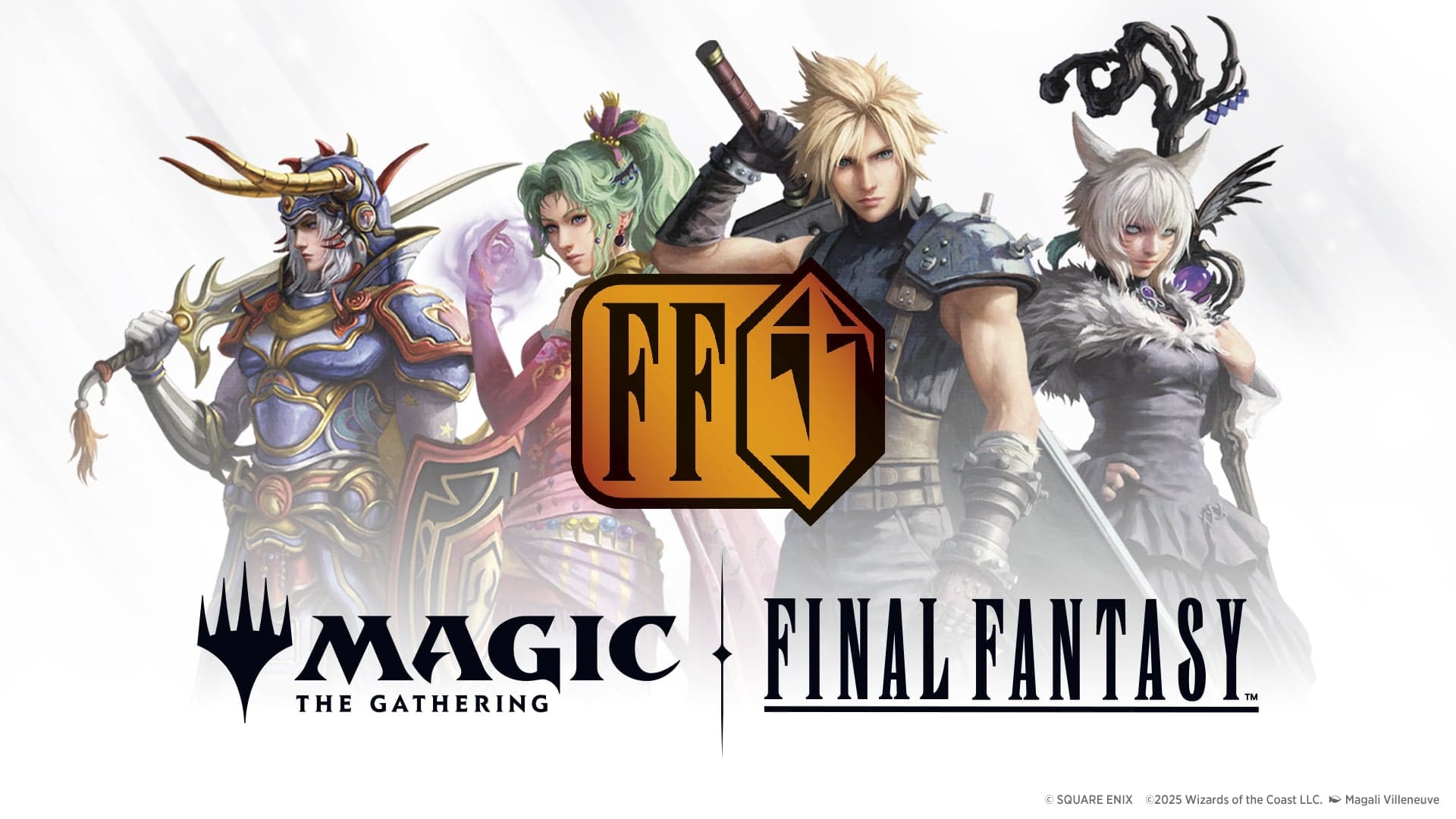
The Final Fantasy crossover did not fade after release-week hype. On the one-year mark, June 13, 2026, it still reads like a Commander product built to be played, not just collected. Wizards and Square Enix turned sixteen mainline games into one release, and the result became the biggest set release in Wizards history.
Why the crossover still matters at the table
The set officially released on June 13, 2025, and Wizards framed it around a simple but ambitious promise: let players experience every mainline Final Fantasy game in a single product lineup. That meant compressing sixteen separate franchise entries into one Magic release, which Wizards’ creative team openly called “an absolutely massive undertaking.” The scope explains why the set hit so hard, because it had to carry heroics, tragedy, and meme-grade moments at the same time.
That breadth also helps explain the business impact. Hasbro said in its second-quarter 2025 results that Magic: The Gathering revenue grew 23 percent on the strength of Final Fantasy, and that the set set the record for the biggest set release in Wizards history. Nelson’s retrospective points to an even sharper benchmark: preorders sold out faster than The Lord of the Rings: Tales of Middle-earth, a comparison that tells you this was never just another Universes Beyond curiosity. It was a release that moved from fandom event to market-defining product.
The legends that gave the set its staying power
What stuck was not just the logo mashup, but the way Wizards chose to represent the franchise. Official materials highlighted a roster that could carry very different emotional registers, from Yuna, Clive, and Y’shtola to Bahamut, Leviathan, and Gilgamesh. That mix matters in Commander, where a deck has to do more than reference a property, it has to tell a story every time it hits the table.
Nelson’s examples make that especially clear. A scene like Sabin suplexing the Phantom Train is exactly the sort of moment that survives past launch week, because it is so specific that it becomes shorthand for the whole crossover. The set worked because it captured the beats players remember most, not just the plots they finished years ago. In Commander terms, that means the Final Fantasy cards that endure are the ones with instant table recognition, the cards that can anchor a deck identity even when the novelty of the crossover has worn off.
- Does the card evoke a moment people already remember?
- Does it point cleanly toward a deck’s identity?
- Does it feel like a role-player rather than a one-line joke?
For deck decisions now, that leaves a simple test:
The Final Fantasy set passed that test often enough to stay relevant.
The four Commander decks are the real afterlife
The strongest Commander signal in the release was the product structure itself. Wizards supported the set with four Commander precons, Revival Trance, Limit Break, Counter Blitz, and Scions & Spellcraft, built around Final Fantasy VI, VII, X, and XIV. Each list came led by a recognizable face, Terra, Herald of Hope, Cloud, Ex-SOLDIER, Tidus, Yuna’s Guardian, and Y’shtola, Night’s Blessed, which made the crossover feel immediately playable instead of aspirational.
Those decks were not treated as simple bonus products. Wizards described each one as a ready-to-play 100-card Commander deck with a foil face commander and a foil featured commander, and the Collector’s Edition versions used surge foil cards. Daniel Holt, who led the deck design, said the four lists felt like “four different Universes Beyond products in one,” which is exactly why they still matter one year later. They gave players four distinct entry points into the same crossover, and that makes them easier to upgrade, easier to revisit, and easier to remember.
For Commander players, that structure is the real lasting value. A lot of crossover products peak on nostalgia alone, then get cannibalized into singles and trade binders. Final Fantasy held because it offered something cleaner: four built-in shells, each tied to a different corner of the franchise, each ready to sit down and play immediately.
What actually lasted after the launch-week rush
One year later, the Final Fantasy cards that still shape Commander conversations are the ones that solve a practical problem. They give you a legend to build around, a theme that is already clear from the box, and a deck frame that does not require you to invent the whole identity from scratch. That is why the set still matters, even after the initial wave of hype has moved on.
The broader lesson is simple. Final Fantasy succeeded because it felt faithful and playable at the same time, and that combination is rare enough to matter. It was a huge crossover on paper, a record-setter in the business results, and, at the Commander table, a product that still knows exactly what it is supposed to do.
This article was produced by Prism’s automated news system from verified source data, official records, and press releases, then run through automated quality and moderation checks before publishing. The system is built and supervised by the people who set the standards it runs under. Read our full AI policy.
Did this article answer your question?